 Housekeeper
Plan your kitchen visit
Oven Cleaning in Bermondsey
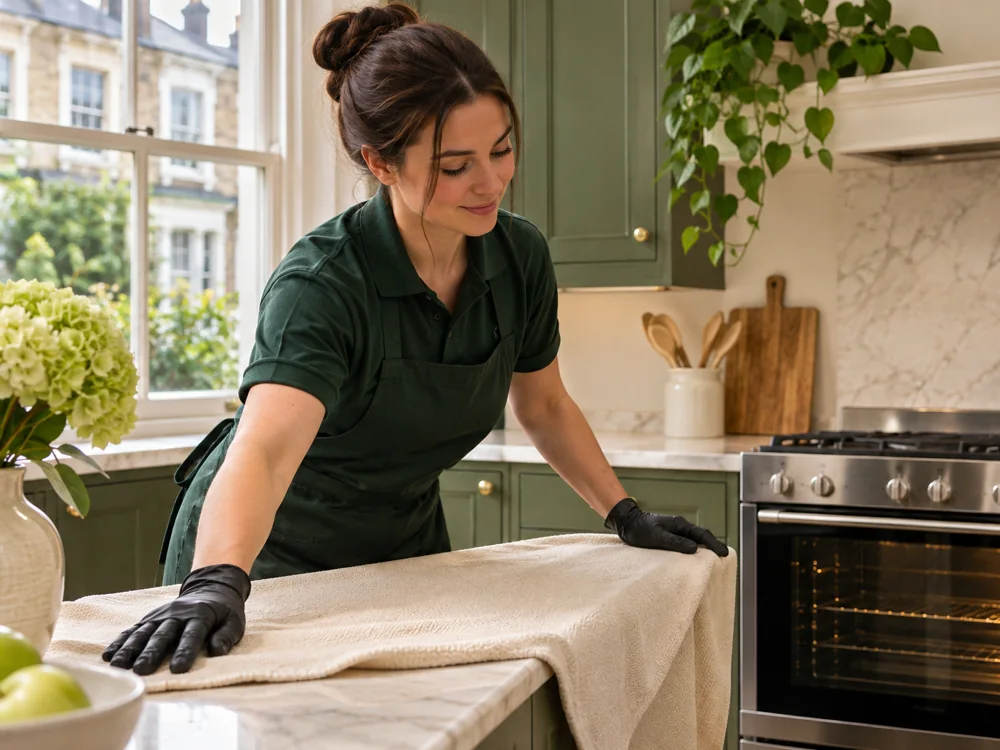
Arrange oven cleaning in Bermondsey around the appliances and handover plans at your address. Identify the cavity, grill tray and accessories you want assessed. Share the precise visitor entrance and the next time the cooker is needed, particularly if an agent or another occupier will handle the keys.
Can I request an oven clean before returning keys in Bermondsey?
Yes. Give the postcode, oven details and agreed access contact. Mention when the keys and kitchen need to be handed over.
Can I add the hob and hood from my inventory?
Yes. Describe each appliance, including the hob finish and extractor filter if known, and request them separately.
Begin with the kitchen inventory and the cooker in front of you
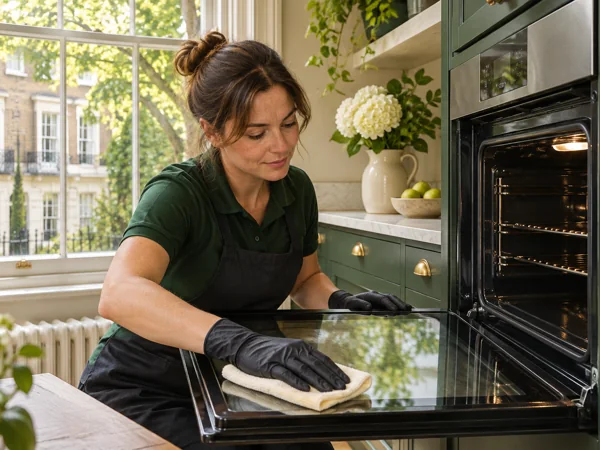
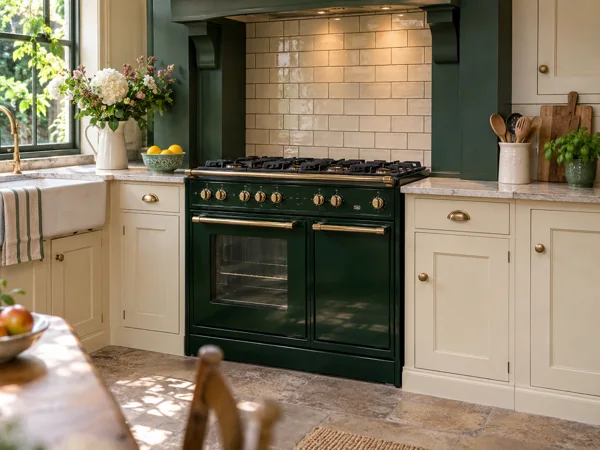
If you are booking before a tenancy handover, compare the inventory’s appliance wording with a photo of the current kitchen. A line for an oven does not tell us if there is an upper grill, a separate combination appliance or a warming drawer. Use the control panel and door positions to name the compartments you would like assessed. Explain whether you will be using the oven before you leave the property. If a new tenant needs it available that day, give the timing early so the clean can be discussed around handover.
Ask the person doing the inventory to clarify any entry that says cooker or fitted appliances. A hob or extractor listed in another part of the document is a separate item to describe. If one component was replaced after the move-in inspection, photograph it as it is now. Identify the model from a visible label or manual rather than moving the cooker. Tell us which parts are present, whether the oven is currently in use and which concerns you would like raised while an assessment is made.
- Match each inventory entry to a current photo.
- Name the cavity and any loose parts on the request.
- Give the approximate handover time.
Describe how a visitor reaches your Bermondsey kitchen
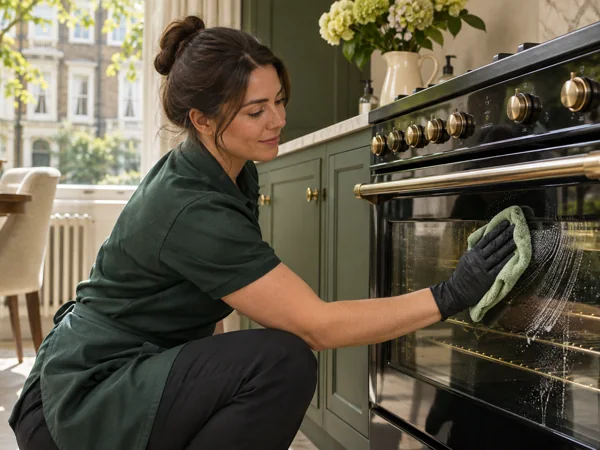
Southwark Council puts Bermondsey Spa Gardens on Spa Road and lists further entrances on Albany Road and Grange Road. If you use the gardens to explain the vicinity, give your actual property address as well. A block at the end of a shared approach can have a courtyard facing one street and a visitor lobby on another. Provide the visible entrance name plus the floor and flat. If the flat is reached through a service arch or a separate stair, give the first door someone needs to look for.
Check arrangements before the access contact leaves the property. A code may only be needed for the first gate, while visitors must speak to a concierge for the next door. Use the agreed private means of sharing access detail. Confirm any route for equipment from the unloading point, including bends or steps after the lift. If an agent is due to collect keys later, agree who meets the technician and who can respond if an entry route changes. Give the contact details to the person arranging the appointment.
- Confirm the actual visitor lobby and intercom label.
- Describe the route from unloading to the kitchen.
- Identify who can open any second gate or internal door.
Match the inventory to the current kitchen
| Entry | What to look for | What to confirm |
|---|---|---|
| Built-in oven | Cavity count and shelf sets | Agreed compartments |
| Grill | Own door or part of main oven | Pan and separate insert |
| Extractor | External cover and filter type | Any separate work on those pieces |
Prioritise the surfaces that are likely to be checked during handover
Check the cooker cold and describe where residue is concentrated. A grill used most days can carry grease on a tray and wire insert even if the large cavity looks lightly used. A spill beneath the lowest shelf may show as a dark patch across the base. Show areas of grease and any other mark you expect someone to ask about. Mention how the oven was used since the mark became visible and whether any cleaner has already been applied. The technician can then inspect the relevant surface and discuss what is achievable.
An oven inventory can mention chipped enamel, worn lettering or a damaged pane as existing condition. Tell us about those observations when requesting cleaning. A patch on an enamel panel can be residue or a change in the finish. An old fault with heating, a loose seal or a faulty hinge should be declared before the appointment. An appliance specialist can advise about operation. Keep a photo of the area as well as an overall picture so it is possible to review cleaning separately from any existing condition the owner wants noted.
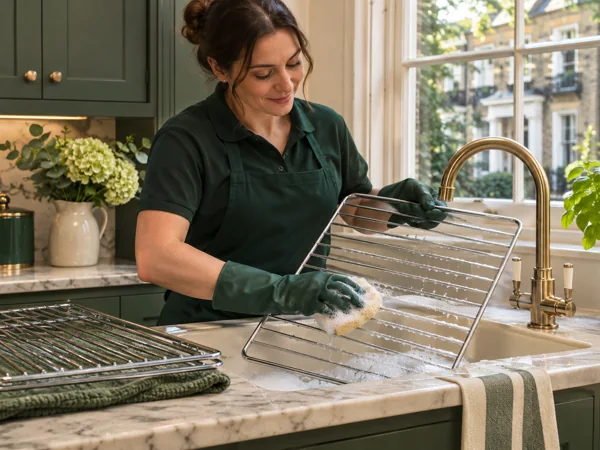
Check which racks and trays remain in the property
Look for the grill pan, its wire insert and any spare rack before packing the kitchen. A cooking tray supplied with the oven can be easy to mistake for cookware you plan to move. List the removable pieces you want discussed and identify any replacements. Suitable removable parts can be cleaned separately and may be soaked in a dip tank where appropriate. The technician can consider the material, construction and condition before choosing treatment. A coated tray from another appliance may need handling differently from a plain wire shelf.
For a rail that catches or a shelf with a bent edge, tell us where the movement changes. Leave fitted parts in position if unsure how they are retained. Put accessories with their correct oven when two units have matching shelves. Leave a clear worktop with enough room to look at pieces separately. Tell the person meeting the technician which pieces are expected to remain at the property, as the owner may need to locate a specific rack or set of supports when they take over.
- Set aside grill inserts and removable handles together.
- Leave fitted rails in place if their fixings are unfamiliar.
- Tell us about bent racks or damaged coatings.
Explain marks on the glass by where they are visible
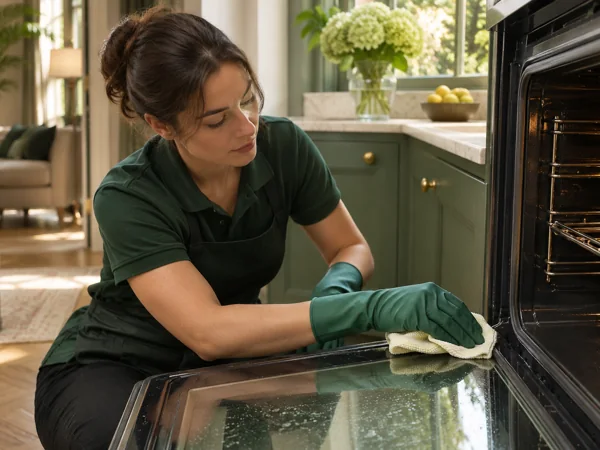
With the oven cool, see whether the glass looks marked with the door open, shut or both. A cloudy patch on the inside may be easy to see from the worktop; a streak between panes may only appear from a sharp angle. Give the position in a photo and mention previous glass replacement or damage around its frame. The technician can discuss which areas are accessible after assessing the actual door. A loose strip of trim can affect that assessment even when the appliance still closes.
If there are marks on the control area or handle, describe those separately from the glass. For printed knobs, show sections where lettering is already faded. If you know the oven has catalytic liners or another specialist coating, share any guidance from the appliance maker. Mention any recent sprays or self-cleaning programmes. A dark area can be an accumulation or discolouration; what happened before it appeared can help the technician decide how to discuss it. Ask about any limitation you should record for the handover.
- Locate the marked surface as clearly as possible.
- Identify previous glass replacement or damage.
- Share instructions for specialist liners and finishes.
Note existing problems at assessment
| Location | Condition to share | Why it matters |
|---|---|---|
| Interior lining | Patch or chipped finish | Assessment of residue and coating |
| Door surround | Loose trim or changed pane | Accessible glass surfaces |
| Shelf rails | Tight spot or bend | Whether pieces can be moved |
Confirm separate work on the hob or extractor
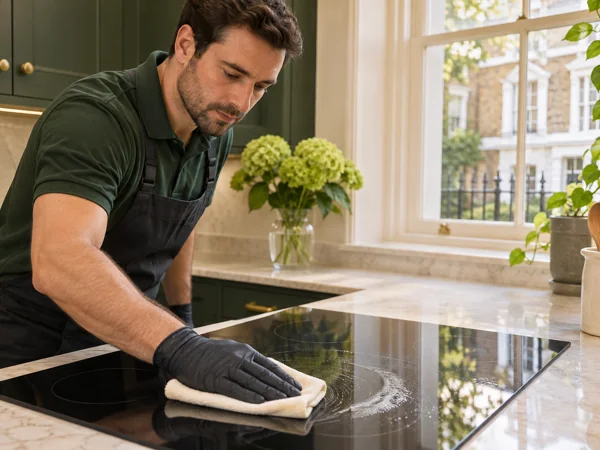
Give the type of hob if you also want it assessed. A flat surface with deposits on one ring may require a different discussion from a gas unit with several supports and caps. Photograph the top and controls and explain which parts are of concern. If the hob is part of a range, list a griddle or drip tray on its own line where it matters. Note any damage or worn markings that are already recorded in the property's inventory.
With an extractor, describe where it sits relative to the oven and its approximate height. A fixed cover can have grease along its outer edge while the filter inside is a different item. If you know whether there is a metal mesh or disposable insert, give that information along with the visible finish. If the cover is hidden under cabinetry, show the area from a safe position. Ask for each component to be considered separately, and compare the agreed list with the items due to be checked during the property handover.
Fit the work around access and key return
If packing is taking place, clear boxes away from the kitchen approach and give an open path to the cooker. Leave the oven cold and remove food, foil and cookware. Clear the nearest worktop and tell us about any water or power restrictions before the visit. If the kitchen needs to be used by other people during the same window, explain which routes or appliances they need during that time. Keep children and pets out of the working area while oven parts are being handled.
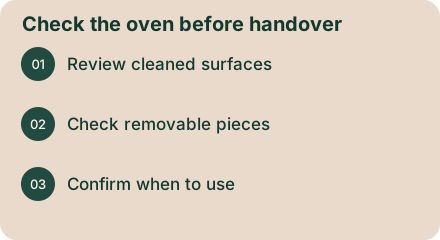
Check who will remain at the flat until the oven is handed back. Make room for the technician to explain what was addressed and when the appliance can be used. If the tenant and property agent are different people, pass the cleaning details to the correct contact before returning the keys. Leave enough time to check that the agreed accessories are present. Tell us if a new occupant is planning to cook soon after handover. Give the schedule early so timing can be discussed before the quote is confirmed.
- Leave the path and work surfaces free of packing.
- Confirm who can stay for the handover.
- Allow time to check the accessories and transfer the keys.
Send a quote enquiry with the appliance list and photographs
Give the full postcode and name the cooker or cavity you want assessed first. Add the accessories and any proposed hob or hood cleaning under separate headings on the enquiry. Attach an overall photo and any specific concerns. If the person booking will be away from the property, give the access contact and make sure they have the same list. Check that any issues with the appliance are described in the booking details and can be highlighted in person.
Before confirming the appointment, compare the quote with the appliances and fittings present in the home. If you find a loose tray left in a cupboard or spot another cooker behind a matching cabinet, ask to review the list. A property timeline may include separate cleaning, inventory inspection and key return. Give the time each needs access to the kitchen. Set aside the final list and handover information for the person who will pass the keys to the occupier or agent.
Confirm the handover sequence
| Stage | Information needed | Contact |
|---|---|---|
| Before arrival | Visitor entrance and timing | Person with keys |
| At the flat | Priority appliance and loose trays | Occupier or representative |
| At the end | When the oven can return to use | Person handing over the kitchen |
Get an oven cleaning quote in Bermondsey
Tell us the oven type, number of cavities and whether the hob or extractor also needs cleaning.
Get a QuoteOther Cleaning Services in Bermondsey
Local references · Southwark Council – Bermondsey Spa Gardens
Bermondsey oven cleaning questions
Can an agent give access while I am at work?
Agree who will meet the technician and send them the appliance list, photographs and access instructions.
Will you clean a replacement shelf from a different oven?
List it separately and describe its material and condition so it can be assessed.
How do I record a stain before the appointment?
Take a close-up and a wider photograph showing its location. Mention what treatments the surface has already had.
Should the person holding keys bring the appliance manual?
It is helpful if the model or liner finish is unclear. A clear photo of the model plate can also help.
Can a spare tray be added on the day?
Tell us about it before the visit where possible and ask to confirm the list of pieces covered by the quote.
Do I ask about using the oven if someone moves in immediately?
Yes. Give the time the new occupier needs it and pass on the technician’s handover advice.