 Housekeeper
Care for built-up cooking residue
Oven Cleaning in Harrow
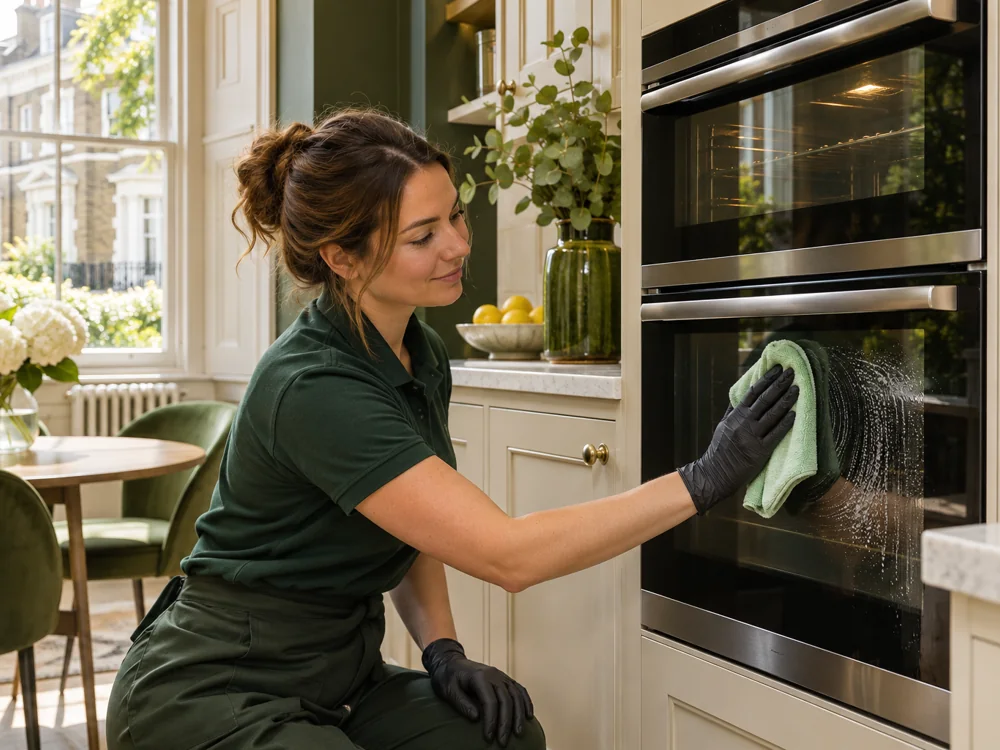
Show us the part of your Harrow oven where grease or food residue has collected. Name the cavity, give the model if available and tell us about any treatment already tried. We can discuss which surfaces can be assessed in a cool oven and which suitable removable pieces can be dealt with separately.
What do I add for a flat close to College Road?
Give the full postcode and identify the street door or main entrance used by residents.
Can you assess grease inside a little-used grill?
Describe the grill and tell us which parts belong to it. We can discuss the accessible areas.
Identify the deposits that have built up over time
Grease from using an upper grill may collect near its door, while a roasting spill in a larger oven can leave a defined patch on the base. If you see both, describe the two locations individually. Give the approximate size of a deposit where it stands out from the surrounding surface. If it was first noticed when you moved in, report that without assuming what caused it. Take a picture of the complete area after the appliance has cooled, including the edge and a shelf position if these make the mark easier to recognise.
A mark in an oven that has been unused for some time may look different from fresh cooking residue. Tell us if the last person using it left notes about any prior treatment. If you have already cleaned one part, describe the products you know were used and any change in appearance. A change to the finish can deserve its own discussion. We can assess existing condition where the affected surface is accessible and talk about the grease or baked-on residue you want cleaned.
- Describe one affected area at a time.
- Report earlier products and appliance cycles if known.
- Use a wider image to locate any isolated deposit.
Find the kind of lining before discussing treatment
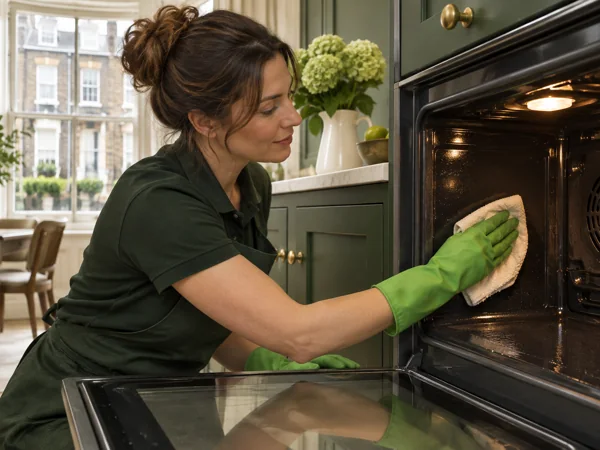
A cooker that has a black interior may contain smooth enamel, textured side panels or separate pieces with particular care requirements. The model and handbook can help distinguish these where their names are unfamiliar. Explain whether a deposit seems to be on a fitted panel, the flat base or a removable tray. If the lining has a visible seam or its texture changes beside a shelf holder, use it to locate the mark. Keep the lining in place while giving this information and mention any apparent chip or loose edge.
For an appliance with a cleaning setting, give the name of the setting if it has been used recently. Explain whether the residue remained in one area afterwards or changed over a much larger surface. An appliance with two ovens may label the functions differently for each cavity, so identify which one ran. These details give us the context to discuss how the surface should be assessed. If some marks appear on a worn coating, the cleaner can identify the accessible material before agreeing how to address those areas.
Separate fitted guides from pieces that lift away
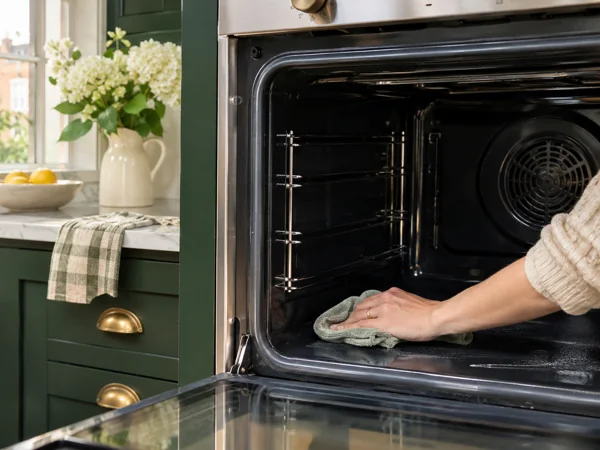
Think of the shelf itself and the rail along the wall as two parts. A shelf that normally lifts clear can be described alongside original trays and grill inserts. A guide that stays fixed to the wall or slides as part of the assembly should be identified by its position and the oven model. If you have never taken one out, leave it where it is. Mention loose or damaged fittings in the enquiry. A picture of the parts together can show how they are used without taking anything unfamiliar apart.
Suitable removable items can be assessed for dip-tank treatment. Which items can be soaked depends on their finish and condition. Give a separate description of any coated pan or unusual tray. If the oven includes a spare rack that lives in another cupboard, add it to the count. Ask the person at home to keep personal cookware apart from the requested pieces. A written list of the parts can also be checked afterwards if you did not take part in the initial review.
- Count the loose racks, trays and grill pieces.
- Identify fixed or telescopic fittings separately.
- Mention surface wear on a piece you want discussed.

Identify the main area of build-up
| Area | What to show | What to mention |
|---|---|---|
| Lower oven base | Patch and nearest seam | Prior spray or cleaning cycle |
| Separate grill | Panel above the tray | Age of deposits if known |
| Door window | Position on the identified door | Difficulty identifying the glass face |
Locate the window or door part you see from the kitchen
Look at the cool appliance from the front and then with the door open if it opens normally. A mark on the face nearest the oven can often be seen from both positions. A streak that seems to remain behind the glass needs a discussion about door construction and access. Give the model if you can read it without moving the appliance and say which door has the mark. When the oven is part of a range, identify if it is the door to the left or right of the grill.
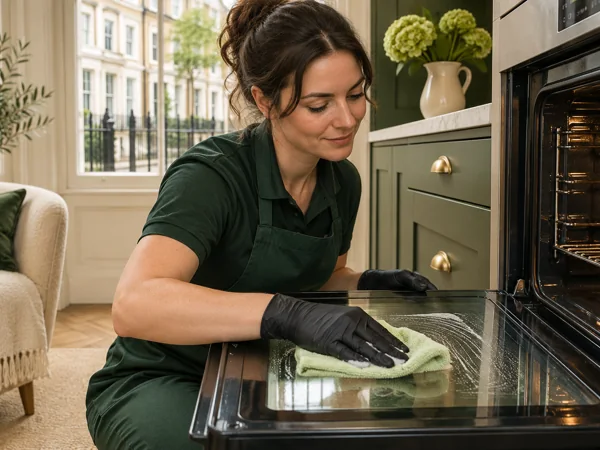
Mention the finishing surfaces around the window. A glazed front may have a painted edge or brushed handle whose appearance has changed over time. If a seal has moved near the position of a deposit, describe the area and leave that part where it sits. Give details of previous marks or wear around the panel and controls. The technician can review the accessible faces after considering the condition you have reported and explain any limits specific to the oven and door.
Give the Harrow address in the order a visitor needs it
Harrow Council lists its Pavilion Register Office at Perceval Square on College Road and identifies the nearby Harrow on the Hill station and Harrow Bus Station. If you use one of those as a landmark, distinguish it from the name of the property and its entrance. State the full HA1 or HA2 postcode and give the street name at the front door. If a building can be approached from a pedestrian route and from a loading area, specify which is the residential approach and who can arrange any alternative.
The next part of the route may go through a lobby, up a lift and into another hallway. State the floor and door number separately. If the oven is in an extension and your preferred access is through a side gate, describe the ground and any step into the room. Someone meeting a cleaner on your behalf should have the same instructions and be able to confirm them. Send any private access details directly to the arranged contact after agreeing a visit.
- Provide the exact residential address and full postcode.
- Explain the entrance beyond any town-centre landmark.
- Name the person who can confirm stairs, gates or lift access.
Identify accessories for assessment
| Piece | How to recognise it | Condition detail |
|---|---|---|
| Plain shelf | Lifts from an accessible guide | Grease on rear or front edge |
| Pan and insert | Two items normally used together | Coating and handle condition |
| Side guide | Stays fitted between uses | Model and any movement problem |
Keep the areas around a cool oven open
Before the visit, take household cookware and food out of the oven and the grill. Give the appliance time to cool and explain when it was last in use. Clear loose objects from the floor in front of the appliance and make space for the door to move normally. A narrow footpath between the oven and a counter may still be enough to stand at a distance, but it is helpful to describe it. Show any item that cannot be shifted if it alters where the cleaner can work.
Discuss a work surface near the oven and mention any door or cupboard that opens into the same area. Tell us if another person needs the sink or the kitchen aisle during the visit so the arrangement can account for them. Keep children and pets away while parts are being handled. If an unusually high or low appliance may limit the approach to an area, explain how it is fitted. The space and the construction are both useful before agreeing work on the affected parts.
Add deposits on the cooker top and hood by location
If grease has collected around the hob, specify whether it is gas, induction or ceramic. On a gas hob, locate the mark relative to the burners and supports. On a flat surface, use the heating zones or a control strip as the reference. The finish where the hob meets the surrounding counter is worth including when residue reaches the edge. Send a wide view to identify the surface and a closer view of the position if that makes the request clearer.
Mention an extractor separately and give the finish and approximate mounting position. A hood with a coating or glass face should be described by the surface where the grease is visible. If you want a filter considered, say what you can identify from where you stand or from the manual. A model helps when the filter sits out of view. We can discuss an addition for the canopy or filter independently of the work requested for the oven, so the quote can list the parts precisely.
- Name the cooking surface before describing the mark.
- Identify detachable supports if you want to discuss them.
- Separate the hood’s outer surfaces from the filter request.
Ask about the areas you originally reported during the review
Bring up the location of the heaviest residue when checking the agreed oven areas after the visit. Ask what was assessed and which loose parts were removed. If a mark on the base or glass looks different but remains visible, identify it by the same position you originally gave. An accessible review also lets you confirm the number of accessories and where they belong. If someone else arranged the visit, use their item list to check that each part can be recognised.
Before cooking, ask when the oven can be used again and note any relevant manufacturer instructions. A household that plans to use the grill shortly after an oven clean should share those details with whoever will cook first. If the appointment was requested for a property inspection, confirm who will see the cleaned parts before the key handover. Keep the model and the list of agreed areas so later enquiries can distinguish new deposits from existing conditions that have already been discussed.

Pass on instructions for a Harrow visit
| Place | What to provide | What to confirm |
|---|---|---|
| Street | Residential entrance and postcode | Nearest landmark if useful |
| Building | Floor and door number | Agreed lift or stair route |
| Kitchen | Approach and working space | Who can give access |
Get an oven cleaning quote in Harrow
Request a quote with the oven type, number of cavities and any extra appliances.
Get a QuoteOther Cleaning Services in Harrow
Local references · Harrow Council, The Pavilion Register Office
Harrow oven cleaning questions
How can I distinguish an old cooking spill from a worn patch?
Describe the shape and surrounding surface with a picture. Report anything you know from previous use so the area can be assessed when seen.
Should I try to free a rack that catches on its rail?
Leave the rack in place and describe how it moves. Include the model and the rail position when asking about the clean.
Can I request attention just to the oven door and its window?
Describe the affected face and give the model. We can discuss access and which parts of that door you want included.
Can I add a hood whose underside is difficult to see?
Give the position, exterior finish and model from the manual if available. Mention any access issue when discussing the quote.
What should I say if my building has two entries near College Road?
Give the address and entry label at the door the cleaner should use, and name the person who can direct them from that point.
Can the person checking my tenancy inventory use my original quote?
Share the agreed oven items and where the accessories belong, so the person reviewing the appliance knows what to check.