 Housekeeper
Detail-led care for your oven
Oven Cleaning in Hammersmith
Give us enough detail to identify the oven you want cared for, including the door, interior finish and removable parts. An enquiry for oven cleaning in Hammersmith can start with a photo of the fitted kitchen and the exact appliance, followed by your full postcode and the agreed way in.
Can I enquire for a W6 address?
Give the full postcode and the actual door that serves your home.
Can I ask about one part of the door?
Yes. Describe the location of the mark and the door’s condition so access can be assessed.
Start with the finish you want to look after
If the oven was selected to match the rest of a fitted kitchen, find out which surfaces belong to the appliance and which are cabinet or worktop materials. A stainless handle, glass surround and enamel cavity can sit close together without sharing the same care instructions. Tell us which part has changed appearance and send any relevant guidance from the appliance maker or kitchen installer. An image of the whole unit makes the boundary between the oven, fittings and neighbouring panels easier to understand.
Do the same for custom or specialist parts inside the oven. Look for the name of a catalytic lining or an automatic programme in the handbook. If an interior side panel has a rough appearance while the base is glossy, describe the two surfaces separately. A mark may be a layer that can be treated or a lasting change to the finish. The technician can determine what is accessible and discuss appropriate care once the specific materials and condition have been checked.
- Photograph the oven and surrounding surfaces together.
- Share care instructions for parts with special finishes.
- Identify the exact area that changed appearance.
Give each official appliance component its own description
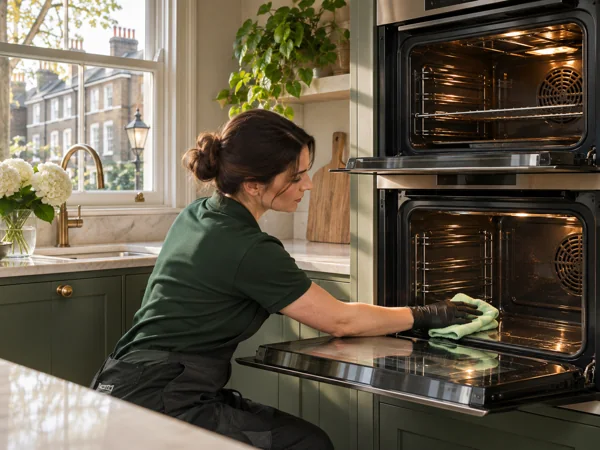
Read the doors by their actual purpose and list the cooking cavities separately. In a stacked installation, a shorter door could open to a compact combination unit, a warming drawer or a grill. Include the manufacturer’s terminology beside the door position if possible. Confirm which parts you want assessed when the quote is prepared. A request that says double oven can mean two ovens or an oven plus another appliance, and the interior fittings can differ substantially between those arrangements.
Tell us if one appliance is used only when you are entertaining or if a separate oven has remained unused since the property was fitted. A dormant cavity may contain spare trays and racks from the model above it. Identify where each accessory belongs before asking the technician to treat several together. Use a current photograph and a visible model reference from the handbook or label. If the controls are integrated into a panel shared by two functions, include a close view of the names or symbols that identify them.
Identify the boundary between oven and kitchen
| Surface | Helpful detail | What to discuss |
|---|---|---|
| Cavity lining | Appliance handbook and finish name | Treatment suited to the lining |
| Door glass | Affected face and condition | Safe access by model |
| Cabinet trim | Material next to the oven | Whether to make a separate request |
Explain what lies behind a visible mark
A thin streak at the base can be left by a tray sliding along the surface or by a spill that was heated more than once. Share what you know about the cause and how long it has been visible. If you already wiped an area and the shade stayed different, mention the earlier treatment and remove no fitted parts to look for further clues. The assessment can distinguish the position of reachable deposits from features visible in the original surface.
Include the name and timing of any product you used on a particular area. A steam programme, a powder or a household spray can leave different observations for the technician to consider. Share what the maker says about that surface if you have the instructions. Tell us if you saw marks before the product was applied. A recent treatment can affect the inspection even when most of the oven looks untouched. Put the concern that prompted the appointment at the top of the list.
- Describe a stain alongside what was used on it.
- Record whether the mark changed after heating.
- Keep the exact part or cavity clear in your notes.
Make a plan for removable and fixed parts
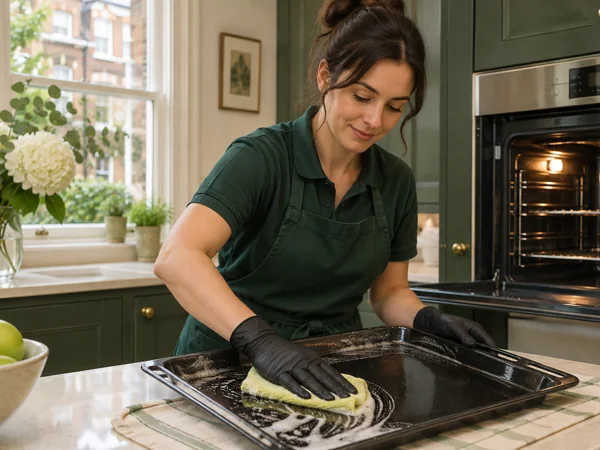
When you enquire, count shelves, grill inserts and trays by cavity. Note any sliding rail with a latch or visible fixing and mention a rack that will only move partway. Leave uncertain fittings for the technician to inspect. Suitable removable components can be taken out and soaked in a dip tank. A coated accessory or one with an attached mechanism may require different handling. If there are instructions for a particular part, give the technician those details before it is moved or treated.
An extra baking sheet that happens to fit the cooker may have a different finish from the original pan. If you want it discussed, add it as its own entry. Empty food and loose personal dishes from the cool oven, then clear a surface close enough for the technician to sort agreed parts. Keep the path between that surface and the appliance free. Make sure nearby cabinet doors can be left shut once the oven is open. A clear arrangement helps avoid confusing spare pieces with those installed in the oven.
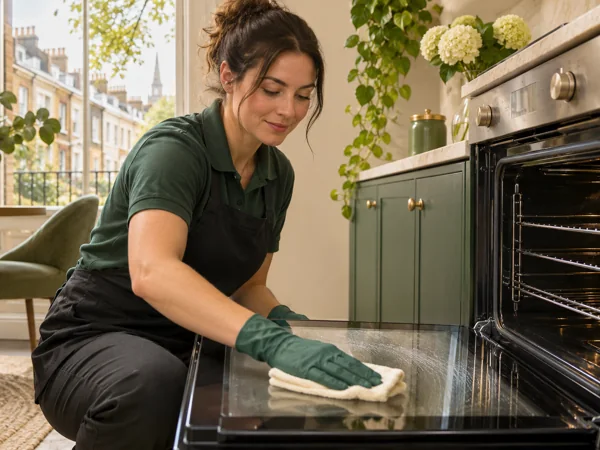
Make stacked appliances easy to recognise
| Part | Describe by | Decision |
|---|---|---|
| Main oven | Door position and regular cooking mode | Cavity and shelf list |
| Compact unit | Model and grill or combination settings | Appropriate cleaning approach |
| Lower drawer | Actual use and removable items | Separate consideration if requested |
Set a specific question about the glass
Tell us where a mark on the door stands out, including which direction you look from and what light catches it. If you can see it with the door closed and again from the inside while the oven is cool, describe both views. Photos may help establish the area but access to glass between panes depends on how the door is made and whether the fittings are in suitable condition. Report loose trim, a chipped corner or any known earlier work on the door.
If you have two glass fronts side by side or stacked, identify the one affected in the enquiry, particularly where both doors look alike. Tell the technician if seeing clearly into the oven is more important than treating a small mark on another part. Leave the assembly in place and point the area out on arrival. Ask which accessible surfaces can be included, and have any special restriction from the handbook ready. A coating near the edge may require consideration separately from the main area of glass.
- State which door and face show the problem.
- Report any loose trim or chipped edge.
- Leave the panel in place pending assessment.
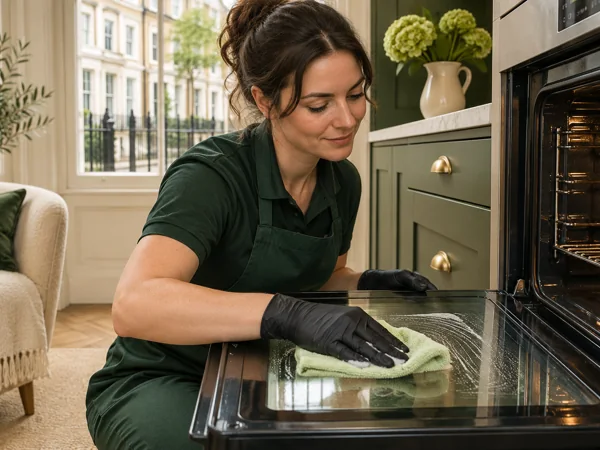
Describe the route near Hammersmith Broadway
Transport for London gives Hammersmith Broadway as the address for the District and Piccadilly line station in W6. If your home is in that vicinity, use the name to orient the route, then give the full residential postcode and entrance details. A postal address can refer to a building that is reached by different doors or through a shared court. State the building name and visible label on the bell, particularly when a pedestrian route and the appropriate equipment entrance are different.
Inside the building, mention which lift or set of steps can be used to reach your floor. Check with reception or the owner before giving an unloading point. If the route depends on a timed loading area, pass on that information while choosing the appointment and say whom to contact if access changes. In a private house with a separate kitchen door, explain how to identify that approach before walking past the main entrance. Give the person opening up your agreed details if someone else handles the booking. If a lift requires a resident pass, check whether guests can use it to leave the building as well as to enter.
Include only the nearby surfaces you want considered
Describe the hob as a distinct appliance. Give its material, cooking zone layout and any removable supports that need attention. If a surround is finished in painted metal, stone or glass, record it independently. An enquiry for the top of an oven and the work behind it can be clearer with two labelled images. Mention any part that the maker says must stay in place. Ask for the quote to say which specific items are included when the appropriate approach has been agreed.
Add the extractor height, filter type and any part of the cover you want assessed. A high hood over an island may need a different working arrangement from a wall-mounted unit with a filter directly below it. Supply the model guide if the filter can only be accessed in a particular way. Confirm whether you are enquiring about the exterior cover, the filter or both. The assessment can then focus on what is reachable and consistent with the finish and construction.
- Specify the individual hob items you want.
- Name the extractor cover and filter separately.
- Check the written quote matches the requested surfaces.
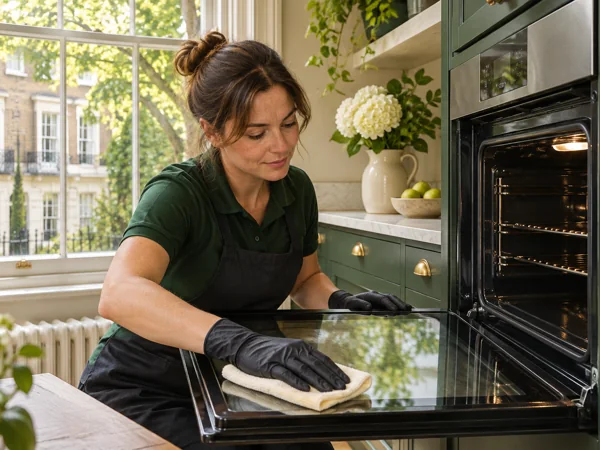
Explain the route through the home
| Issue | Before arrival | Useful detail |
|---|---|---|
| Shared access | Confirm allowed entry door | Bell or reception name |
| Timed unloading | Confirm opening time and allowance | Contact for any change |
| Working space | Clear counter and area near the door | Nearby route that must stay open |
Arrange the kitchen handover before work starts
Start with the postcode form and keep the access note and appliance reference together. Confirm who can authorise any changes after the first look at the appliance. At the appointment, leave the oven cool and the worktop nearest to it clear. Set a place for children and pets away from the working area. Move any light furniture that would block the open door and let the technician know if there is an alternative route to another part of the home.
At the end, discuss which parts were cleaned and when and how to put the oven back into use. If a surface required a separate decision, remember the exact model and compartment so you can refer to it later. Check where the trays or removable racks should be placed and pass on the technician’s advice to whoever cooks next. If another person will be using the oven before you do, make sure they hear the instructions before turning on a grill or oven for the first time after the visit.
Get an oven cleaning quote in Hammersmith
Request a quote with the oven type, number of cavities and any extra appliances.
Get a QuoteOther Cleaning Services in Hammersmith
Local references · Transport for London, Hammersmith District and Piccadilly line station
Hammersmith oven cleaning questions
Can I request a built-in oven without the surrounding units?
Yes. Show which surfaces are part of the oven and describe the exact cavity and removable parts.
Should I rely on the model number alone?
Add a front photograph. It helps us connect the model to the door or part you want assessed.
What if casework prevents the oven door opening fully?
Explain where it is obstructed before booking and leave the appliance in position for assessment.
Is the filter included if I ask about the extractor cover?
Confirm the pieces individually. The accessible cover and filter can require different treatment.
Can I ask for a quote if our entrance is through a courtyard?
Yes. Give the full postal address with the gate, steps and any agreed route beyond it.
How can I tell the next person when the oven is ready to use?
Ask the technician at the handover and pass on the specific advice for the parts cleaned.