 Housekeeper
Plan your kitchen visit
Oven Cleaning in Ealing
When arranging an oven clean in Ealing, start with the entrance and the appliance you want us to see. In a divided house that might mean a shared front door and a built-in oven one floor up. In a home with a kitchen extension it might mean a side path and a separate range. We can discuss the visit once we know what the work involves and how to reach it.
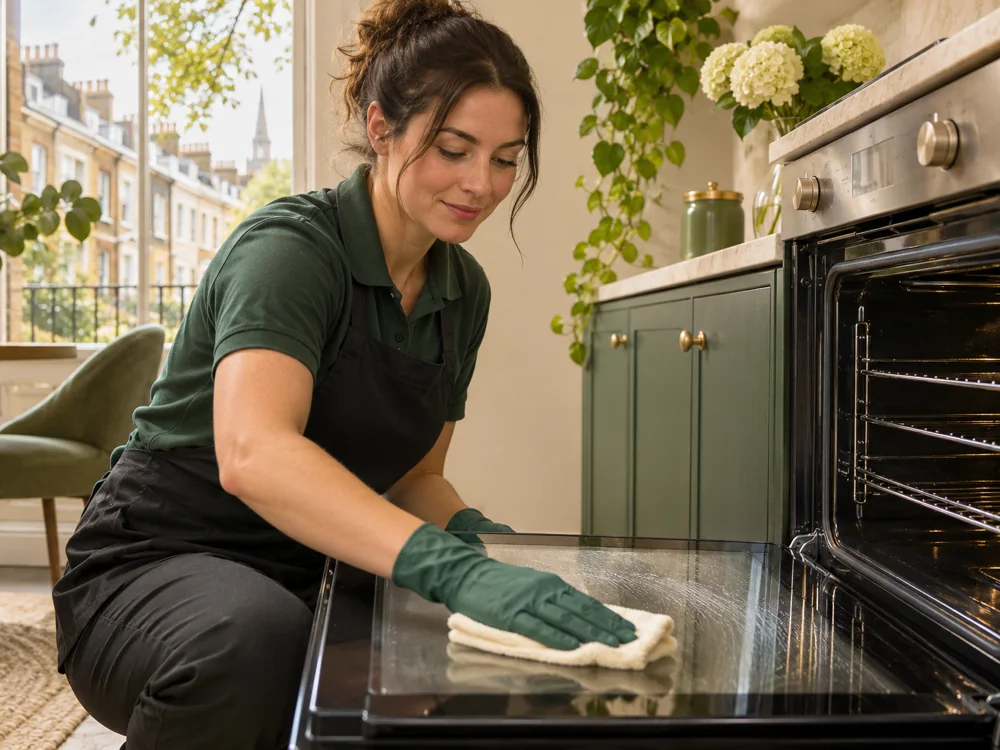
What should I tell you about a flat near Haven Green?
Give the full W5 postcode and the name or number at the residential entrance.
How do I ask about a cooker in W13?
Send its model or a picture of the controls, count the working cavities and mention the parts you want considered.
Distinguish the street address from the door that leads to the oven
Ealing Council’s Haven Green appraisal places the green north of The Broadway and traces the area west towards Castlebar Road, Gordon Road and Carlton Road. If an address in W5 is described in relation to the green, give the name of the street where your entrance sits. Some homes have a building name visible before the flat number comes into view. Mention what is written by the first bell and identify the second door if a person has to pass through a common hallway. A good route description means the cleaner can tell which entrance serves the kitchen you are enquiring about.
In W13, use the full postcode and the address as it appears on the building rather than relying on a broad district name. If the door to a converted flat is down an outside path, say which side of the property to walk along and describe any steps. If you want a side door used for a kitchen extension, name the meeting point and who can open it. Share any building access instructions directly when the visit is agreed. Include a contact who can resolve directions if more than one resident uses the same front bell.
- State the full postcode and entrance street.
- Describe the relevant bell and route within the building.
- Give a contact for shared or secondary doors.
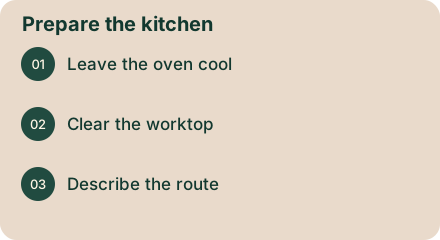
Identify the cooker with the least disruption to your kitchen
If the appliance came with the property, start by looking at its front. A picture of all the controls can help distinguish a main oven with a grill setting from an appliance with a different cavity above it. If you have a manual or can read the model on a label near the door, include that information. Leave the oven in its fitted position. If it is a range, say which parts function as ovens, which serve as grills and how you use a drawer that has its own door.
If two separate appliances sit together, describe the one that is the subject of the quote by location. A property may have a large oven by the sink and a smaller combination oven built into the cupboards beside the fridge. Take a wide photo if the two fronts look similar. Explain if they are used differently and which removable items belong to each. A model gives further details about liners or glass, but it is useful to describe the appliance even when the paperwork is missing.
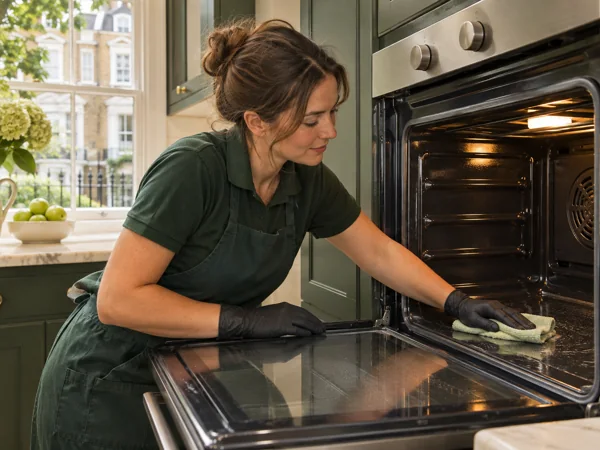
Give arrival details for an Ealing property
| Step | What to tell us | Who confirms |
|---|---|---|
| Property address | Full postcode and door street | Person booking |
| Communal approach | Correct bell and floor | Resident |
| Kitchen entry | Preferred route where two doors are available | Person at home |
Keep the condition record as specific as the booking
Name the first mark you want looked at, then report any others that would be easy to miss. A dark deposit below a shelf and a drip on the inside of the door may come from the same meal, but they sit on different materials. Describe both when the unit is cool. If the oven was left by a former occupant, record the appearance without guessing its cause. A previous picture or check-in note may tell you when a part was already scratched or discoloured.
Point out any marks close to a worn seal or a fitted side liner. If you know that somebody used a spray or ran a cleaning cycle, give the details and tell us which surfaces changed. We can check the appearance and accessibility of the area in relation to the appliance construction. If a coating already looks chipped or loose, leave it in place and mention its location. The first assessment can then account for existing condition and the residue that is visible around it.
- Give the location of the main mark and any surrounding wear.
- Share an earlier record only if it helps date existing condition.
- Mention a product or cycle already used on the appliance.
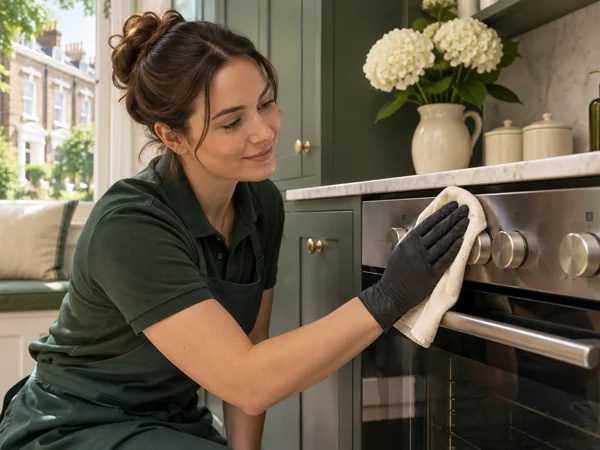
Note which shelf or grill parts are ordinarily removable
If the oven has extra fittings, identify the pieces you can lift free in everyday use. A grill pan may have a removable rack that sits inside it, and a main oven may have both plain shelves and a sliding shelf. Give the quantity you want considered and state their normal position. If an oven accessory is stored above the appliance or inside a cupboard, it can still go on the list. Let the person opening the property know where it will be found.
Removable items suitable for soaking can be considered for dip-tank treatment. Tell us if an original accessory has a coating or appears worn. Leave guides and parts that need unusual effort to move where they are for the technician to assess. Before the visit, remove your own pans and cooker accessories that are outside the quote. When one resident takes out a shelf for another to use later, label it by the oven it belongs to so the count can be checked.
- List the grill insert and tray as distinct parts.
- Identify a shelf that usually stays on guides.
- Say where shared or spare pieces are kept.
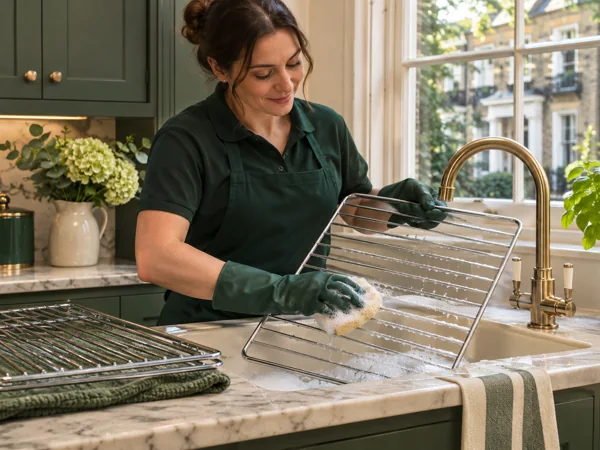
Make room by the door before the appointment begins
If the appliance sits next to a corner, open the cool oven as far as it normally goes and see what the door passes. You might find it approaches a cabinet handle or reaches across the path from the hall to the sink. Let us know if the floor or working aisle is narrow. A wide photograph is useful when a fixed feature changes the room available. Clear loose items from the area if you can and leave any furniture or heavy objects you cannot move comfortably in place.
Agree when the oven will be left cool and empty. If people normally cut through the kitchen, set another route or ask them to leave the room while the oven and parts are being handled. Check where loose components can be inspected, particularly if a small worktop serves as the main cooking station. Ask any resident who will be at home to tell us if the room is arranged differently from the photograph. We can discuss the work with the space you have.
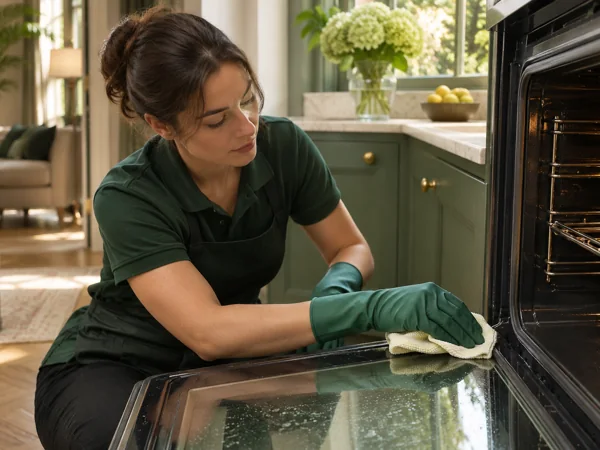
Identify cooking parts before the visit
| Item | Usual position | Extra concern |
|---|---|---|
| Spare shelf | Main oven or separate storage | How many to include |
| Upper grill tray | Above main cavity | Insert and handle |
| Sliding shelf | Inside main oven | Guide or rack condition |
Use the fascia to locate marks on the oven front
The front might contain hot air vents, printed settings and controls with different finishes. Tell us whether the area you want to discuss is an exposed part around those controls or a section of the glass door. A mark that appears to sit behind the window needs a different access discussion from one on the outside. Name the model and explain where the mark is visible. If both doors on a double oven have a similar window, identify the upper or lower door in the enquiry.
A cooker in a let property may already show wear near the programme markings or handle. Tell us which details were recorded when you moved in, if you know. A knob that is loose or a panel with faded numbers should be identified before cleaning is discussed. We can review accessible surfaces according to the appliance and the reported condition. Ask about the areas that matter to you, including how the existing marks on the front will be considered when the oven is inspected.
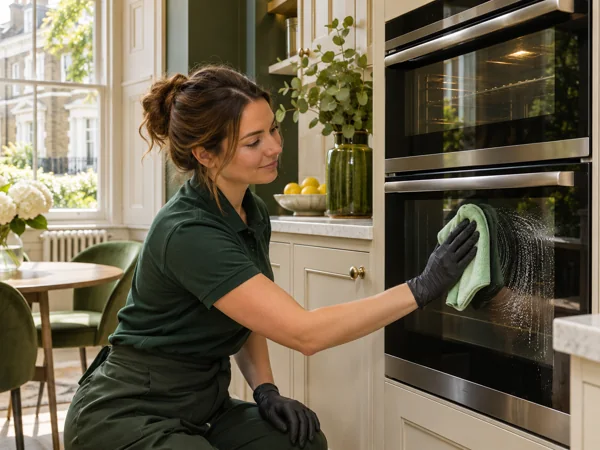
Quote the surfaces above the cooker as their own items
If you need attention to a gas top, tell us which pan supports or visible burner areas you want discussed. For a flat glass top, describe where marks sit relative to the heating zones and the nearest edge. If the same appliance contains the hob and oven, the top and cavity still need separate descriptions. Send a photograph that shows the whole surface and how it meets the worktop, especially where a thin trim or an unfinished edge lies beside it.
To add an extractor, tell us what hangs above the hob and which visible areas you want assessed. A flat pull-out unit, a canopy against the wall and an island hood offer different access to their filters and outer surfaces. Give the finish and any known filter information. You can leave the filter as it is and send a model name instead. We can discuss the extra item in relation to its height and position alongside the rest of the booking.
- Name the hob surface and any parts to consider.
- Describe the hood by position and finish.
- Identify the filter by model or material if you know it.
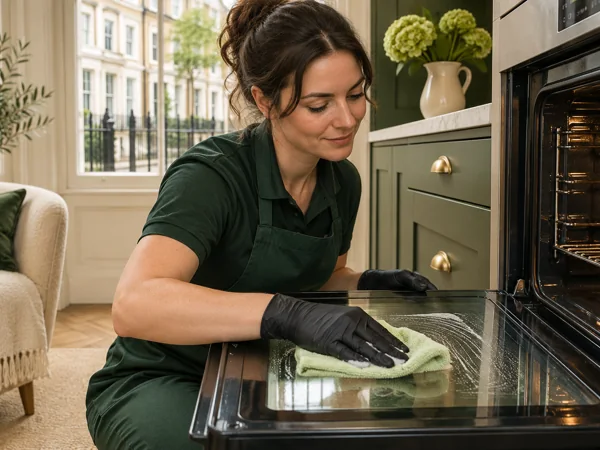
Give the next user or property contact an appliance handover
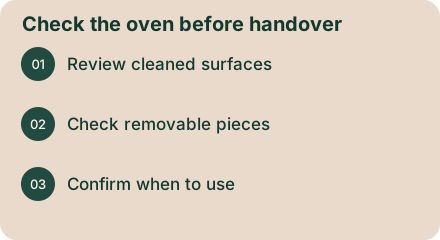
Return to the list of parts you agreed before the visit and look at them in the kitchen. If you described a drip near a shelf guide or separate upper oven, make sure the relevant position is easy to identify. Ask the technician which pieces were removed and when the oven can be used again. Pass the same information to the resident who will next cook or the property contact who will check the kitchen. Keep the oven handbook somewhere both you and the next person can find it.
If the appointment is part of a change of tenancy, agree who has enough time to review the appliance before the key return. Give them the cavity name and the count of removable items you discussed, especially if an accessory was found in a cupboard. If a hob or hood was also quoted, record it separately alongside its agreed parts. The handover then provides an accurate account of the items checked without leaving a different resident to reconstruct the booking.
Prepare the appliance handover
| Detail | What to review | Who receives it |
|---|---|---|
| Cavity | Identified oven and areas discussed | Resident or agent |
| Loose pieces | Which racks and inserts were considered | Owner or tenant |
| Return to use | Timing and care instructions | Next person cooking |
Get an oven cleaning quote in Ealing
Request a quote with the oven type, number of cavities and any extra appliances.
Get a QuoteOther Cleaning Services in Ealing
Local references · Ealing Council, Haven Green conservation area appraisal
Ealing oven cleaning questions
Do I put a W5 building name or street number first in the address?
Give the full street address and postcode, then add the name displayed at the entry if it helps someone recognise the property.
Can I ask for a quote if the controls have no legible model label?
Yes. Show the front and visible cavity and describe the size and arrangement of cooking compartments.
Should the original grill handle be on my parts list?
Mention it separately if you want it discussed and identify the tray it belongs to.
Can a landlord report an appliance mark from a check-in photo?
Yes. Note where the mark sits and share current information if available, so it can be checked when seen.
What if I only want the glass on the main oven assessed?
Give the model, specify the main oven and say which glass face appears to have the issue.
Can I describe an extractor mounted over an island without reaching it?
A view of the outside and underside from floor level can identify its position. Add the model or filter description if the manual is available.