 Housekeeper
Detail-led care for your oven
Oven Cleaning in Wandsworth
Tell us how your oven fits into your Wandsworth kitchen. A low oven installed under an induction hob presents one arrangement; a full-height cabinet with two separate appliances presents another. We can discuss the clean by cavity and finish, including the accessories you want considered and the way into your building.
What if my flat is reached from a service entrance near Old York Road?
Give the full SW18 postcode, entry street and the person who can open the door.
Which model should I give for matching ovens?
Identify both if readable and name the one you want quoted by its position.
Read the arrangement of appliances in a tall cabinet
A wall of cabinetry can hide differences between its cooking appliances. Two black fronts with the same handles may cover a fan oven and a steam appliance. If you want one cleaned, identify it by position or function and include a model name where you can read it. Show the whole stack so the requested cavity can be distinguished from its neighbour. Tell us which racks and trays belong to the appliance under discussion. An enquiry that specifies the lower oven and its shelves is easier to match with what the cleaner sees.
Add the parts you might want us to consider, starting with the main reason for the clean. A lower shelf may carry the most visible deposit while the surrounding cavity remains lightly marked. If another part of the stack is seldom used, give its condition separately if you intend to include it. The appliance handbook can identify an internal surface or mode you are unfamiliar with. Where the appliances share a matching trim or control style, label each photograph by its location in the kitchen.
- Name each appliance by height or function.
- Match loose accessories to the requested oven.
- Identify a compartment with a specialist cooking function.
Locate the transition between the oven and adjacent woodwork
Tell us what sits against the oven front and around its sides. An exposed strip of lacquered timber, powder-coated metal or painted cabinet board can sit very close to a glass door. If you want a surrounding surface included in the discussion, give its own description and explain the location of the mark. Mention a narrow gap, joint or step where two materials meet. A picture from the side is useful when the oven projects or the cupboard edge overlaps the plane of the fascia. Keep any fixed fitting in its position.
If kitchen work has recently been carried out, describe any unfinished edge or fresh finish you want taken into account. We can check which accessible surfaces belong to the oven and talk through the treatment of the surrounding area separately. Identify existing splits, chipped paint or deteriorated caulking so they are visible in the description. You can also point out a worktop elsewhere in the kitchen that can be discussed for staging removable pieces if the surfaces immediately around the oven have specialist care requirements.
Distinguish built-in appliances in a stack
| Position | What it may contain | What the quote needs |
|---|---|---|
| Upper | Steam oven or combination cavity | Individual model and liner detail |
| Middle | Main oven | Cavity, door and count of racks |
| Lower | Warming or storage drawer | Function and whether you want it discussed |
Use simple references for internal grease and residue
Give the position of the affected surface as you see it from the front of a cool oven. The first shelf slot on the left, or the back corner of the base below a rail, makes an easy location to recognise. Describe the deposit and the material it appears to sit on. A run from a pan can cross a seam or leave marks on two different surfaces. If the deposit reaches the lower edge of a fitted liner, mention the liner type or send the model so the finish can be identified.
Some cooking marks are easy to see only under the oven light. A photo showing the wider cavity can give more information than a magnified picture with no reference point. Tell us which surface you first noticed and identify any part that has already been treated. If the oven is usually set to a self-clean mode, explain if that ran recently. The assessment can then account for previous treatment and changes in appearance alongside the accessible grease or baked-on residue you want us to review.
- Describe the mark using the nearest shelf guide or cavity edge.
- Mention any previous cycle or cleaner.
- Identify a seam or liner where the deposit reaches two materials.
Check which parts belong on the removable list
An original tray may normally sit on runners and an additional shelf may rest above it. List the two pieces separately and tell us if each can normally be lifted out. The same approach works for a rack that you have stored in a cupboard because you do not use it, or a grill pan that carries a loose insert. Avoid moving unfamiliar fittings to prove that they come out. A photo and the model give enough to ask how those items can be assessed before a quote is finalised.
Suitable removable components can be treated in a dip tank after the condition and construction are checked. Mark coated or damaged pieces on the list so the technician knows to look at them first. A loose support and a bent tray may still be recognisable parts of the model, so note where they go. Keep the main cavity clear of food and anything you own that is not part of the clean. Let the person showing the kitchen know where the listed loose accessories will be found.
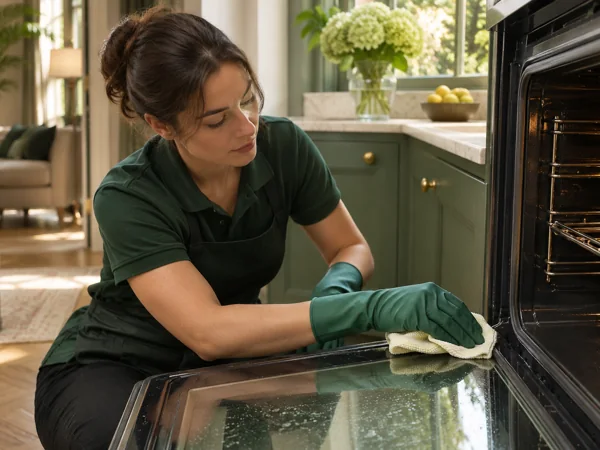
Point out kitchen finishes before work
| Surface | Example | Detail to give |
|---|---|---|
| Cupboard edge | Lacquered wood | Distance from the door |
| Oven fascia | Printed markings | Wear and location |
| Door trim | Brushed or coated metal | Existing scuffs |
Arrange arrival from Old York Road or nearby streets
Wandsworth Council locates Old York Road in the heart of Wandsworth and documents public-realm improvements there. If that street is the closest reference point for your property, add the precise approach for the visit. A building entrance, a service door and a flat door can all have different names. Send the street address and postcode for the property, then give the door or gate the cleaner should approach. If the home is elsewhere in SW18, use the same method with your own street and a nearby reference only if you need one.
Mention how to reach the kitchen once inside. A lift may open onto a long corridor or at a different level from the flat itself. If there is a building manager, tell us who can confirm the route on the day and whether they expect advance notice. If you live in a house and prefer to give access through the side gate, describe the gate from the street and any steps leading to the kitchen entrance. Keep entry instructions that grant access in a private message.
- Give both the street address and the door to use.
- Name the person who can arrange building access.
- Tell us about lifts, steps or corridors on the route.
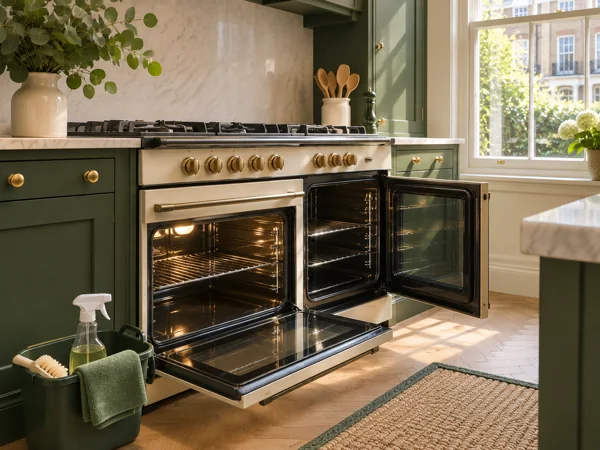
Plan the final check of glazing and controls
If the front matters as much as the cavity, tell us which controls and parts of the window you are asking about. A broad appliance can have separate control clusters for two ovens, even when the settings are shown on one central display. Give the finish around the marks you want considered. If an etched setting looks intact while a painted label is wearing away, name each position. That makes it easy to locate the original concern when assessing the front, or when you look at it again after the clean.
Report marks that seem to sit between panes, especially if the front panel has been replaced in the past. Show the affected door and include the model because access to the layers depends on the door construction. If the visible mark is beside the seal, note how far it extends and whether the seal is already displaced. Ask about which glass faces or other accessible surfaces are in the quote. The condition of the glass and fittings can be discussed when they are seen.
Treat an induction top or overhead hood as an additional appliance
When the oven shares its location with an induction hob, list the glass top separately and give the position of any greasy film or residue you notice. Mention which controls sit on the top and where the edge meets the counter. If a gas hob is located on the island instead, use its own model or describe the arrangement of burners and supports. A photo with the edges of the hob visible shows how it sits in relation to the oven and surrounding working area.
For a hood, describe the canopy finish and its position over the cooking surface. A hood at the wall may sit close to cupboard doors on either side, whereas an island unit can have accessible surfaces on more than one face. Tell us which external area or filter you are asking about. Give the filter material if you have that detail in the manual. We can discuss each item individually and list the agreed extras so they can be compared with the parts requested for the main appliance.
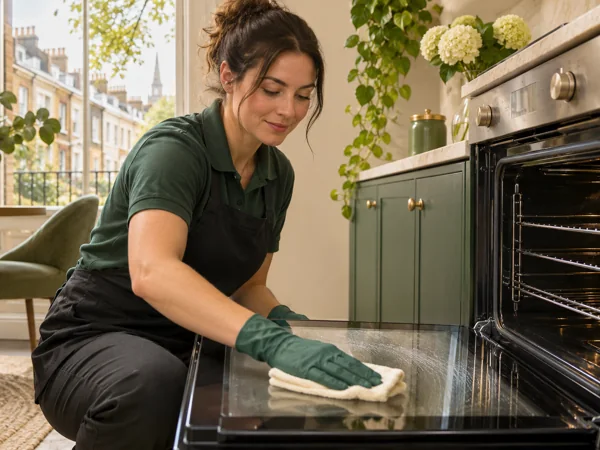
Explain arrival at a Wandsworth flat
| Stage | Useful information | Who confirms it |
|---|---|---|
| Building approach | Street entrance rather than building outlook | Person sending the enquiry |
| Common areas | Lift position and expected route | Resident or manager |
| Flat door | Number and agreed contact | Person at the property |
Share a review with the owner or person at home
Give anyone who is meeting the cleaner a short copy of what you agreed to include. Use positions like middle fan oven and upper grill where the appliances look alike. They can check that the requested parts and trays are available and point out the marks mentioned when asking for a quote. At the end, they can review the condition of those accessible surfaces and ask about any separate component they expected to see. Record a clear name or model for anything that is to be discussed later.
If a tenant is moving in or leaving, agree who can complete this review before the keys are passed on. Confirm when the appliance can be used again and let the person making the next meal know. Find a place to keep the manual and a note of the original pieces so a future request can use the same names. An owner planning to have a second oven cleaned later can keep that separate from the completed list, with its own model and accessory details.
- Share the agreed parts with the person opening the door.
- Ask about any marks noted before the work.
- Confirm when the cleaned oven can be used again.
Get an oven cleaning quote in Wandsworth
Tell us the oven type, number of cavities and whether the hob or extractor also needs cleaning.
Get a QuoteOther Cleaning Services in Wandsworth
Local references · Wandsworth Council, Old York Road public realm improvements
Wandsworth oven cleaning questions
Can I ask about the oven nearest the floor in a tall cabinet?
Yes. Give its position and individual model, with a wide view of the cabinet if the other doors look similar.
Can someone view the installation without shifting the cupboard trim?
Send a photograph showing the oven in place and describe any limited clearance. Keep fitted cabinet pieces in position.
How do I show residue where two liners meet?
Send the model and use a wider photograph to locate the seam. Mention what you know about the lining materials and any prior treatment.
What should I tell the building manager about the visit?
Ask which entrance can be used and whether they want prior notice. Pass on the agreed route and the name of the person who can meet the cleaner.
Can I ask about one filter and leave the rest of the hood for later?
Give the filter type, its position and the hood model if known. The desired part can then be considered as an individual extra.
How can a tenant check a model they have never used?
Look at the appliance front or any manual left at the property. Share a photograph and describe the position if you cannot read a label.