 Housekeeper
Care for built-up cooking residue
Oven Cleaning in Lewisham
If a cooker feels sticky every time you open the door, look at where the grease has accumulated once the appliance is cool. Tell us what you see on the cavity, glass and removable parts. For a Lewisham oven cleaning quote, include the model if you can find it and the route to your kitchen.
Can I enquire from a flat in SE13?
Give the full postcode and building entrance so we can check the address.
Can you assess older grease in a grill?
Yes. Show where it sits and specify which compartment and tray you want included.
Look at the grease pattern before describing the clean
Start at the door and look in from the opening while the oven is fully cool. A spot on the enamel floor, a film under the grill and grease around the edges of a wire rack may all have different causes. Say where the problem is concentrated and point out any unusual change in the finish. A photograph can be useful when a stain crosses two surfaces or is hard to see in normal light. Take it from outside and leave the components as you found them.
If a roast or grill pan spilled, explain how it happened and whether you used the oven afterwards. An old patch may look as if it has grown when new drops have collected beside it. Share what you remember without trying to test the surface yourself. The technician can inspect the areas you have marked and explain where residue can be treated, where access needs to be checked and what visible changes may remain because the underlying finish is worn or discoloured.
- Identify the source of a spill if known.
- Describe how far the residue spread.
- Point out any change in the surface underneath.
Report the cleaning you have tried already
The name of a product and the part where it was used help more than guessing why a film is still visible. Keep the label or a picture if available. If a household spray was used on the glass and nowhere else, say exactly that in your enquiry. Tell us when it was applied and if you noticed a pale streak or another change afterwards. Pass on any special directions for the maker’s liner or removable tray, particularly if the care instruction differs from the rest of the oven.
For an appliance with an automatic cycle, supply the cleaner setting in the handbook and roughly when it was last run. If you have used the cooker several times since then, say what changed during those uses. Report spots individually if they have different histories. An image of each concern helps match the explanation to the correct cavity. Wait for the technician’s assessment before using another product in a marked area. The work can then be planned around known treatments and the condition on arrival.
Identify the section close to each heat source
A combination grill and oven can behave differently from a dedicated grill above the main cooker. Send a full photo of the doors and knobs so the layout is visible, alongside the model from an accessible label or handbook. Use the appliance labels where possible when naming each cavity. If you mainly use the smaller compartment to finish dishes, specify whether there is a pan beneath the grill and how close it sits to the area of build-up. Discuss the work for each compartment separately.
Areas above a grill tray or under a lower shelf can be awkward to see from standing height. Point them out during the initial inspection instead of withdrawing a fitted panel to take a photo. If the oven has a specialist finish or changes material around a panel, show us any care information you have. The technician can talk through the accessible cavity surfaces and the choices for suitable removable pieces. That discussion is especially important when a deposit crosses from enamel onto a lining or fitted edge.
- Show controls and doors in the same image.
- Name the grill or oven with the heaviest use.
- Keep model instructions available for the visit.
Identify the source and location of marks
| Observation | Useful detail | What to discuss |
|---|---|---|
| Baked-on patch under a shelf | Approximate age and what spilled | Treatment for the accessible finish |
| Film high in the grill | Which compartment and tray position | Reachable surfaces and fitted components |
| Streak visible behind glass | Reflecting light and angle | Possible pane access by model |
Give each rack and tray its proper place
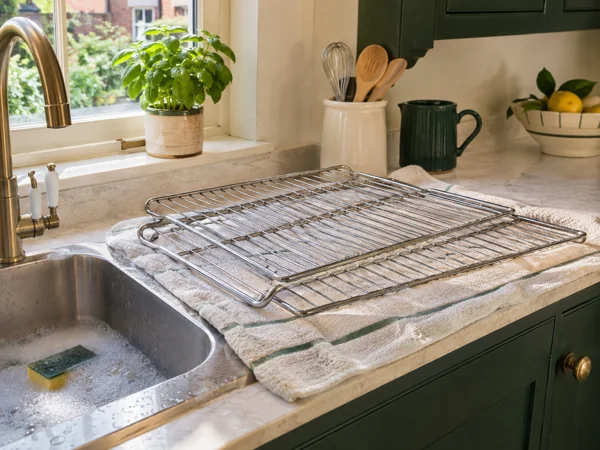
Count shelves by cavity. A removable rack that sits in a wide main oven may differ from a shallow tray designed to go under the grill. If a rack has an extending mechanism, mention that when you ask about it. The technician can check how pieces are fitted and safely remove appropriate parts. Suitable components can be soaked in a dip tank. A finish specified by the maker or a part that appears to have shifted needs to be considered before handling.
Clear cold loose pans, foil and food from the oven and set personal items well away from the working space. Identify any component you want considered that has already been taken out of the oven. A loose piece with no obvious place may belong to a different appliance, so give its markings and tell us what you know. If you normally store a spare shelf in the bottom of the cooker, specify where it goes so the technician can distinguish storage from normal fitting when the work is checked.
Set expectations for what is visible through the glass
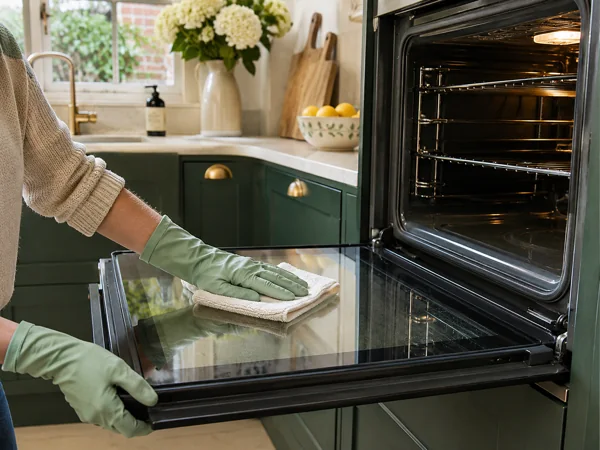
Look at a streak from the cavity side as well as from the front, once the cooker is cool enough to open. If the mark appears behind a reflection, it may be between the door panes. Include that possibility when you enquire. The construction and condition of the door determine what the technician can reach, so give the model and mention trim that shifts or glass damage already visible. A door with a different replacement part might also need closer inspection before any optional glass work goes ahead.
The affected area can show more clearly with light coming from the side. A picture from that angle gives the technician a reference during the initial check. Tell us if you can only see the faint mark with the oven door closed. Leave fitted parts in place and point to the section once the technician is there. If an apparent streak remains after an accessible surface is cleaned, ask what the inspection could establish about its position. Record the affected cavity if the cooker has two similar glass doors.
- Photograph the mark from a safe position.
- Tell us which side of the glass appears affected.
- Point out damaged edges or shifting trim.
List the parts for a separate decision
| Part | Information for the quote | Why it matters |
|---|---|---|
| Telescopic rails | Model or signs they catch | Type and handling of the mechanism |
| Grill pan | Tray and insert construction | Suitability for removal and soaking |
| Extractor filter | Height and material | Access and approach for the filter |
Give a door-by-door approach for a Lewisham address
National Rail places Lewisham station on Loampit Vale in SE13. That reference may help orient a visitor, but it cannot identify your kitchen entrance. If a block has a door on another street or the intercom is set back from the pavement, describe the sign a person should look for at street level. Include the full postcode, flat number and the entrance the property uses for visitors with equipment. Check if there is a different access arrangement during a timed reception shift.
Inside the building, state which lift is authorised and which level helps the technician reach your flat. Mention steps after the lift and a passage that has a second controlled door. If a relative will meet the technician, give their number and make sure they know the agreed method of entry. Otherwise a visitor can reach the right reception desk and still be unable to carry equipment inside. Mention confirmed unloading arrangements and any limits on when the vehicle can stop, alongside the best time for your booking.
Decide if the grease extends to a second appliance
If you can see droplets across the hob or marks on the extractor above it, list those concerns separately from the oven. Say whether the hob is a flat glass surface or a gas fitting with pan supports, and identify the specific parts that need work. Add any relevant maker’s care instructions to the enquiry. The corner of a separate splashback may sit very close to the cooking surface, so tell us if you want to ask about that surface too and what material it is.
An extractor can have residue on the exposed cover while the filter sits inside a separate frame. Give the approximate height and say whether the filter is metal or disposable if you know. We can discuss reachable surfaces and which optional items can be included in the quote. If you only see the filter when the canopy is opened in a particular way, send the manual or model instead of trying to remove it. Where an owner specifies a limit on what may be handled, include it in advance.
- Name separate surfaces if grease has spread.
- Describe the filter and working height.
- Ask for each agreed appliance on the quote.
Plan the inspection and how the kitchen comes back into use
Use the postcode form to begin. Have the appliance reference and your list of priority areas ready for the quote conversation. On the day, let the oven cool before arrival and clear the counter nearest to it. Leave room to open the door and keep children and pets away from the working area. Tell us if you need to pass between a second door and the fridge while the work is being done, so you can agree a practical alternative.
At the end of the clean, ask which parts were treated and when the oven can be used again. If you have several trays, check where they normally fit and let the next person cooking know any relevant instructions. Keep a short note about the original marks if a permanent change remains visible. This gives you a reference if you notice new build-up in the same spot later. For a rented home, make sure the person handling the inventory hears about the exact compartment and accessories covered.
Give a route to the kitchen
| Stage | What to confirm | Who can confirm it |
|---|---|---|
| Street | Residential door and approved unloading | Person who manages the property |
| Lobby | Arrival procedure and reception timing | Building contact |
| Flat | Lift, level and any later steps | Person who will admit the technician |
Get an oven cleaning quote in Lewisham
Request a quote with the oven type, number of cavities and any extra appliances.
Get a QuoteOther Cleaning Services in Lewisham
Local references · National Rail, Lewisham station
Lewisham oven cleaning questions
Why does the dark mark look different after I cook?
Tell us how it changes and where it sits. The technician can assess whether residue or a change in the finish is visible.
Will the technician need the packaging from a product I used?
The name and any details of the label help, alongside when and where you applied it.
Does a spare rack automatically go on the quote?
Ask for it separately and explain which oven it fits.
Can I leave a photograph rather than withdraw a grill tray?
Yes. A photograph and description from the opening are useful. Let the technician inspect the fitted tray.
What if the entrance sign shows a different building name?
Include the postal address and give the exact sign that appears at the door visitors use.
Can you discuss just the exposed extractor cover?
Yes. Describe its material and height, and say if you want the filter left out of the quote.