 Housekeeper
Plan around the family kitchen
Oven Cleaning in Islington
If the oven sees a breakfast tray, a batch of bread and a family supper in a single day, booking starts with choosing a useful gap between meals. Tell us which parts of your Islington cooker need attention and what needs to remain available while the oven is cool and the kitchen is being worked in.
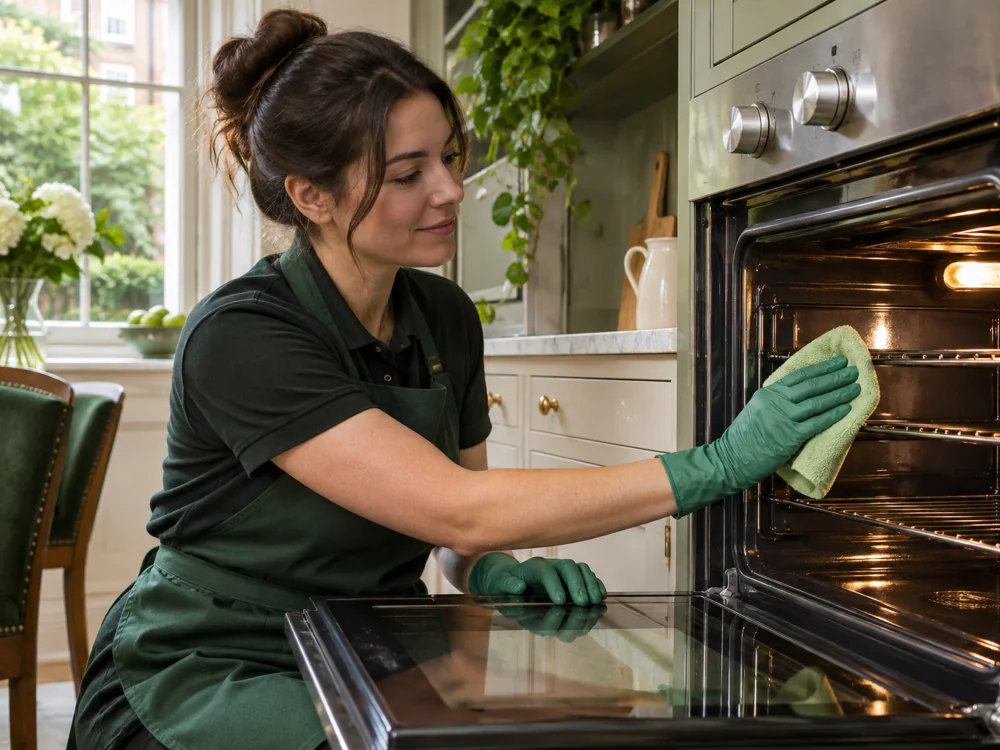
Can I ask about my N1 address?
Yes. Send the whole postcode and the entrance you expect us to use.
Can I keep the second oven for weekday cooking?
List the one you want cleaned, and discuss when you need access to the other cavity.
Choose a break in the cooking routine
Start by picking the meal that will be easiest to serve while the oven and working area are out of use. If you usually bake on a Saturday morning and feed several people in the evening, discuss whether a weekday slot would give the kitchen a longer gap. A family member heating breakfast in the small oven can leave it warm even though the large compartment has been off all night. Use the last cooking time for each cavity when working out when the appliance can be fully cool.
Write down any times you must be away from home. If someone will leave to collect children, agree who will open the door and who can answer questions about the appliance. Leave an alternative place for drinks or a quick meal if the oven opens directly into the room where you normally eat. Ask about the return to use during the visit before relying on the cooker for a specific meal.
- Note the last meal in each cavity.
- Plan another place to prepare lunch.
- Give us the times when an adult can meet the technician.
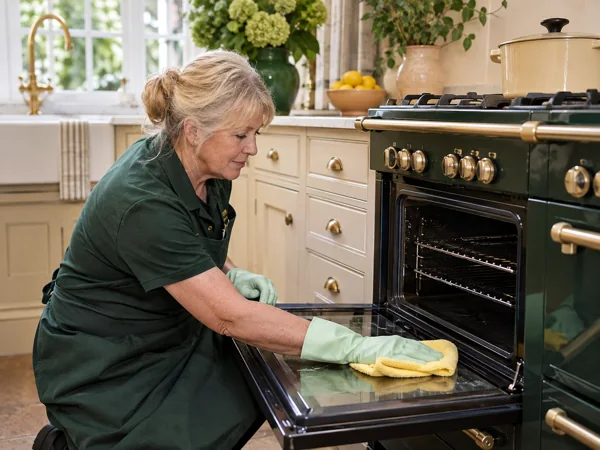
Find a family cooking gap
| Routine | What to confirm | Action before arrival |
|---|---|---|
| Grill used at breakfast | Time when the small compartment can cool | End cooking early enough |
| Lunch in the kitchen | Which counter is needed for parts | Move sandwich supplies to another surface |
| Evening baking | When the oven can be used again | Allow time to ask the technician |
Separate the ovens people call by different names
One person may refer to the top oven while another calls the same compartment the grill. Identify it using a picture and the position of the controls. If the control dial offers steaming, fan cooking or a microwave mode, add the appliance reference from the manual so we can identify the correct unit. Tell us which doors need attention and which cavity gets most of the daily spills. Check for a model label only where you can see it without moving the appliance.
Give each compartment a short note about what cooks there. A shallow unit used to toast bread may have residue on the grill pan, while the main family oven may have drips along the base or behind a wire shelf. When large trays are stored in a cupboard below, say so if the doors are difficult to tell apart from a photo. Ask for the agreed cavities to appear separately on the quote so everyone in the household can recognise what it covers. If you moved into the property recently and the local occupancy guide gives the appliance details, check the pictured control panel against the guide so the reference matches what is installed.
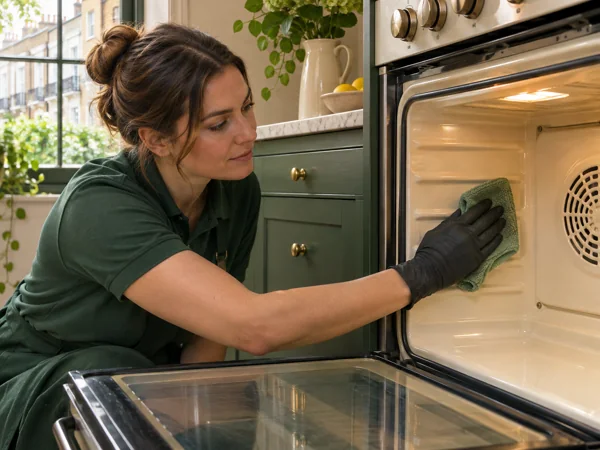
Leave the most useful evidence of a spill
A dish can boil over on a full shelf and drip down one wall or leave a hard patch directly beneath it. The visible outline is a helpful detail when the oven is cool. Say whether the spill was a liquid sauce, a mixture with sugar or grease from a roasting dish if you remember. Point out whether the oven has been used repeatedly since. If you have washed an area already, add the name of any product and where it was applied.
The technician can assess whether a dark patch is a cooking deposit, discolouration or a change in the finish. Give particular attention to the area that prompted you to book. If there are several marks, rank them and say if one is only visible in bright light or when viewed from the side. Mention any built-in cleaning programme that ran recently and share the relevant parts of the manual. That lets us discuss the appropriate approach for the actual finish.
- Describe what spilled and where it travelled.
- Use a photograph from the opening of the cool oven.
- Mention any attempt to clean the affected area.
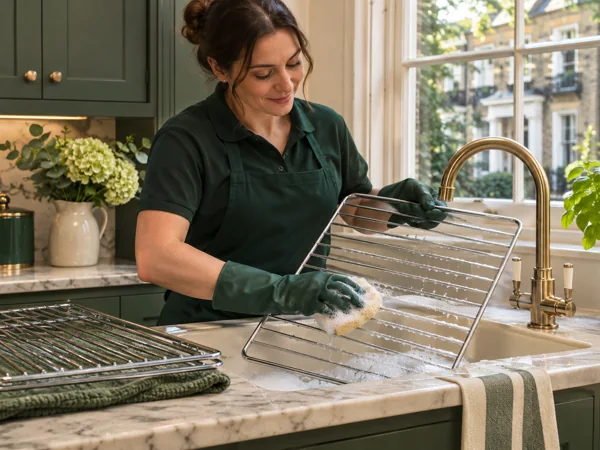
Look at racks, trays and the tray beneath them
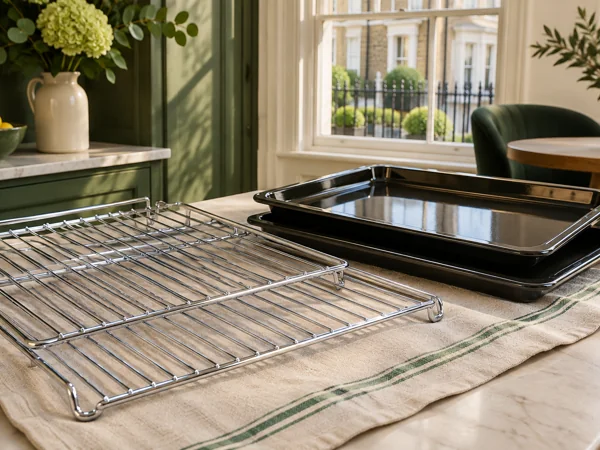
Count the wire racks that came with the oven and include any grill pan you want discussed. People often use a newer dish in the same compartment, so describe that separately and say whether it has a special coating. The technician can check which fitted components can be safely removed. Suitable parts can go into a dip tank, subject to construction and condition. A sliding shelf assembly may need different handling from an ordinary wire rack.
If a tray clips into a runner or is heavy to handle when the oven is empty, tell us before attempting to take it out yourself. Keep food and loose utensils out of the oven and arrange somewhere stable for removable parts. Confirm what you expect to be included, especially where a rack alternates between a larger and a smaller oven. Let the technician point out what was cleaned when the work ends so you can put each accessory back into the family’s usual routine.
Pinpoint the priority area
| What you notice | Describe it this way | What can be assessed |
|---|---|---|
| Sauce mark | Which way the spill ran | Accessible deposit and oven finish |
| Discoloured shelf | Position and part type | Handling by design and condition |
| Scattered marks on glass | Angle and side of door | Likely location and possible access |
Leave enough space for the door to open
A compact kitchen table can make the oven reachable when the door is shut but block the room when it opens flat. Move lightweight pieces of furniture away from the work area before arrival. Take plates and bowls off the nearest counter, and make sure a passage to the kitchen is available. If a child normally comes through the kitchen from a play space, decide on another route, or arrange for an adult to stay with them away from the area.
For a family pet, prepare a room it can stay in while the equipment is carried in and back out. Tell us if the oven is at the end of a narrow staircase or directly beside a door that cannot be held open. A home with a kitchen on a lower floor might need a different route for equipment from the one you use daily. Talk through any unusual layout before the appointment so the technician can identify where to work. If a passage has a basket or coat rack beside it, leave a little more clearance there as well.
- Allow for the full width of the open door.
- Move breakfast and school items off the working counter.
- Set aside a route away from the kitchen for pets and children.
Describe the entrance from the street
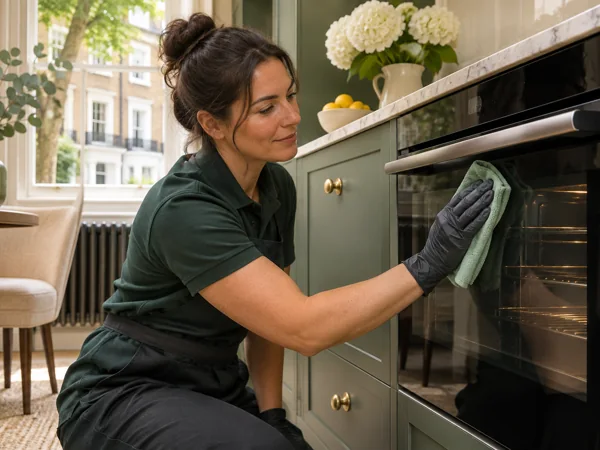
Islington Council’s library information identifies South Library on Essex Road in N1. A named road can orient an arrival note in that part of the borough, but use the full postal address to identify your own home. Explain where the bell sits when there are separate street and basement doors. A visitor can miss a set of steps if they only see the number above the main entrance. Describe the route from the pavement to the door you have agreed to open.
Let us know if the home is reached through a shared hall, past a second door or up an additional flight of stairs. For a building with a controlled entrance, check which contact can open it during the time you expect to book. Give any confirmed loading information and mention the smallest clear point along the route. If the person arranging the visit is out, make sure the person opening up can tell the technician how to find the kitchen.
Keep the household’s booking clear
| Detail | Supply before the visit | Person who needs it |
|---|---|---|
| Street and lower bell | Full postcode and approved door | Person meeting the technician |
| Oven model | Front photo and manual if available | Person discussing the work |
| First meal after cleaning | Expected time and cavity used | Person cooking next |
Agree the work on glass and nearby cooking surfaces
A pane that looks greasy after grill use may have marks on the side you can reach, or the concern may lie between panes. Show where you see it and ask what inspection can establish. The door design and condition affect access, so point out any loose trim or damage before it is handled. If you know that a panel was previously moved, give the technician whatever details you have about the door and how it currently closes.
Add a separate line for the hob or extractor if either needs attention. Describe the cooking surface, approximate extractor height and filter material. If you need the hob kept free for a particular meal, confirm when you need it rather than assuming it will be available during oven work. A gas pan support and a glass induction hob need different checks, and the extractor cover and filter can be considered separately. Ask for a written list of the optional work you agree.
- Describe the position of marks on the glass.
- List each nearby appliance separately.
- Discuss any time when the hob must be available.
Hand the kitchen back to the next person cooking
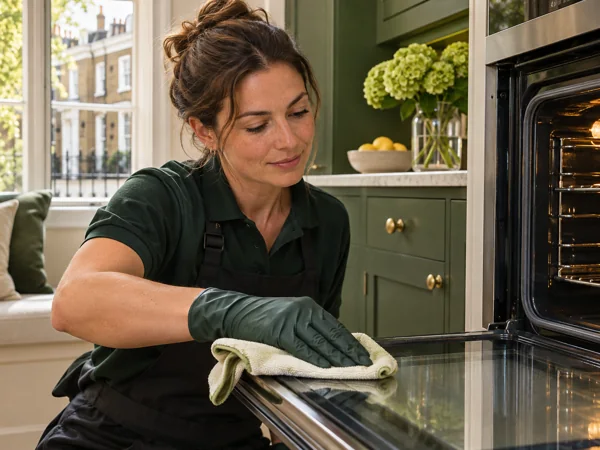
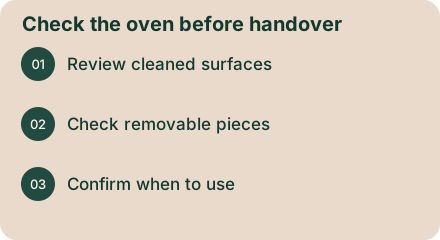
Start a quote request with your postcode. Put the appliance photo and notes on racks, spills and access together so they can be used in one conversation. Confirm who can make decisions if the technician finds a finish or a part that needs clarification. The person running home between errands may be able to admit the technician but may have little idea which oven the booking was meant to cover. Send them the agreed details early enough to go through them.
Before cooking, follow the technician’s advice about when and how the oven may be used again. Check which components were assessed or handled and tell the person preparing the next meal. If there are surfaces or accessories to discuss separately, keep that note with the appliance manual for future reference. In a shared family kitchen, put the original shelves where everyone expects them. A short handover can avoid an interrupted dinner when a cook looks for a grill insert and finds it in another compartment.
Get an oven cleaning quote in Islington
Request a quote with the oven type, number of cavities and any extra appliances.
Get a QuoteOther Cleaning Services in Islington
Local references · Islington Council, Mildmay Library refurbishment
Islington oven cleaning questions
How do I describe the grill if we cannot tell which model it is?
Use a photo of the controls and doors, and identify which compartment you use to grill.
Can the smaller oven be cleaned on a different visit?
Yes. Tell us which cavity should be assessed now and request the other separately.
Should we remove a tray caught against the shelf?
Leave it in place and tell the technician exactly where it catches.
Can we include a separate casserole dish?
Mention it before booking and describe the finish. We can discuss if it can be included.
How should we plan for a school run during the visit?
Arrange for an adult to manage the door and keep the contact for any decisions about the oven.
Could the extractor be discussed even if we do not know its filter type?
Yes. Give the model if available and describe where it is mounted and what is accessible.