 Housekeeper
Care for built-up cooking residue
Oven Cleaning in Highgate
Arrange deep oven cleaning in Highgate when grease or spills have built up with regular roasting and grilling. Show the parts you want assessed and identify any bakeware or shelf sets that belong with the oven. The property entrance, appliance model and cooking schedule help with an individual quote.
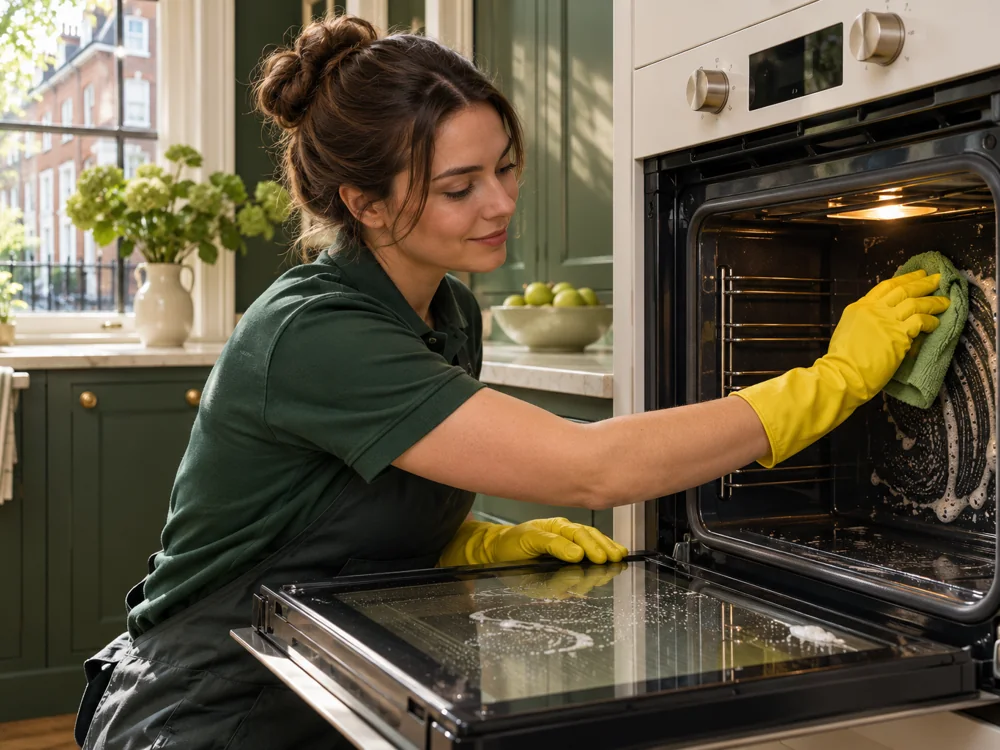
Can I request a clean at a Highgate house with a side entrance?
Yes. Give your full postcode, the agreed door or gate and any steps between the street and the cooker.
Can I request just the cavity with the heaviest grease?
Yes. Tell us where the cavity is, what you normally cook there and which trays or shelves belong to it.
Find the last used oven shelf before describing the deposits
If your oven has several usable shelf positions, remember where the biggest dishes usually go. A roast in the middle of the oven can splatter nearby walls, while a casserole at the bottom may leave a patch under the lowest shelf. A grill pan often collects fat in a different area from the cavity surface. When the cooker has cooled, take a look with the door open. Describe one or two areas of concern to help us distinguish a general request from one focused on a particular tray or panel.
Send an overall picture of the cooker with a second picture of the affected part. If the cooker has separate doors, name the cavity by its position as well as its usual job. Include how long the mark has been there and explain if the oven was used again after a spill. A mark that formed after a single meal is useful context even if the surrounding oven has a normal build-up. Where someone else will be present, leave the photos with them so they can point out the same features.
- Mention the shelf positions you normally use.
- Highlight recent spills separately from gradual build-up.
- Specify whether the main oven or separate grill needs attention.
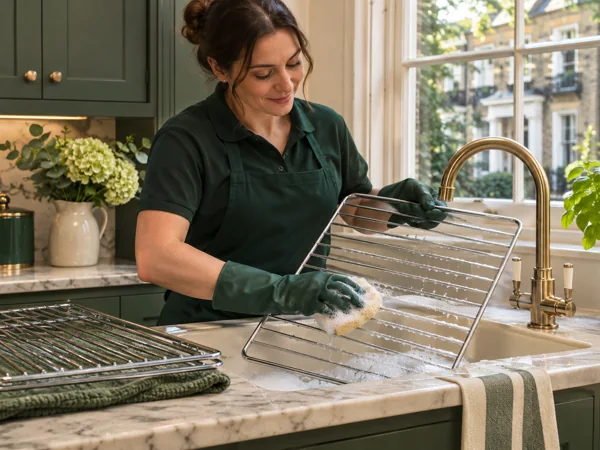
Explain Highgate access by the doors you actually use
Haringey’s Highgate Village character appraisal describes the historic village core and identifies Southwood Lane and Jacksons Lane in the original conservation area. Near the village, a street name can help with orientation but the street-level door and the kitchen’s position determine how the visit can be set up. Tell us the full postal address and explain the preferred approach if the kitchen is reached by steps or a side gate. For a divided house, give the name of the doorbell rather than just the number on the outside of the building.
If the route includes sloping paths or a stepped run down to a side extension, mention those before agreeing an appointment. Tell us the distance from the agreed loading point in practical terms and include restrictions on using a shared approach. If someone holds an internal key or can open a second gate, give an arrival contact and explain how the technician can let them know they are there. In a house whose entry and kitchen are on different levels, describe each flight and where the working area is.
- Send the actual entrance and the full postcode.
- Describe steps or a sloping approach to the kitchen level.
- Confirm who can unlock any shared door or gate.
Show the features that identify each oven compartment
For a single wall oven, one model reference and a clear view of the controls usually identify the installation. With a double oven, explain the position of the compartments and which one houses the grill. Some ranges have separate hotplates, oven spaces and a warming drawer whose front looks like a small oven. Mark the compartments you want considered on the request. A picture of all the doors can show which components share one set of controls and which belong to another appliance.
Look for the maker’s details in paperwork or on a plate within view near the opening, while the oven is cool. Do not move a fitted cooker to get to the back of it. If its main cavity has an enamel floor and specialist liners, tell us what the manual says about each finish. Share replacements since installation, especially if a shelf or pan has a different coating from its original matching piece. Include a known control fault or an unusual hinge movement when planning the visit.
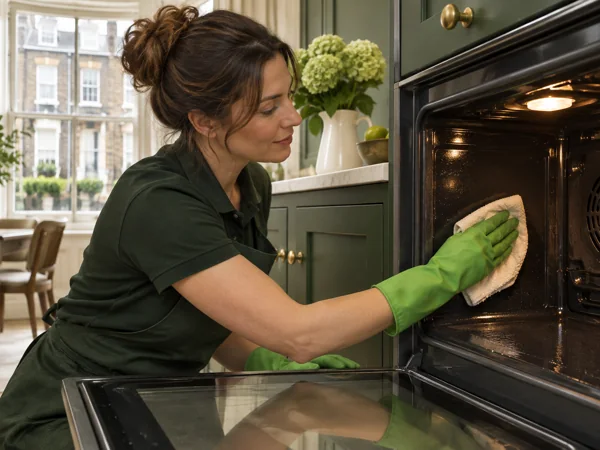
Describe where cooking deposits have accumulated
| Location | Clue to include | What it helps identify |
|---|---|---|
| Under the middle shelf | Roasting dish overflow | Area of affected enamel |
| Behind grill tray | Grease along one side | Grill components to check |
| Lower door glass | Film visible at an angle | Likely surface to examine |
Separate free racks and trays from fitted components
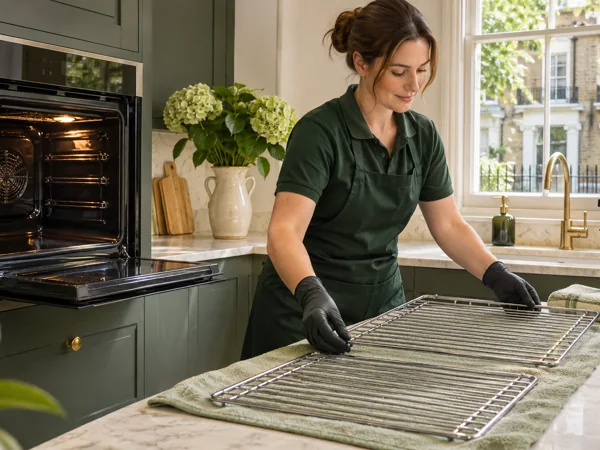
Before the appointment, remove your ordinary cookware and food. If you want a roasting tray or grill insert assessed, list it as an item and show the technician its finish. A remodelled kitchen can hold racks that were left over from the previous cooker, so keep loose spares with the right model. Some suitable removable components can be soaked in a dip tank during oven cleaning. Coating, construction and present condition inform that decision rather than age or appearance alone.
Leave any suspect rail or removable side panel for the technician to assess before trying to force it out. A rail that sticks at one point can behave differently from a wire shelf that lifts out freely. Point out the release or adjustment you normally use if you know it. Put loose accessories you have asked about where they can be inspected, leaving room to check each one without shifting hot pans or moving a kitchen appliance. Note any grill tray handles or extra supports stored with another utensil.
- Group removable accessories by oven.
- Flag coating damage and sticking runners.
- Keep fitted parts in their usual positions until they can be assessed.
Show which glass surface is affected by the cooking
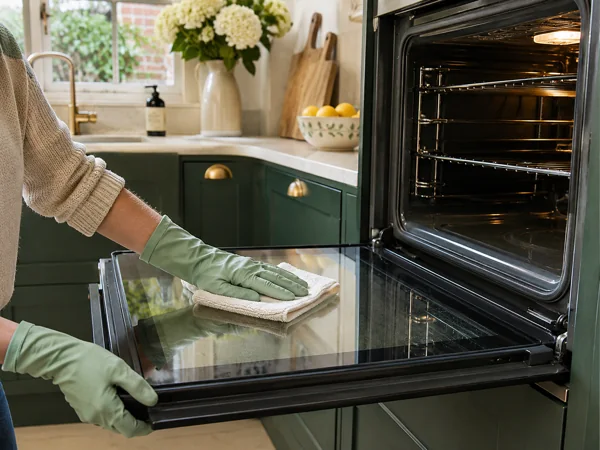
A greasy film may be clear enough from the outside until the oven light catches it. When the cooker is cool, see how it looks with the door open and then with it closed. If the streak appears to run down behind a corner, note which edge of the glass is involved. The technician can check the door and discuss access to the affected surface. Explain if the door had replacement glass or if the surround comes loose, so any limitations can be considered before work.
Some residue darkens with repeated heating, while a coating or glass surface may retain a change in colour even after the associated residue has been addressed. Tell us about recent treatments and cleaners and whether the patch reappeared after a self-cleaning cycle. If the oven is not heating consistently or the door fails to shut, mention the condition before arranging the clean. For advice on getting the appliance working normally, contact a qualified appliance specialist. At arrival, identify any marks on the handle or printed controls alongside the issue inside.
Separate removable pieces from fixed fittings
| Piece | Condition detail | Point to agree |
|---|---|---|
| Loose wire shelf | Finish and any bent corners | Treatment and cavity it belongs to |
| Grill tray | Coating and removable handle | Suitability for separate cleaning |
| Sliding rail | Where it sticks during use | How the technician can assess it |
Check the rest of the cooking area for what you need quoted
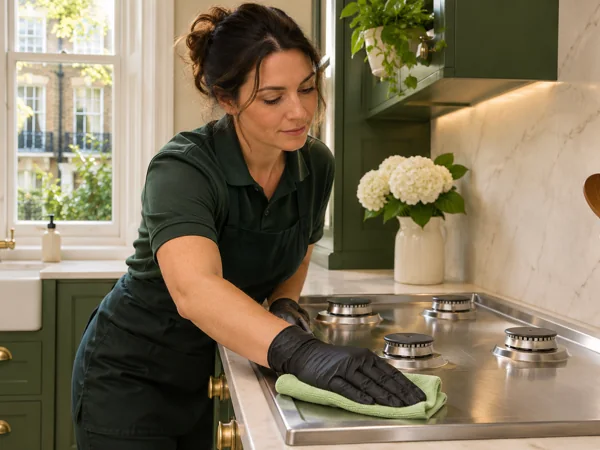
A gas hob with individual burner caps is a separate item from the oven. If you want the pan supports assessed, say how many there are and whether they are plain or have a finish. A ceramic or induction surface can show individual rings or one patch left by a pan. Mention the hob type and the position of anything you would like reviewed. For a range with a griddle plate, include its purpose and known material rather than describing it as part of a single cooking surface.
On an extractor, report the finish of the outer cover and the type of filter if known. A wall-mounted chimney and a small unit hidden underneath a cabinet can require different access, so show the whole housing in the photo and estimate its height from the worktop. Ask separately about the external housing and removable filters. Identify kitchen fittings which limit approach and mention any existing damage. Use the enquiry to confirm what is included in the quote rather than assuming grease near the cooker is all covered by one line.
- Quote the hob and extractor as separate items.
- Distinguish the external extractor from its filter.
- Name individual griddle plates or pan supports where relevant.
Choose a visit window around the kitchen schedule
Leave the oven empty of food and loose cookware, cool and out of use before the appointment. Move the bin, trolley or chair if the door opens into a narrow aisle. Tell us whether the working route shares a doorway with another room and how people can move around safely in the meantime. Make a clear place to put parts and keep children and pets away from the working area. If a kitchen tap or socket cannot be used, discuss that before arranging the work.
On the day, show the priority cavity, identify relevant trays and explain whose advice is needed if an extra item is discovered. If you need the kitchen for dinner or another arranged use, give the time when discussing the quote and allow a handover. Ask which components were treated and when the oven can be used. If someone else is due to cook, tell them which accessories were returned and how soon they can start. This matters in a shared kitchen where people use one part of a range independently.
- Tell everyone when the cooker should be cool.
- Keep the oven door swing and adjacent area clear.
- Identify somebody who can hear the handover.
Create an itemised enquiry before making plans around it
Give the full postcode, door instructions and priority deposits, then name each appliance and loose part you want assessed. Include a copy of the relevant appliance instructions if a specialist liner or coating is involved. A photo of the cooker and the room together can show which side the technician can approach it from. If the house is being emptied, check the inventory for whether the owner expects a grill and extractor to be addressed alongside the oven.
After the appliance list has been reviewed, check that the quote covers the named cavities and agreed accessories. Confirm who will be there to show the cooker and how to reach them if the gate is shut. If you find a second grill tray when clearing cupboards or learn that a side entrance is unavailable, share that update ahead of the appointment. Keep a note of which marks are your priority, so a named point on the list can be discussed again during handover.
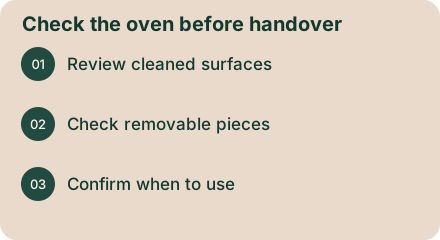
Plan the route from the Highgate street to the oven
| Route point | Useful detail | Check with |
|---|---|---|
| Street | Full address and loading arrangements | Resident or building contact |
| Side approach | Gate, slope and steps | Person meeting the technician |
| Cooking area | Position of appliance and prep space | Person using the kitchen |
Get an oven cleaning quote in Highgate
Request a quote with the oven type, number of cavities and any extra appliances.
Get a QuoteOther Cleaning Services in Highgate
Local references · Haringey Council – Highgate Conservation Area character appraisal
Highgate oven cleaning questions
What should I do if I cannot see the oven model label?
Check the instructions or send photographs of the doors and controls. Leave a fitted appliance in its usual position.
Does a roasting stain mean the oven coating is damaged?
The technician can distinguish visible residue from discolouration or a change in the finish during assessment.
Can an older range be included?
Tell us the number and condition of the compartments and any particular surfaces. Include a picture and identify the areas you want assessed.
Will you treat a shelf with a broken fitting?
Flag the condition in advance. The technician can discuss which parts can be treated as they are.
Can you use the entrance below pavement level?
Describe the actual steps and landing, and agree with the property contact which entrance is available.
How soon can I start cooking after the visit?
Tell us when you next need the oven and confirm its return to use at handover.