 Housekeeper
Plan your kitchen visit
Oven Cleaning in Stratford
Ask about oven cleaning in Stratford when a cooker has collected spills or grease during daily use. A photo of the front, the position of the affected oven and instructions for reaching the kitchen give us a starting point. Tell us if you also want to discuss a hob, separate grill or extractor.
Can I enquire for an oven in a Stratford apartment block?
Yes. Provide the postcode, building name, entrance and floor. Confirm the visitor route if residents normally enter with their own keys.
Can I include a shelf and a grill insert?
Yes. List both pieces, say which cooker they fit and mention any coating or condition you know about.
Give the actual Stratford building address
Newham Council places Stratford Park on West Ham Lane. If you use this landmark to describe your part of the neighbourhood, follow it with the full postal address. A development can have more than one street entrance, and an entrance may have a building name that differs from the one used for post. Give the name printed by the intercom and the flat number as it appears on the button. If a gated approach is normal for residents, explain where a visitor should wait and whom they can call.
Find out whether the building expects visitors to sign in and whether a different lift is used from the loading area. Give directions without relying on somebody following a resident through a door. A route that passes through two buildings can be hard to describe, so name the lobby, floor and final turn separately. If you will be outside when the technician arrives, agree where to meet and give the actual kitchen floor. Explain if there is a short flight beyond the lift or a large distance between the vehicle and the building.
- Use your full property postcode.
- Identify the intercom label and correct lobby.
- Include stairs, lift instructions or a visitor meeting point.
Describe the cooker in a way that rules out mix-ups
If a fitted oven sits below a ceramic hob, show the full front and the position of the hob in your photos. Some kitchens have matching upper and lower appliances that use different cooking functions. Count the cavities you want assessed and say where the separate grill is, if there is one. Include the size in everyday terms if you cannot see a model label. A main cavity and a compact combination appliance may be referred to as two ovens in the household even though they have very different fittings.
Check the appliance manual or a label visible by the door for a make and model. Keep the oven in its usual position and leave the important details visible in the picture. For an inherited range, label the compartments by location and describe which are working and used. If something is already switched off because it has a fault, bring it up before discussing the appointment. Send one picture with the doors closed so we can understand the installation and another showing the cavity that needs attention.
- Identify the affected cavity by position.
- Photograph the front and label if accessible.
- Mention any separate grill or warming compartment.
Information that identifies the correct Stratford entrance
| Part of the route | Send this | Check this |
|---|---|---|
| Building perimeter | Street and block label | Name above the visitor entrance |
| Reception | Signing-in contact | Hours and person to meet |
| Upper floor | Lift and steps after it | Route to the flat number |
List loose accessories before the work area is cleared
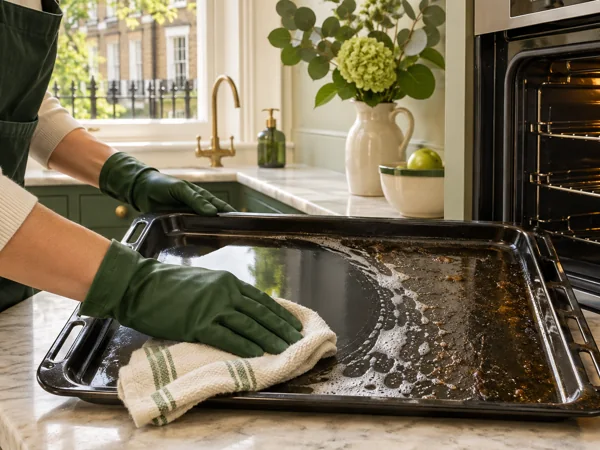
A tray stored in a lower drawer might be easily missed if the quote just says oven. Tell us about racks, grill inserts and extra trays you hope to include. Different finishes can need separate assessment. A technician can remove suitable parts to clean them separately and may soak compatible pieces in a dip tank. A fixed support, a coated lining and a removable wire shelf have different jobs in the oven and should be discussed by name. If you bought a second set of shelves after moving in, mention that change as well.
Put the loose pieces you want considered together before the visit and keep other pans away from the set. Leave fitted pieces in place if you are unsure what retains them. When an oven has a grill pan with a removable handle, tell the technician whether the handle locks or comes away and where you keep it. Flag damaged coatings or a shelf that drops on one side, so its condition can be considered while discussing the clean. Show which parts are normally at the top and which are reserved for baking.
- List each accessory you hope to include.
- Keep the grill insert and tray together.
- Explain any known damage or sticking points.
Explain why a particular patch is your priority
A spread of grease after repeated use of the grill may look different from an individual spill that ran underneath a roasting dish. Say if the concern is in the corners, around the fan area or confined to the base. Describe how long it has been visible and whether the oven heated again after you first noticed it. It can help to note if the patch is visible when the oven light is off or only when the door opens. Photograph it while the oven is cold and leave it in place for assessment.
A dark mark can be a deposit, discolouration or a change to a coating. Share what you have already tried so the technician knows where a spray or a self-cleaning cycle may have affected the finish. For a specialist liner, mention any care instructions that came with the cooker. If you want the glass seen from inside and outside, show which side looks marked. Access behind panes varies by design and condition. Explain any previous glass replacement or damaged trim before the technician looks at the door.
- Show where the residue begins and ends.
- Say which treatment you already tried.
- Describe the side of the door where marks are visible.
Specify the hob and extractor in their own entries
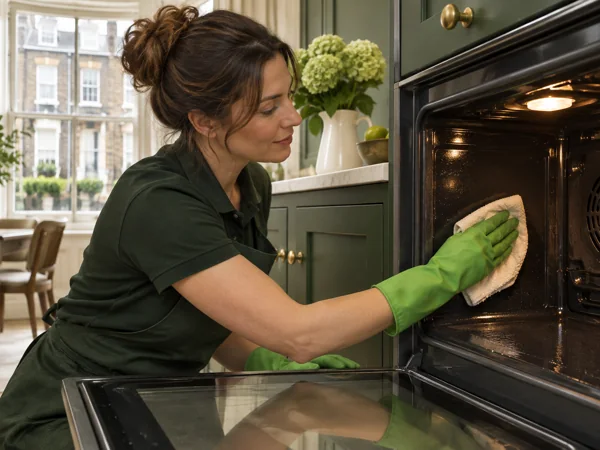
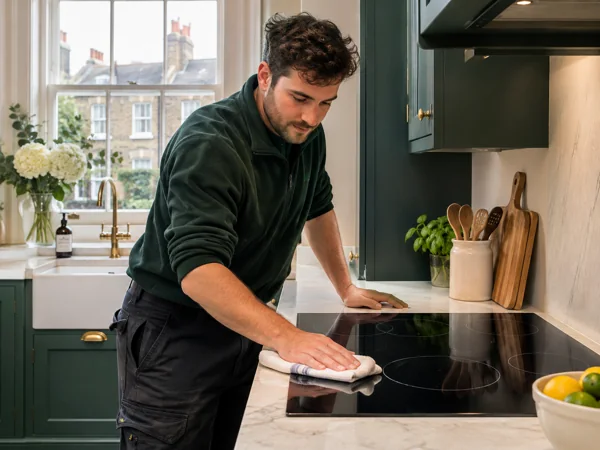
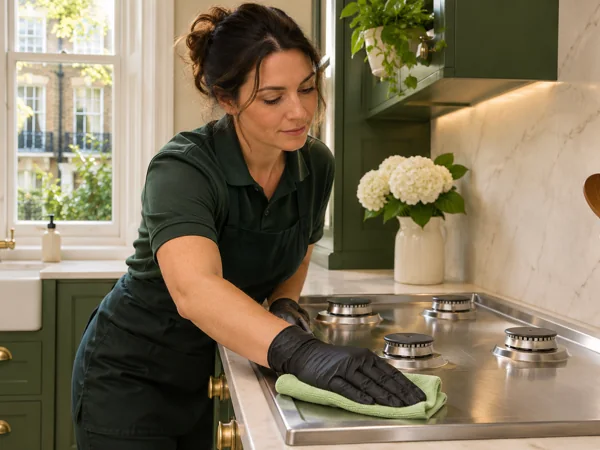
If you use the same appliance controls for oven and hob, identify the hob finish as a separate detail. A gas unit with a cast support and a flat glass surface with touch controls are assessed differently. Tell us about any pan supports and removable caps you want considered. If the extractor is hidden in a wall cabinet, photograph its underside from a safe position rather than trying to open a tight cover. Include the approximate height above the cooking surface and any cupboard trim that affects access.
Grease around an extractor edge can be visible while the filter itself is hidden. Let us know if it is metal mesh or a disposable design when you have that information. Separate the appearance of the outside housing from the condition of the filter. If a wall switch or special control is used, show where it is during the discussion. Look for separately agreed oven, hob and extractor work on the quote. This helps if another household member expects the appliance above the hob to be included automatically.
Match each appliance to the concern
| Item | Example detail | What to discuss |
|---|---|---|
| Main oven | Food residue under a shelf | Cavity surfaces and suitable treatment |
| Compact grill | Grease on the insert | Tray type and finish |
| Extractor | Grease on a removable filter | Filter type and access |
Prepare a shared or compact kitchen
Make enough room for the oven door to open without moving other furniture on the day. If a breakfast stool normally lives opposite the cooker, put it elsewhere before the appointment and consider where loose parts can be set down. Clear the worktop near the oven and remove food and loose cookware from the cavity once cool. When the kitchen is shared, ask other residents to leave the cooker out of use in good time and tell the technician about access needed for anyone entering the room.
If a doorway opens into the same space as the oven, say how people generally pass between rooms. Keep children and pets away until the area is handed back. Tell us if the sink is shared with another person or the main kitchen tap cannot be used, and discuss any power or water requirements ahead of time. Choose an appointment around planned cooking and send the time you need the oven again. Leave enough time to be shown what work was carried out and ask when the appliance can be used.
Use a first look at the kitchen to confirm priorities
When the technician arrives, show the main issue with the cold oven and make the list of agreed items available. Explain where the model details are if the number is printed in an unexpected place. If the original enquiry focused on a spill at the base and you later spotted grease on a separate grill door, ask how the visit can accommodate both before work starts. Point out any scratch, broken shelf restraint or loosened control you knew about beforehand so it can be considered alongside the cleaning.
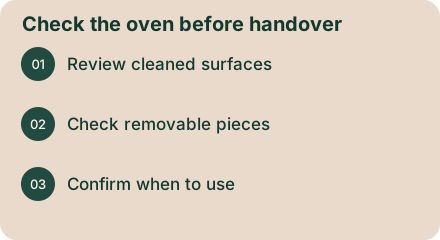
A clear handover is helpful when the person returning to use the kitchen was out during the appointment. Check the position of shelves, ask what can be done about any remaining visible stain and request guidance about use after cleaning. If appliance manuals live in a communal drawer, tell other residents where they are together with the information they need to use the cooker. The most useful note says what was done, which accessories belong together and the advice received at the end of the visit.
Send a quote request that can be checked against the cooker
Use the postcode form with the full address and keep a copy of the list of cavities and loose parts you want covered. Give the property contact or visitor point if somebody else is handling entry. If a landlord is working from an inventory, match the appliance described there against the actual kitchen, especially with an extractor or grill behind a separate door. Ask for a revised quote when that inventory adds something that was absent from your original description, or if the landlord’s access arrangements change.
You can review the oven care plan separately from a wider property clean when you are preparing to move. Agree who can make decisions about extra pieces if something relevant is discovered on the day. For your own kitchen, tell us in the enquiry if there is a meal or event that sets a deadline for returning the area to use. Specify whether the oven, hob or other nearby appliance is required. Clear dates and priorities help whoever opens the flat explain the booking.
Before and after using the kitchen
| Moment | Household action | Point to confirm |
|---|---|---|
| Before the visit | Leave cooker off and cool | Any water or power arrangements |
| At arrival | Identify the cooker and priority | Agreed accessories |
| At handover | Check which shelves go where | When to use the oven again |
Get an oven cleaning quote in Stratford
Request a quote with the oven type, number of cavities and any extra appliances.
Get a QuoteOther Cleaning Services in Stratford
Local references · Newham Council – Find your local park, Stratford Park
Stratford oven cleaning questions
Do I need to give the flat number as well as the block name?
Yes. Give the complete postal address and the visitor entrance so we can distinguish blocks with similar names.
Where can I find the oven model?
Look in the appliance paperwork or for a label visible by the oven door while it is cool.
Can I include only the grill cavity?
Describe where the grill is and which pan or rack belongs with it. Ask for those items to be listed.
Can I include the hob if its controls are on the cooker front?
Yes. Give the type of hob and show the shared controls in your photo.
Does a dark patch always come off during cleaning?
The technician can assess the mark and discuss what can be addressed. Some marks involve discolouration or a changed finish.
What if somebody else lives in the flat and will let you in?
Send the agreed visitor instructions and leave a copy of the appliance list with them.