 Housekeeper
Plan around the family kitchen
Oven Cleaning in Hackney
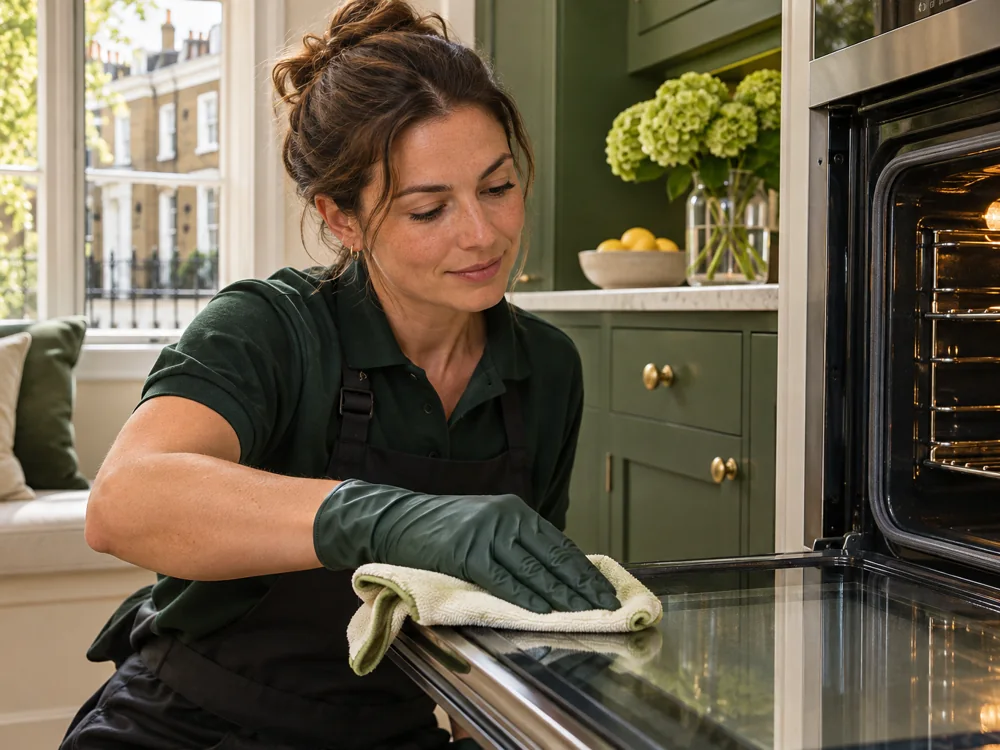
In a kitchen that makes breakfast, packed lunches and supper, the oven may have only a short window when it is cool and unused. Give us that window and tell us which part of the cooker you rely on most. We can discuss a Hackney oven clean that accounts for the appliance, the people using the room and the access to your home.
What address details help near Hackney Town Hall?
Send the complete E8 postcode and specify the residential entrance, especially if the building has a separate entrance on another street.
Can we discuss a visit between school runs?
Give the times when someone can open the door and when you need the kitchen back. We can discuss your options.
Find a gap between the meals you cook
Tell us when you last expect to use the oven before the proposed visit and when it is needed again. In a family kitchen this might be the period between a batch of breakfast rolls and the evening meal, or a morning without a packed lunch to prepare. Let everyone who uses the appliance know that it needs to be left cool. If another person in the household normally puts something in the oven while you are out, agree on a different plan for that meal before the appointment is settled.
Think about what else will be going on in the room, as well as what is in the oven. If the kitchen table will be used for feeding or homework, check whether a person at the table would have to pass the open oven to reach the door. You can tell us which times make the room easiest to work in. When one adult leaves midway through the visit and another takes over, provide a contact who knows which items were discussed. Any addition to the visit can then be handled with that person rather than left until everyone is home.
- Set a time for the last planned use of the oven.
- Make sure someone can open up at the start.
- Tell us when the kitchen needs to be free again.
Organise a family cooking gap
| Before we arrive | What to tell us | Who can help |
|---|---|---|
| Last oven use | When the final dish comes out | Person cooking |
| Kitchen free | When the room can be cleared | Adult at home |
| Review | Time the kitchen is needed again | Person making the next meal |
Distinguish the second cooking space from the first
Some double ovens share a front panel but divide the work in very different ways. The main cavity could be used for baking, while a shallow top compartment serves as the weekday grill. Tell us what each one does and which ones you wish to include. If you can read a model identifier inside the door frame without removing anything, include it in the enquiry. A model and an overall picture give us a way to discuss unusual fittings without relying on an estimate of the oven width from a kitchen photograph.
If the top cavity has been used almost exclusively for toast, describe the marks you can see there separately from the condition of the larger oven. The larger compartment may contain one tray, wire shelves and rails, even if the pieces came with both ovens originally. Tell us which removable parts are associated with the appliance and how you normally use them. You can identify the grill pan by its insert or by the handle supplied with it. Leave supports that you have never taken out in place and mention them when you ask about the model.
Show us the spill that changed how you use the oven
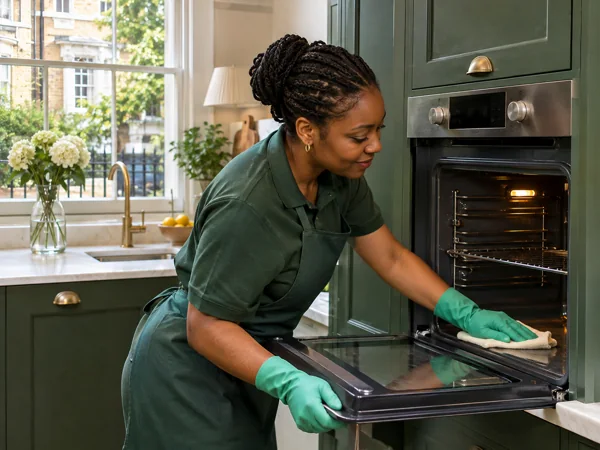
If there is one area you want us to look at first, say where it is. A puddle from a casserole on the bottom of the main cavity tells us more than a general description of grease. The same goes for a line of cooked-on drips below the front edge of a shelf. Tell us if an area has been exposed to a previous treatment and describe what changed, if you know. A photograph taken when the oven is cool can show the location alongside details like the seam between the floor and the side wall.
Make a note of anything the next person opening the oven might mistake for residue. Examples include a chip left by a dropped dish, a patch of dull enamel or a scratch on the edge of a glass panel. In a rented home, you may know about an existing mark from the check-in inventory but have no record of when it happened. Give the position and appearance and leave it for discussion. We can talk through which accessible surfaces are part of the clean and what can be assessed when the appliance is seen.
- Point out the area you want reviewed first.
- Mention prior products used if you know them.
- Describe chipped, scratched or dull surfaces in the same message.
Keep racks, inserts and personal cookware straight
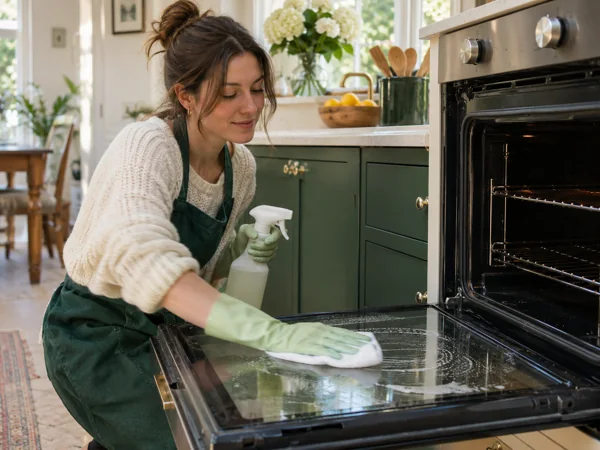
Before the visit, collect the racks and oven accessories that you want to discuss. A family may use different trays for cakes, roasting or a meal that needs to be cooked separately. Put away your personal cookware so the parts you want included can be identified easily. If one loose shelf has been kept in a drawer because it is seldom used, include it by name if it should be considered. A tray that belongs to another appliance can stay with that appliance to avoid confusion when the fittings are reviewed.
Check the distinction between the complete grill pan and an insert that lifts out for cooking. You can describe both even if the insert has been put away elsewhere. Mention a heavy rack on runners if you are unsure which component is removable. We can discuss removable parts and rails separately once the appliance is identified. If somebody else is meeting us, jot down the quantity and location of the pieces you want considered. Keep the list short enough to check without looking through a full cupboard.
- Group the parts that came with the oven.
- List a grill insert separately from its tray.
- Tell the person at home where any spare racks are kept.
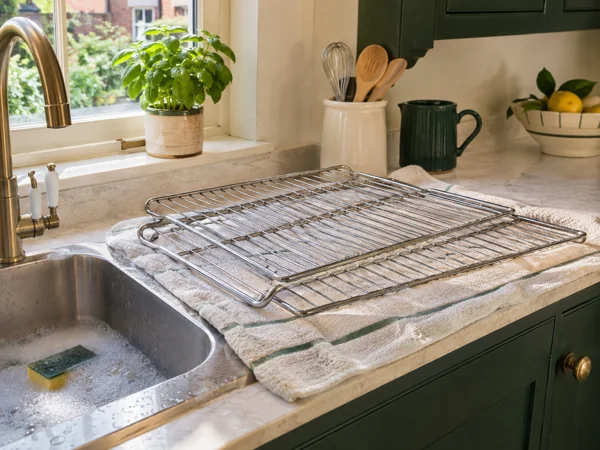
Identify parts by where you use them
| Part | Where it belongs | Detail for an enquiry |
|---|---|---|
| Flat baking shelf | Main oven | Quantity and condition |
| Grill insert | Top compartment | Tray and insert listed separately |
| Door glass | Upper or lower door | Face where residue appears |
Agree how much of the front to include
When you use the oven daily, you might notice the front long before the interior. Give us the details of any marks around the controls, on the handle or on the outside of the viewing panel. A display with touch controls presents a different set of surfaces from a panel with printed markings and projecting knobs. If a fascia's markings are already fading, mention that as part of the enquiry. Describe the finish next to the appliance, especially if the front is built into a run of painted cupboards.
The viewing glass also gives you a useful reference point for explaining what you see. Identify marks on the inside face, the outer face or apparently behind a pane. Ask which areas can be accessed on the model you have. If there is a separate top oven door, say which window has the issue. On the day, point out any door edge or seal you raised when arranging the clean. We can discuss attention to accessible surfaces by component, which is especially helpful when glass is the first priority and the rest of the appliance is in routine use.
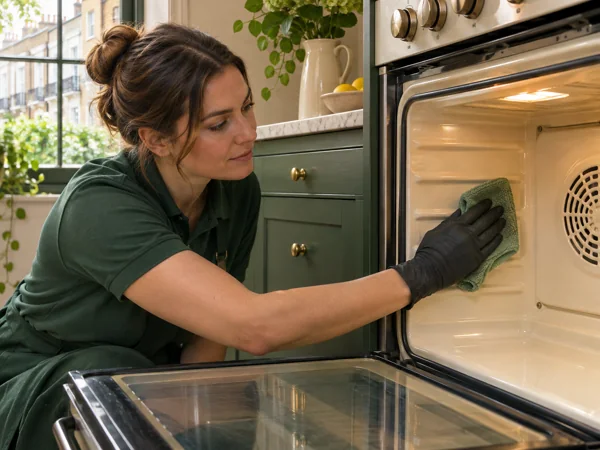
Get from the right street door to the right kitchen
Hackney Council identifies the Town Hall and Hackney Empire within its Town Hall Square conservation area and places the square between the Mare Street and Clapton Square conservation areas. A nearby landmark may orient someone but still leave more than one street door to choose from. Give the flat number or house number, the street and the full postcode. If your front door is reached through an archway, mention the name on the outer entrance and explain how to find the inner door once the visitor is through.
Check the approach as though you were taking it for the first time. A flat above street level may have a separate entrance at the side of the building. A rear kitchen could be reached by a back door that the household rarely opens, even if it looks like the closer route on a map. Let us know which approach you want used and if a shared staircase turns sharply at the top. Set a simple way for the visitor to reach you if the bell serves more than one flat. Keep gate codes and key arrangements in a private exchange.
- State the street and door to approach on arrival.
- Explain which bell label matches the flat.
- Mention any stairs or shared entrances along the way.
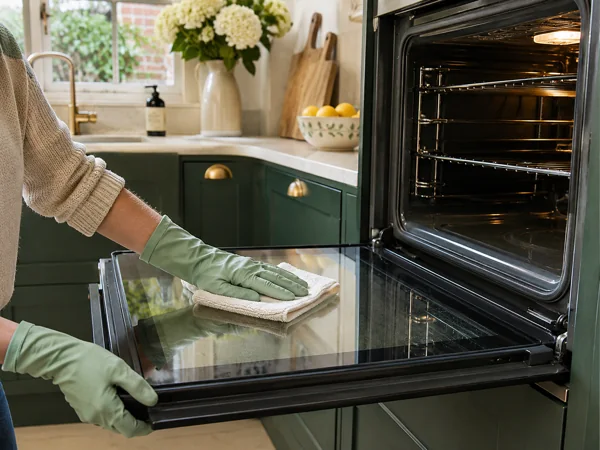
Plan the arrival near Mare Street
| Arrival point | Description to share | What to confirm |
|---|---|---|
| Street entrance | Number and street name | Whether it is shared |
| Communal door | Which bell calls the flat | Who will answer |
| Kitchen approach | Stairs, landing or back door | Which route to use |
Fit the hob or hood into the same enquiry
A family splitting the cooking between oven and hob may want help with both. Say if the hob is gas, ceramic or induction and point out the parts you want considered. A mark around a gas burner, a smear on a control panel and a stain by the worktop joint are different details to put into a quote request. Give the type of surface if known. If the burners or controls have finishes you have struggled to identify, a photograph of the hob with the surrounding worktop is a useful place to start.
If the extractor above the hob also needs attention, describe its visible surfaces and the filters you can identify. In a kitchen where storage reaches all the way to the canopy, mention the clearance at each side. For a hood concealed by a cabinet door, a model name can be more useful than the appearance of the doors. Separate the cooker, hob and extractor in your message so the items can be reviewed in order of importance. We can then discuss which additions are practical for the kitchen and the time you have set aside.
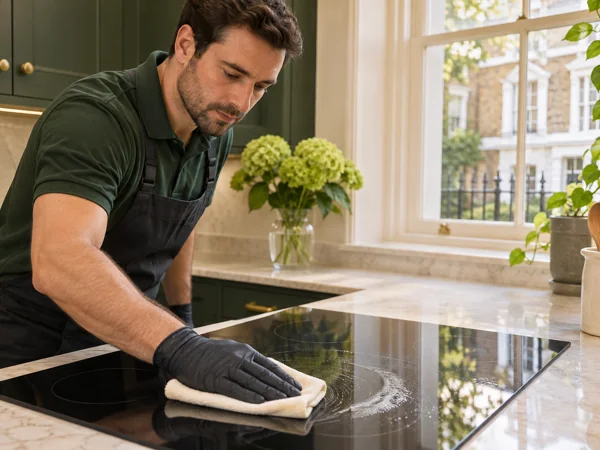
Review oven items with the next person who will cook
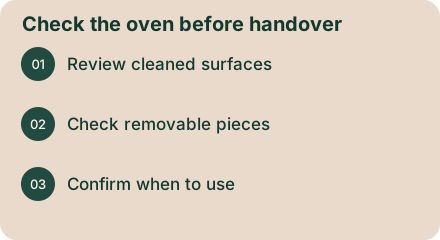
A good review starts with the appliance and parts you agreed to include. If a person is meeting the cleaner on your behalf, share the list before the visit and let them know which concern led to the booking. They can ask about a particular shelf, the lower door glass or a mark you pointed out in the enquiry. If the oven is being cleaned between tenancies, ask the incoming occupant or agent who is expected to review the work before the keys are returned.
Finish by checking the removable pieces against your original list. Make sure the person using the kitchen next knows which cavities were attended to and can ask any questions about using the appliance again. Keep the manual at hand if it gives care instructions for distinctive liners, glass or a separate grill. If an item was discussed for a future appointment, keep it on your own note beside the model number. You can then use the same detail next time without guessing which extra rack or small grill pan was mentioned.
Get an oven cleaning quote in Hackney
Request a quote with the oven type, number of cavities and any extra appliances.
Get a QuoteOther Cleaning Services in Hackney
Local references · Hackney Council, Town Hall Square conservation area
Hackney oven cleaning questions
Can I ask about the top grill if the lower oven is already clean?
Yes. Describe the grill cavity and the parts that belong to it when you ask for a quote.
Do you need the brand if the cooker was already in my rental?
Share the brand or model if you can see it. A photo of the controls and open cavity can help identify the appliance when you do not have the manual.
Can I leave the accessories out on the kitchen counter?
Tell us where you have put the pieces and what each one belongs to. Keep cookware you are still using separate.
What if our island is close to the drop-down door?
Describe how far the door opens and where a person can stand with it down. A wide kitchen photo can clarify the space.
Can someone else show you the mark I reported?
Yes. Show them the position in advance and share which pieces you requested so they can discuss the right part.
Should I report faded numbers on the control panel?
Yes. Note which controls are affected and the material nearby so the condition can be recognised before the work.