 Housekeeper
Plan around the family kitchen
Oven Cleaning in Clapham
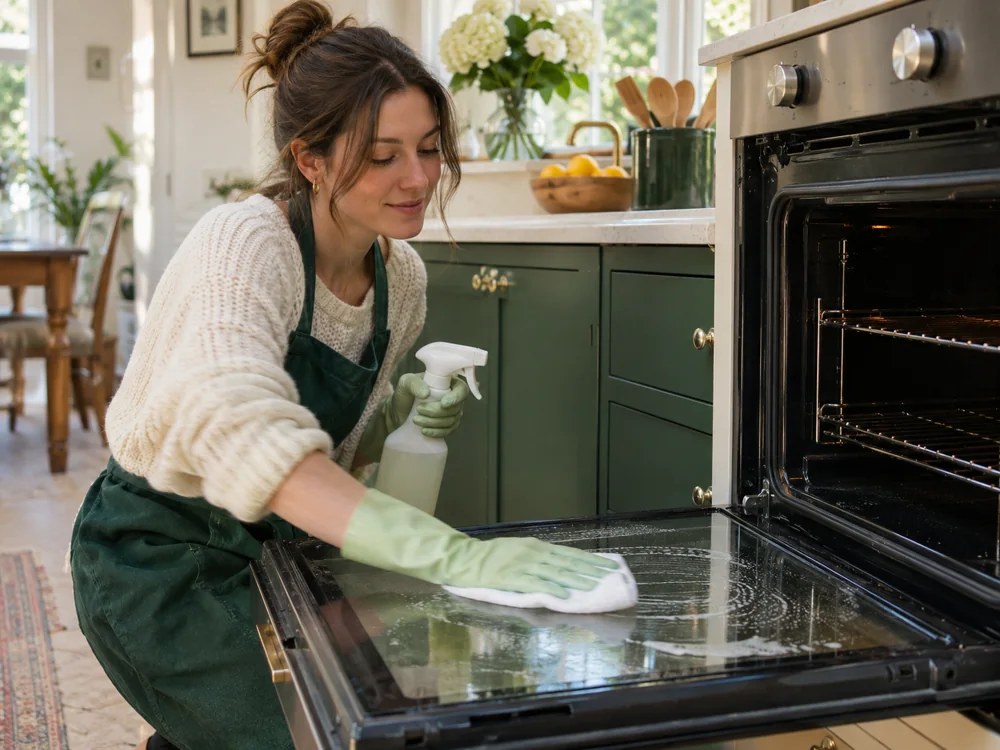
A Clapham family kitchen can go from breakfast to an evening tray bake without the oven having much time to cool. Tell us what you cook most often, where food has collected and when you can leave the oven and nearby counter free. An enquiry can cover the oven alone or include separately agreed items such as a hob.
Can I request a quote for my SW4 home?
Send the complete postcode and oven details so we can check the address.
Can I keep the hob available for lunch?
Tell us before booking so we can discuss how to keep the kitchen usable.
Find a gap between meals
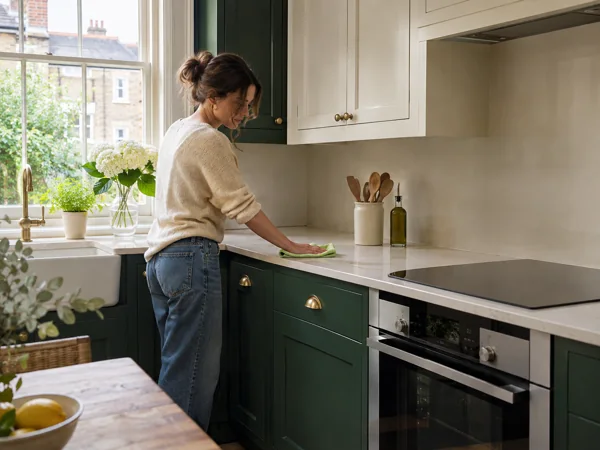
Think about the last meal before the visit and the first one afterwards. The oven needs to be cool when the technician arrives, so a roast just before the appointment can make the timing awkward. The work also takes up some of the space in front of the cooker and beside it. If you normally prepare sandwiches on that counter or have to pass the open oven door to get to the fridge, move what you need for lunch in advance and arrange a clear route elsewhere.
Give us the hours when the kitchen is quietest. A school run might leave the kitchen free but make it hard for you to answer the door. If another adult will be there, agree which compartments are included and make the details available to them. For a double oven, mention if either cavity has been used on the day, since the smaller compartment may still be warm when the main one feels cool. Ask the technician at the end when and how the appliance can be used again.
- Plan the last use so both compartments are cool.
- Move food preparation away from the working counter.
- Tell us who will be there to open the door.
Plan the appointment around meals
| Kitchen detail | Arrange in advance | Why it helps |
|---|---|---|
| Early breakfast | Cook before the oven cooling period | Allows the appliance to cool fully |
| Packed lunches | Put lunch supplies on a separate surface | Keeps the working counter clear |
| Dinner later that day | Ask when the oven can return to use | Lets you plan the next meal |
Identify the compartments you use
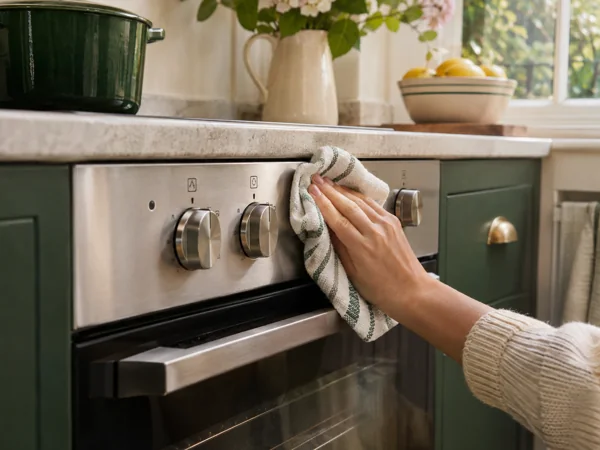
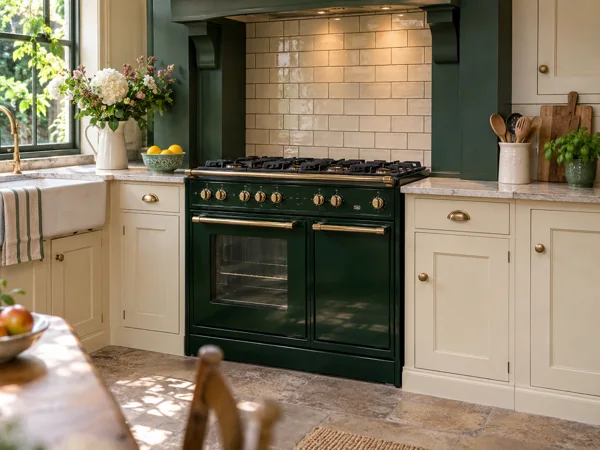
A front photograph usually explains more than a description of a big oven. A double unit might have a smaller combined oven and grill above the main cavity, and an arrangement that looks similar might have a steam or microwave combination instead. Send the visible model information from the manual or accessible label and say which doors you expect us to open. If there is a lower compartment for storing pans, tell us how you use it and agree separately on any attention you want there.
A family can put all the week’s cooking through the same compartment while the other is used only for grilling. That difference matters when the marks sit high in the smaller cavity or on an enamel floor in the larger one. Describe the parts you can see from the front and pass on any care instructions for them. For a combination appliance, the instruction book is particularly helpful. Cleaning choices depend on how each cavity is built, including finishes and pieces that are intended to stay in place.
Describe the spills you want assessed
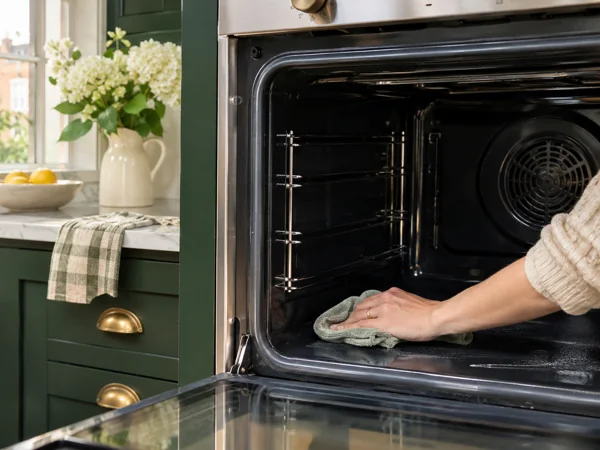
A fruit crumble may leave a hardened patch underneath the lowest shelf, while repeated grilling can leave a deposit across the upper part of the compartment. Mention the most recent spill if you remember it and describe anything else that has accumulated over time. A photo taken in good light from the open door can identify the area without asking you to touch a coating or remove a panel. For an old mark, say if you usually see it dry or if it becomes more noticeable during cooking.
Tell us if you recently ran a self-cleaning programme or applied a product to the dirty area. The information helps the technician see what has already been tried before deciding what is suitable for the interior. Permanent discolouration and coating damage can remain visible after deposits have been removed. Show the technician the patch that bothers you most so they can look at it during the initial check. If you are unsure which side of the glass a mark sits on, describe the angle from which it is easiest to see.
- List the most noticeable spill and where it landed.
- Name any recent product or self-clean cycle.
- Photograph the affected area from the doorway of the appliance.
Set aside a place for racks and trays
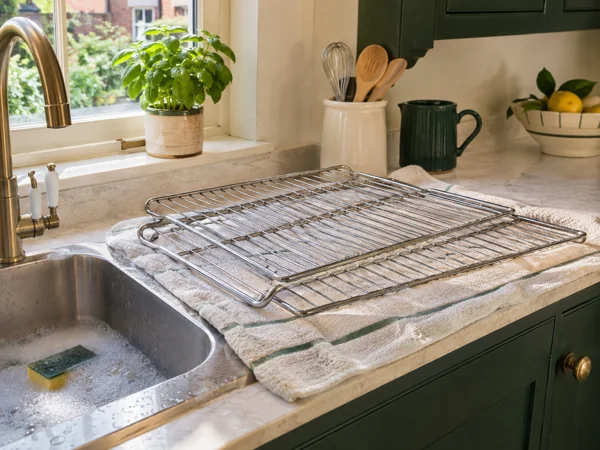
Take out food, baking dishes and loose covers before the appointment. Tell us which items were supplied with the oven and which are your own bakeware. If you want a heavily used grill tray included, say so when you ask for the quote. The technician checks the way components are fitted before removing those that can safely come out. Suitable pieces can be soaked in a dip tank, with the choice depending on their finish and condition. Let us know if a runner has been hard to slide.
Clear a stable space beside the cooker and leave a route in and out of the kitchen. In a narrow galley, a table immediately across from the oven can make a door hard to open fully. Move light portable items you normally keep near the oven to a safe spot before the visit. Leave fitted components for the technician to check. If a child or pet needs to pass through the kitchen, agree an alternative route so they can stay clear of the work and components.
Describe what each part needs
| Part | What to show us | What to discuss |
|---|---|---|
| Main oven | Base where a dish overflowed | Assessment of the deposit and finish |
| Upper grill | Photo of the upper area from the open door | Which accessible surfaces are included |
| Door glass | Angle at which a mark is visible | Location of the mark and possible pane access |
Discuss glass and linings before work starts
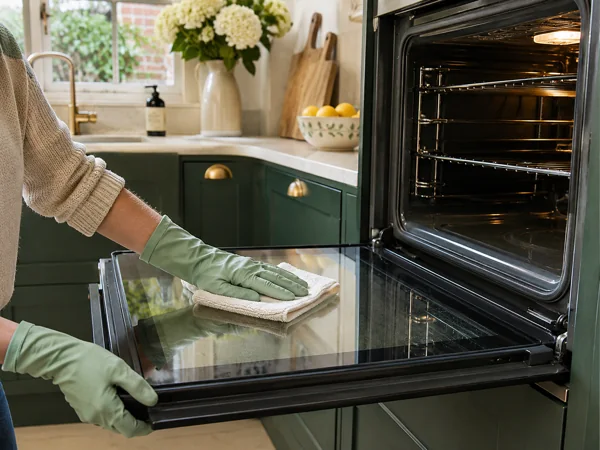
A greasy smear on the accessible face of the door is different from residue that sits between panes. Explain what you can see when light catches the glass. Access between panes depends on the appliance and the condition of the door, so raise it before the visit and ask what the technician can assess on the day. Describe any loose trim or a door that does not close normally. It is easier to discuss safe access when these observations are part of the original enquiry.
Check the manual for panels that have special instructions, including catalytic liners or a manufacturer-specific cleaning surface. A mark on a coated panel should be assessed with that finish in mind. Show us the instructions if you have a printed copy or can provide the relevant page. The technician can then discuss which surfaces and removable parts can be cleaned, how the door can be approached and which areas should be left alone. Ask about the proposed treatment before the work starts if you are unsure.
- Point out the position of marks on the door.
- Share the maker’s guidance for specialist liners.
- Flag loose trim before the door is handled.
Keep hob and extractor requests clear
If you want work above the oven, write down the exact items. A gas hob with heavy supports presents a different set of surfaces from a flat induction or ceramic hob. For a range cooker, say how many burners or cooking zones there are and name any griddle or cover you want to discuss. When a hob sits in a separate island, explain where it is and how that part of the kitchen will be used during the appointment.
For the extractor, give its approximate height and describe the external finish and filter type if you know them. Grease on an accessible cover and a saturated filter call for different decisions. A metal filter and a disposable filter also need different handling. Ask for these items to appear separately on the quote so you know what is included. If you will need a cooking zone free for a meal, say which one and when, so we can discuss the practical arrangements before the day.
Optional items to put on the quote
| Item | Useful detail | Question for the quote |
|---|---|---|
| Rack or grill tray | Whether supplied with the oven | Can the item be handled with the other removable parts? |
| Hob | Surface type and pan supports | Which components are included? |
| Extractor | Filter type and approximate height | Which areas can be reached and treated? |
Give the actual entrance for your Clapham address
Transport for London lists Clapham Common Underground Station on The Pavement in SW4. That may be a useful way to indicate the part of Clapham you mean, but the visitor route depends on your own address. Give the house or building name, full postcode and the number or name on the bell. If a downstairs flat has a separate entrance reached by a front stair, describe the direction from the pavement and count the steps before the kitchen.
For a shared entrance, confirm who can admit the technician and if there is another door before your flat. If your kitchen is at the back of a house and a side gate is the agreed route for equipment, say whether the gate can be opened on arrival. Mention available loading arrangements and flag any restrictions you have confirmed. Share the best phone number for that day in case the person booking and the person opening the door are different.
- Supply the full address and the bell label.
- Describe steps and separate gates on the agreed route.
- Confirm the loading arrangement and contact person.
Review the quote with the person at home
Start with the postcode form, then keep the appliance photo and notes together so they are handy when we discuss the job. Ask us to confirm the cavity count, listed trays, glass access and optional items in writing. If you decide to add a second appliance after the enquiry, update the list before the appointment so there is time to discuss it. Let us know about a kitchen with limited space or a part that is already loose so the technician can plan the initial check.
If another adult is home on the day, show them which compartment you mean by the small oven and which pieces are meant to be included. Ask them to relay any observations the technician makes on inspection. At the end, check which removable pieces were cleaned, where they go and what advice applies before cooking. Keep the relevant manufacturer instructions where the family can find them, especially if you use several modes or alternate between shelves and sliding runners. This gives everyone the same information when the kitchen returns to its usual routine. If a family member keeps a favourite tray on a particular shelf, have them check that it is back in the correct place before the next meal.
Get an oven cleaning quote in Clapham
Request a quote with the oven type, number of cavities and any extra appliances.
Get a QuoteOther Cleaning Services in Clapham
Local references · Transport for London, Clapham Common Underground Station
Clapham oven cleaning questions
Can you clean the smaller oven even if we use it mainly as a grill?
List it by door position and mode. A photo or model number helps us discuss that cavity separately.
Should I soak our grill tray before the technician arrives?
Leave it aside and tell us whether you want it included. Mention any product you already used.
Can I leave baking foil on the oven floor for inspection?
Remove loose foil when the appliance is cool. If any material has adhered to the surface, point it out to the technician.
Can someone collect the children while the oven clean takes place?
Arrange for an adult to handle access and check the agreed work. Keep children away from the kitchen while the equipment and parts are being handled.
What if our flat door is below pavement level?
Give the number of steps, the gate or bell label and the best place to meet the technician.
Can filter cleaning be added to the oven enquiry?
Yes. Tell us the type of filter and how high the extractor is so we can discuss access and list the agreed work separately.