 Housekeeper
Plan the equipment route before arrival
Carpet Cleaning in Dalston
For a Dalston carpet cleaning quote, show the parts of the home you want included and describe the carpet as it is now. Include any edges, stair turns, rugs or visible marks that need checking. Share how the residence can be reached and which rooms you need ready first.
How do I request carpet cleaning in Dalston?
Send fitted sizes, photos of the condition and the actual household entrance. Identify loose pieces and stairs separately.
Can I have the carpet around a desk assessed?
Show which floor is open and say whether the chair, mat or cables can be moved.
Give the exact residential approach from Kingsland High Street
Hackney Council locates Ridley Road Market off Kingsland High Street, opposite Dalston Kingsland station. If you use the market or station to orient somebody, add directions to the precise door that equipment may use. A flat above premises may be entered from a street the postcode does not seem to indicate on a map. Give the postcode, number and flat label as well as the authorised door. Explain the point from which the label or number is visible if it is recessed or above eye level. Include the doorbell position if visitors might go to a business entrance by mistake.
Ask whether the building contact has different instructions for people carrying equipment. A communal stair can turn immediately past the entrance, while a service route may leave room to pass but need a key or lift reservation. State which approach you have confirmed, plus any timing. Give a contact who can resolve a problem at the door or a change to the route on the day.
- Give the property postcode and approved residential door.
- Mention a narrow step or turn immediately inside.
- Check the approved route and who can open it.

Describe where fitted carpet sits in a mixed-use room
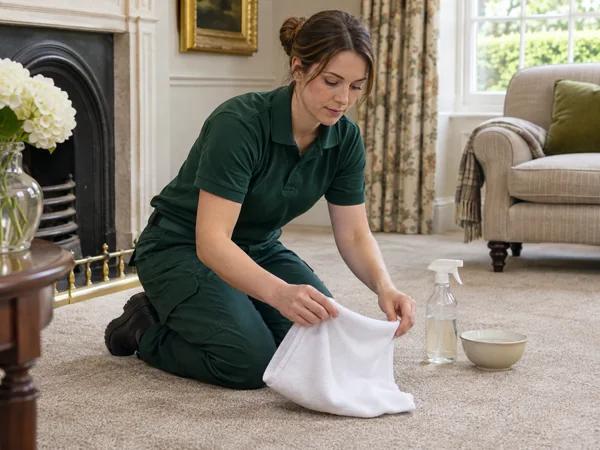
A front room that serves as a workspace may have fitted carpet around a desk but a hard surface near the entrance. Give an approximate plan of the room and label the floor transitions. Tell us how much fitted carpet stays under the desk or low storage and whether a mat or rug lies on top. Take a picture from the far end with the layout visible. If the fitted surface stops at a step or turns under a door, note the dimensions of that part separately, even if it occupies only a small piece of floor.
List a fitted stair using its treads, carpeted risers and any landing. A loose runner with a border needs its own length, width and care information. Describe any weak fixing that can be seen without lifting it. If a landing is part of a common area, ask the property contact who may request work there. Keep it separate from carpets that are within the private flat.
Identify areas in a room with several uses
| Location | What to provide |
|---|---|
| Desk area | Reachable floor, floor protector and cables that can be moved. |
| Entrance threshold | Size and how it meets the other surface. |
| Rug at the seating area | Dimensions, label, border and condition. |
Check carpet around the furniture used most often
Take a wide photograph around a desk chair or bed and look at how the carpet appears along the normal movement route. Furniture can cover a paler area or leave compacted pile, and a wheeled seat may repeatedly take the same path. Include a close image of the most noticeable spot from an angle where the texture shows. Explain how long the furniture has been in its position and if somebody has taken it out recently. If a floor protector used to sit below it, show the edge of the patch it covered.
Tell us if a dark mark appeared suddenly or after a known spill. Send a separate note for anything you have applied since, including water, a household product or a carpet machine. Describe any change in feel or colour as it dried. If there is current dampness or odour, say so before the visit. Wear, damage and some stains may remain visible, and the condition is assessed along with what is known about the mark.
- Show the main route and the pile up close.
- Mention past furniture, mats and floor protectors.
- Give details of previous treatment and remaining moisture.
Give each exposed seam and narrow edge its own description
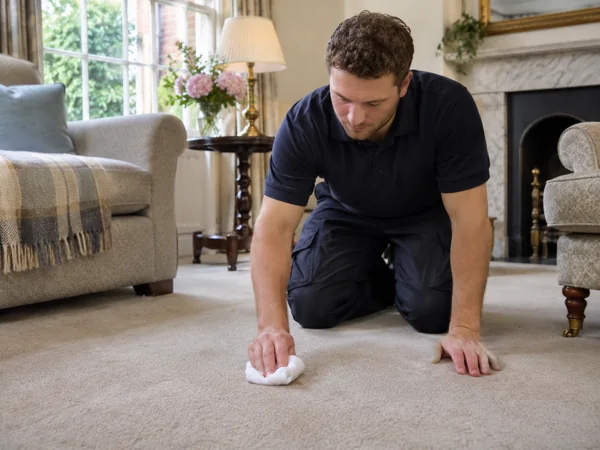
Look at the carpet near the entrance to each room. A seam might lie behind the normal swing of a door or below a shoe rack. Show where it crosses from one flooring type to another. A photo from floor level can show a raised strip more clearly than one taken from a standing position. If you know the carpet has been repaired, tell us when and how it looked afterwards. If you have noticed a loop begin to pull, describe its position rather than trying to straighten the edge. Leave the backing as it is where carpet is fixed.
Where a door catches, identify how far it opens and which side rubs. If equipment needs to pass through a small gap, give the approximate clear width. The technician can examine which parts are suitable to treat and discuss any limit that comes from the condition or position. A short fitted strip may be smaller than a room but still matters if it is a place everyone crosses.
- Locate seams and joins using both room names.
- Show raised strips and gaps without moving the carpet.
- Point out a rubbing door or previous repair.
Use the care information and fitted condition to choose the method
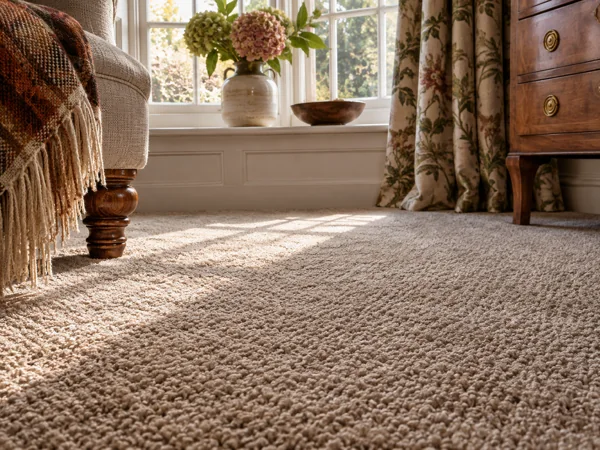
Keep any label, invoice or retained sample available. Where carpet in adjoining rooms was installed at different times, identify which material information applies. The technician can consider the fibre, backing where visible, treatment history and pile condition. A sample is useful for construction information, but an old repair or lifted edge on the floor still needs looking at separately. Discuss whether a test or specialist assessment would help. If there is a rug or mat, show it in context and give material, dimensions and any care label as a separate part of your request.
Water-based extraction may be suitable for some carpet once its material and condition have been assessed. A lower-moisture approach may be discussed when the backing, fibre, dye or finish requires another method. If you want to assess carpet with an uncertain history, explain what you have observed and what you do not know. The best choice takes account of the carpet and the room rather than a method used during a previous clean in a different property.
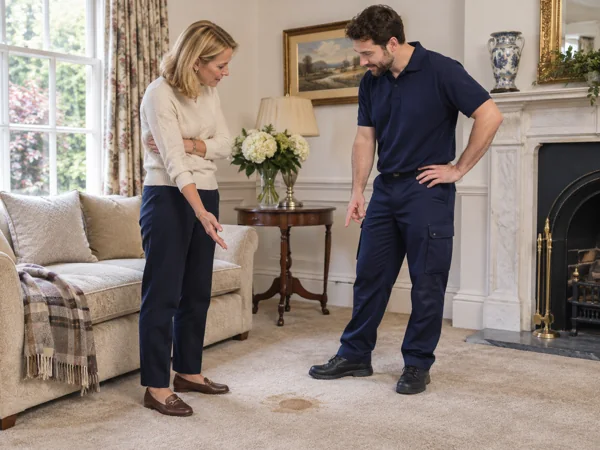
Describe a visible issue to assess
| What you notice | Evidence to share |
|---|---|
| Furniture impression | Original position and how long the furniture was there. |
| Spill | Material, approximate date and earlier product. |
| Rubbing door or raised strip | Show the door swing and take a low photograph of the join. |
Plan a separate dry workspace or route before moving things
A place to work during treatment needs to remain accessible and dry. Decide where you can take a call, reach a socket or handle essential items without crossing the treated carpet. Put bags, medicines and pet supplies on the dry side as well. Move only small items you can handle safely, and leave chairs and boxes away from the entrance, hall and route to the bathroom. Explain which larger objects stay where they are and show the working space around them. If another service is delivering or removing furniture, confirm its time.
Drying varies with carpet, treatment and the conditions in the room. Identify windows, vents and doors that can safely be used, including if the room shares its air path with somewhere you need quiet. Tell us who can attend to close windows and who will receive drying guidance. Follow the advice for when to allow traffic or put a rug, protector or broad furniture base back on the treated pile.
If you move a rolling chair into another room, use somewhere it sits steadily and cannot roll across the doorway. Have the computer lead, headphones and charger there before the visit, rather than retrieving them from a newly treated part of the floor. If you share the desk, put the room timings in your household calendar so the next person knows where to work.
- Set up a reachable dry space with essential items.
- Keep furniture away from the main equipment route.
- Check who can follow the aftercare instructions.
Plan around the agreed access hours and furniture movement
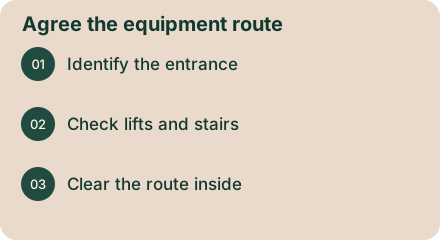
Ask the person responsible for the building where a technician can unload or transfer equipment. Tell us how far it is from the door and whether there is a curb, narrow turn or protected floor between them. If residents share the route with other visits or businesses, check which times are available and whether a lift slot is required for both arrival and departure. A visit can use the right door at the beginning but have no way back out if an access period ends. Make sure the approved approach can be used through to departure.
Tell us about other commitments at the property and how they affect access or the open floor. If a removal leaves storage boxes in the hall, the carpeted rooms might be clear but inaccessible. Share any change straight away and confirm who will deal with keys or provide an alternative route if it has been agreed. Keep the common space usable for others.
Put fitted areas, separate pieces and aftercare in the handover
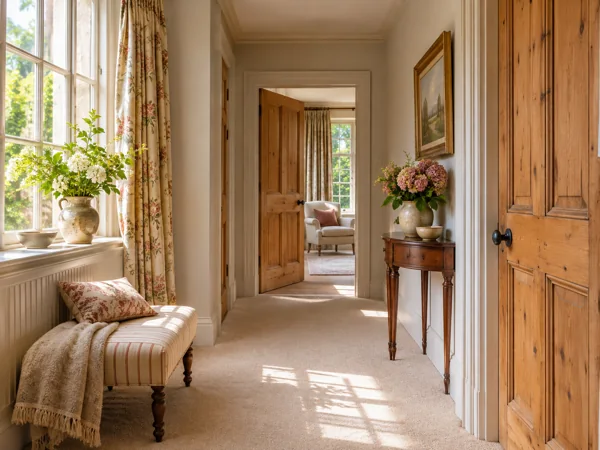
Use the measurements and condition photos to check the carpet estimate against each room. Identify a loose rug or mat independently and confirm the fitted area around it. Ask which part of a room cannot be reached if a desk or cabinet stays in place. Give the person attending the latest floor list and say who can decide if a method or room order has to change. Include the approved access contact. If there have been any changes on the day, share them with the person checking the carpet.
Agree who will record ventilation guidance and the practical timing for using the rooms again. Make sure the person in charge of keys knows where to find the advice and who else has to receive it. If a room is due back in use for work or a change of occupancy, explain that before booking. Allow enough time for checks after treatment and for follow-up if the carpet is still drying.
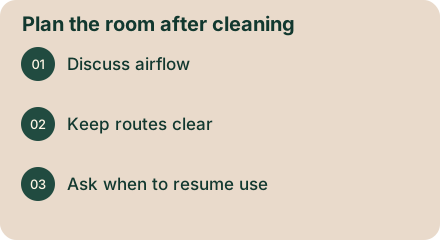
Agree a route at each point
| Stage | Practical decision |
|---|---|
| Arrival | Approved door, lift access and a place to wait if required. |
| Cleaning and drying | Untreated space for work or essential belongings. |
| After the visit | Drying instructions and authorised path for departure. |
Get a carpet cleaning quote in Dalston
Request a quote with the carpeted rooms, stairs and any loose items listed separately.
Get a QuoteOther Cleaning Services in Dalston
Local references · Hackney Council: Ridley Road Market
Dalston carpet cleaning questions
Can I use the market name as my address reference?
Add the full residential address, actual door and any bell or gate that identifies the approved entrance.
What if a room contains carpet and a hard workstation surface?
Show where the surfaces meet and describe the fitted carpet you want assessed.
What if a seam lies under a door?
Show which way the door swings and photograph the edge from each side without disturbing it.
Should I say where a desk chair has rolled for years?
Yes. It can help explain wear and show what part of the carpet should be examined.
Can you plan around a home worker?
Tell us the dry space and route that must remain available and when you need to use them.
What if the approved door is open for limited hours?
Give the permitted time and contact, and confirm how equipment can leave after the visit.