 Housekeeper
Practical carpet care for lived-in homes
Carpet Cleaning in Custom House
Tell us about the fitted rooms and carpet condition in your Custom House enquiry. Show smaller areas such as landings and fitted thresholds alongside anything loose. We can discuss possible cleaning after assessment and plan a visit around the real entrance, the people using the property and drying afterwards.
How do I get a carpet quote in Custom House?
Send the full address, actual entrance, fitted floor list and photos of marks, wear or raised edges.
Can I include a rug on top of fitted carpet?
Give the size, label and edging separately so its treatment can be assessed independently.
Identify the home above or behind premises on Freemasons Road
Newham Council’s regeneration information for Custom House refers to Freemasons Road and to residential addresses above shops. If the main street address helps someone locate the property, follow it with the exact door for the home. This may be beside a shopfront or reached through a different street, gate or corridor. Name the visible part of the residential entrance, the number and the floor. Tell us if a sign can be obscured or if a separate intercom is available on one part of the building. The property postcode and approved entrance are both needed to reach the carpets.
Check which approach the building or resident has authorised for equipment and describe the route after the first door. If there is a lift, explain which floor it reaches and whether there is a step on either side. Tell us who can answer the bell and who can release any interior gate. A person who will be out of the home on the day should arrange another contact rather than leaving uncertain access.
If there are flats on more than one staircase, explain which one begins at the right entrance rather than giving a floor number alone. Where a business sign is a useful reference, describe the residential door in relation to that sign when both are shut. A picture taken from the public footway can make the final turn or change of level clearer.
- Name the street and label visible at the residential door.
- Explain any lift, steps or second locked door.
- Confirm the contact and availability for access.
Identify fitted, fixed and removable pieces
| Floor area | What to describe |
|---|---|
| Fitted hall | Length and width, carpet edge and any protected part. |
| Private stair | Treads, carpeted risers, landing and fixation. |
| Inset mat | Whether it is removable, its size and visible label. |
Map the whole length of each fitted piece
Start at one end of the carpet and look at where it changes material or turns. A carpet can run from the entrance past a cupboard and meet the hard floor in the kitchen. Give its approximate measurements and the intended limits of the fitted clean. Include any short fitted strip at a doorway or entry if you want it covered. Show which parts can be safely reached around pieces of furniture. If one doorway is very narrow or has a raised trim, take a close image to accompany the room plan.
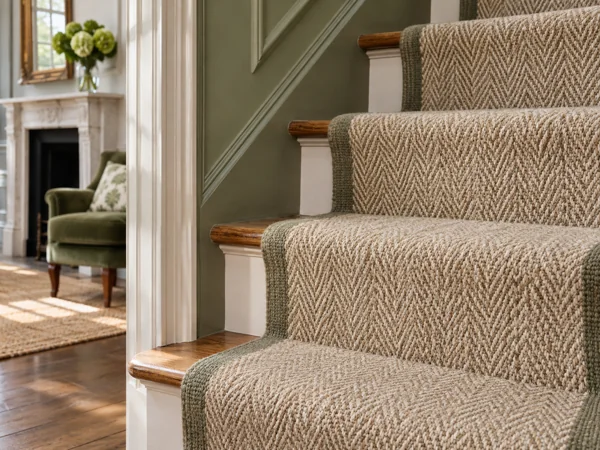
For a private staircase, count the treads, risers and landings with carpet. Say whether a runner is fitted with rods or sits on the floor as a separate textile. Note any repair, loose edge or exposed backing without pulling anything up. A loose rug or inset mat should have its own measurements and care details. If you want to discuss a shared piece of carpet outside the home, identify it clearly and ask whoever manages that part of the building how to arrange it.
Check for changes from door movement and furniture pressure
A carpet can look flatter against a door or beneath a heavy piece of furniture. Take a photograph with the door open and one looking along the pile. Note any edge that is pulled or rubbed when the door closes. If a bed or cabinet was recently moved, show its original position and describe the difference in the exposed area. Identify any lead or floor protector that lies across the affected part. A mark can sometimes appear at the edge of something that has been left in place for a long period. Its position can help the technician assess its possible origin.
Check where carpet meets an adjoining hard floor or touches a low step. A raised strip may be visible from one side only. Tell us if it moves underfoot and share any history of repair. Let the technician assess the current condition and suitability before work rather than assuming that cleaning will change flattening, fading or fibre wear. If there is a separate spot from a spill, give its location and history as its own item.
- Show the line of the door next to the pile.
- Report movement at raised strips or seams.
- Describe changes after a piece of furniture was moved.
Give an account of the area affected by a spill
Write down what you saw when a spill happened. It can help to know which part of the carpet was wet even if the remaining spot is smaller. Include the approximate date, material and anything applied afterwards. If there is a product label, keep it to show the technician rather than reapplying it. Point out any change in the pile colour when it dried. Show where the liquid travelled beneath a rug or over a join. Give one picture that shows the layout and one showing the visible mark more closely.
Mention any dampness, odour or repeat appearance well before the visit. The condition of the carpet and adjoining flooring can affect what is suitable. If a previous occupant used a product and you do not know which one, say that. It is more useful than making a guess. A technician can consider fibre, visible backing, wear and prior treatment before recommending a method. Some marks or changes to the carpet may remain visible after work.
- Record what spilled and where it spread.
- Include anything applied later and any label you have.
- Report moisture, change in colour or odour.
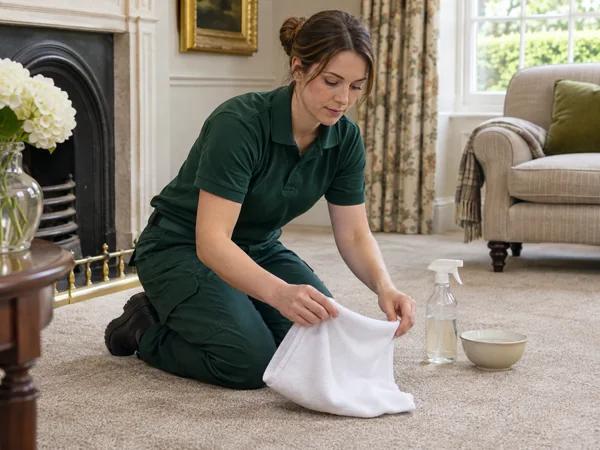
Give a useful history for a concern
| Observation | What helps assess it |
|---|---|
| Rubbed edge | Which way the door swings and when it catches. |
| Newly exposed carpet | Position of furniture and what has changed. |
| Spill outline | Original area, material and products applied. |
Consider treatment against fit, fibre and past work
If you have a carpet label, invoice or spare sample, share it before assessment. Mention which room it came from if carpets were fitted at different times. On site, the technician can examine the pile and how the carpet is attached, including visible backing, joins and condition. Show any area with a previous repair or a weak edge. Discuss whether a suitable test can be made before general work, particularly if the carpet reacted to something before. An assessment can also reveal where access around furnishings prevents work to part of a room.
Water-based extraction may suit some carpets after assessment. A lower-moisture method or further specialist assessment can be discussed where fibre, backing, dye response or damage needs extra care. Describe loose rugs separately, using their label and any condition or markings in the fringe. If a rug sits on fitted carpet, ask which treatments are proposed for each surface. Do not expect a method proposed for one fitting to automatically suit everything in an adjoining room.
Use a second space for people and belongings during drying
Set aside a room or section that can remain dry, with keys, medication, work devices and anything residents may need for children or pets. Leave a route that stays clear when a chair or box has been moved. If the main door and bathroom connect by the carpeted hall, tell us which one people need and when. A route around treated carpet is only useful if people can take it safely. Point out any narrow turn or small step, particularly if someone uses a walker, pushchair or shopping trolley.
Check how each space can be aired, including an inside hall or a room with windows that cannot be opened widely. Drying depends on the carpet, method and conditions. Follow the advice given for each floor before putting down a mat or returning heavy furniture. Tell the person first due back which rooms can be used and where the instructions are. Tell us if you need to close the property or arrange a key return soon afterwards.
- Set aside a dry place to wait and keep essential items.
- Describe dry routes to the door and bathroom.
- Pass on ventilation and drying guidance.
Agree each stage of the visit
| Stage | Practical step |
|---|---|
| Entry | Confirm the authorised door, contact and route. |
| While working | Keep an untreated route and essentials accessible. |
| Aftercare | Agree drying guidance, safe ventilation and key return. |
Check who manages the authorised route at each stage
Find out if arrival relies on a building contact who can approve a loading point or release a lift. Give any permitted times, floor protection requirements and distance to the actual door. Where the street is used by visitors to several properties, ask what the equipment can use without creating an obstruction. Explain who will be there to give access if the route has to change on the day. If the flat is above other premises, confirm that opening hours for those premises are separate from the approved access to the flat.
Tell us if there are deliveries or workers expected to use the same passage. Confirm the expected availability of the route at the end of the visit. If the key is kept by another person, agree a place and time to collect and return it. Share security details privately if they are necessary and give everybody the latest version of the route.

Give the person attending a clear estimate and priority list
Use the photos and floor plan to read the estimate. Check each fitted room, stair, hallway and loose piece against what you actually want. Mark any seam, condition issue or wear that needs checking before treatment. Say if the quote assumes furniture or rugs will be moved. Make an update if something changes before the visit. Give the person meeting the technician the correct room names and priorities, and state who can approve a different method or an adjustment after inspection.
Confirm who will receive the drying and aftercare advice. Give them the timing for occupants, furniture delivery or key return so it is clear which areas need to come back into use first. If somebody else will close windows or check the carpet, give them the guidance and contact details before the first person leaves. A clear handover is particularly helpful where an empty home will only be visited again by someone who did not see the work.
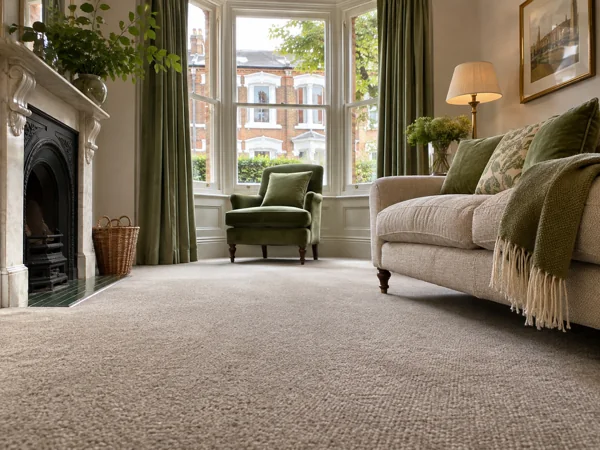
Get a carpet cleaning quote in Custom House
Request a quote with the carpeted rooms, stairs and any loose items listed separately.
Get a QuoteOther Cleaning Services in Custom House
Local references · Newham Council: Custom House and Canning Town resident information
Custom House carpet cleaning questions
What if the flat shares an address with a shop?
Give the full property address and exact residential door or bell, including the street it faces.
Can I ask for the carpet right up to the kitchen threshold?
Show where the fitted carpet ends and flag any trim that is loose or raised.
Should I mention a mark under a piece of furniture?
Explain where it is, what can be moved safely and what you know about how it appeared.
What if a stain returned after another attempt?
Tell us what was used, when it reappeared and whether the area is currently damp or has an odour.
Can I arrange departure after reception hours?
Check the approved route and the person who can release it, then give us the arrangement before the visit.
When can the fitted hall be covered again?
Follow the advice after treatment. Carpet type, method and room conditions affect drying.