 Housekeeper
Plan the equipment route before arrival
Carpet Cleaning in Waterloo
For a Waterloo carpet cleaning quote, tell us what is fitted, where the rooms are and what you notice about the pile or edges. Give the real route from the street to your home. If you need one room back before the others, say so when we discuss the plan.
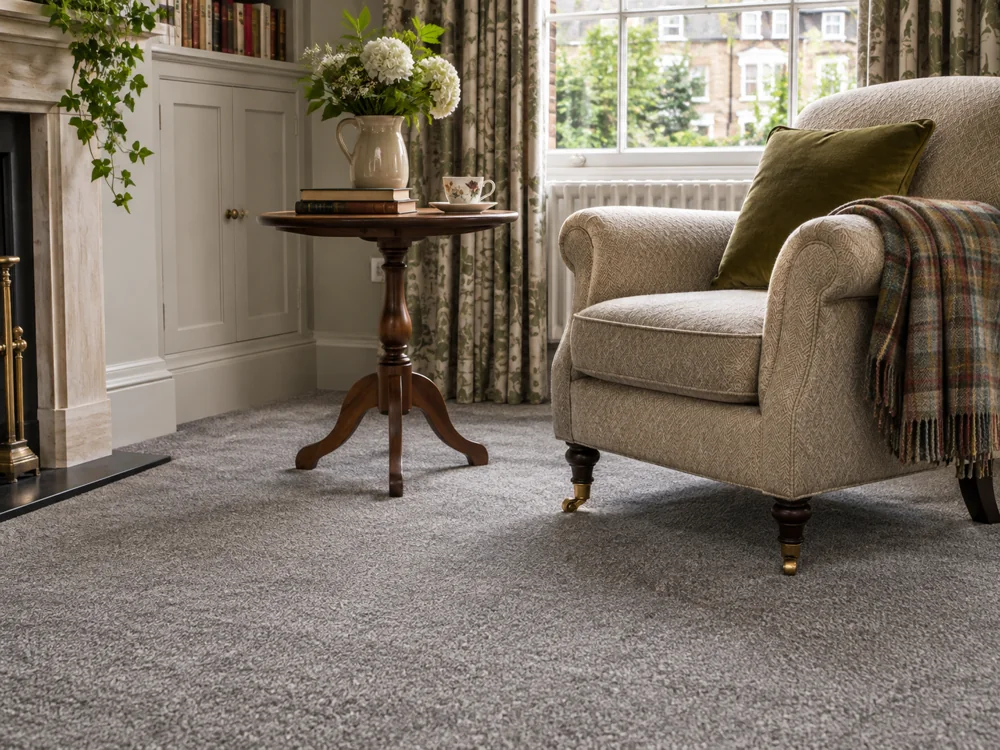
What information helps with a Waterloo carpet estimate?
Send fitted measurements, photos of edges and marks, any loose items and the door approved for equipment.
Can I arrange cleaning around a key handover?
Give the timings and access contact before booking. Allow for drying based on the carpet and room conditions.
Locate the property beyond the station approach
National Rail lists London Waterloo station on Station Approach. A reference to the station can help somebody get to the area, but it does not show which residential entrance may accept carpet equipment. Send the complete house or block address, including the postcode and recognisable door label. If an entrance lies on another street from the building address, explain how to get to it. Tell us which doors have a bell or require a resident to come down, and whether an internal passage from the authorised door reaches the correct floor.
Where there is more than one access option, confirm the difference between the public lobby and the route intended for visiting equipment. The lift may be available only with staff, or it may stop at a level below the home. Give the final steps or corner and ask management about any time when the approved approach is closed. Identify who will confirm the details on the day.
- Give the actual residential door and access contact.
- Describe corners, lift and steps once inside.
- Confirm timing with management if a route is restricted.

Split a connected apartment into countable carpeted parts
From the front door, trace exactly where the fitted carpet lies. A hall can continue into the living room and meet an inset mat at one end. Report the approximate size of each section and whether the carpet carries on without a visible join. Describe transitions alongside timber, tiles or stone. Include any protected part under a moveable seat if you expect to make it accessible. If a piece ends at a fitted cupboard or returns around a coat rack, a drawing with dimensions can be clearer than calling the area a rectangle.
A loose rug, entrance mat or narrow runner has its own care requirements. Give its dimensions, backing if visible and condition rather than including it in the fitted floor total. For steps, count the treads, carpeted risers and landings. Identify whether carpet on the other side of your front door is shared. Ask whoever manages that area if you want it considered and keep it clearly separate from the private rooms.

Show the fitted and loose surfaces
| Area | Details to provide |
|---|---|
| Carpeted hall | Length, width and joins to doors or an inset mat. |
| Private steps | Count treads, risers and landings separately. |
| Loose rug | Dimensions, border, backing and care instructions if known. |
Describe a stain in relation to how you use that part of the floor
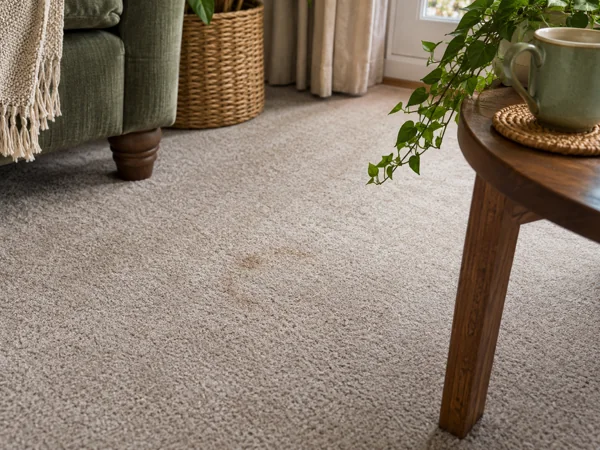
Use room landmarks to locate the affected patch. Say if it sits at the dining side of the carpet, next to a chair wheel or where somebody normally stands at the door. Give a whole-floor photo and a closer image of the pile. If a spill was involved, record what reached the carpet and when. Describe anything applied afterwards, including water or household products. If a container remains, share the name and label before the technician considers how to treat that area.
Explain whether the patch can be seen in all directions or only when looking towards a window. What looks like one spot might include flattened pile, a colour change or soiling from more than one incident. Mention dampness, past leaks or odour, especially if the problem reappears after the carpet looks dry. Some marks and damage can remain visible. Use the assessment to discuss what is likely and what cannot be established until the carpet is inspected.
- Locate the issue with a room landmark and photos.
- Share the substance and any products already used.
- Flag current dampness and changes in pile or colour.
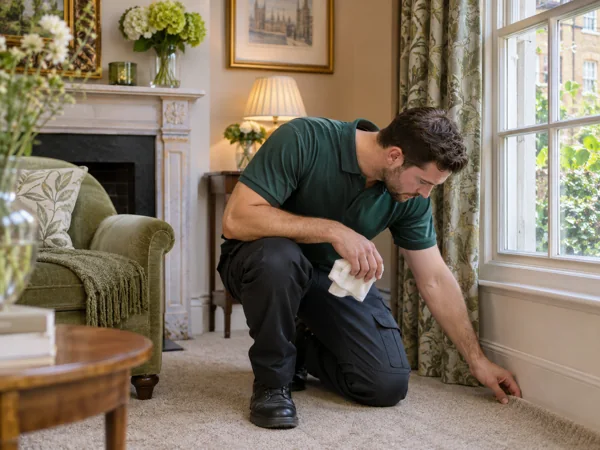
Make room for the visit without relocating heavy items
Choose which lighter belongings can be set aside and find them a dry place outside the access route. A stool can fit in the hall but still obstruct a turn with equipment. A loose desk mat can be moved where safe, but computer connections or cables may need to be dealt with by the resident. Send a photo of the room once it looks as it will on the day. Measure the clearance at a low bed or sofa if the accessible section underneath matters to you.
Tell us where any heavy or fixed item will remain and which parts of the floor it affects. Look at objects on shelves or furniture that might be in the way as someone passes. If a bed is being removed by a separate delivery team, explain when that will happen and who can update the room description if new carpet condition is revealed. The estimate is easier to check when it describes reachable carpet and the boundaries of the agreed work.
- Keep the turn from the door clear.
- Disconnect or secure cables you can safely handle.
- Show access around low or fixed furniture.

Use material and condition to decide the method
A fitted carpet may be made of a natural fibre, a synthetic material or a blend. A plain-looking surface does not reveal the backing, fibre or dye stability by sight alone. Have maintenance notes or a spare sample available when you can find them. Point out repairs, loose joins and areas where the pile has lost texture. Ask what can be checked before work and whether a test or further assessment is appropriate. If carpet in a second room was fitted at a different time, identify it distinctly.
Water-based extraction can be discussed once the carpet and conditions have been assessed. A lower-moisture option or specialist assessment may be suitable to discuss where construction or condition raises concern. Show the label, border and any damage of a loose rug separately. Avoid lifting a fixed carpet to show its backing. Where you know that prior treatment changed colour or feel, identify the affected part and explain what happened before a method is agreed.

Evidence for the first inspection
| Issue | Useful detail |
|---|---|
| Mark close to a chair | Image showing the chair and a close view of the pile. |
| Spot after a known spill | Substance, date and products applied. |
| Visible repair | Where the seam sits and what movement you notice. |
Schedule along the routes that have to remain available
Think about the period between the start of work and the point at which the treated carpet can be used again. If occupants need the bathroom, choose a space with a dry route to it. Move bags, medicine or work equipment there before the visit. Where a fitted hall serves the main entrance as well, say who comes and goes and when. It may be possible to change the order of rooms once everybody knows which part has to be usable first. Flag any door swing or threshold that makes the dry route narrow.
Explain which windows or vents can safely be used, including times the property will be locked or a pet will be indoors. Drying depends on carpet construction, the selected method and the room conditions. Follow the advice before placing furniture, rugs or floor protectors back. If an occupant comes back later than the resident who met the technician, ask them to pass on the instructions and point out which room or route still needs time.
If a neighbour or family member will bring a delivery to the flat, point them towards the agreed door and let them know when they can enter. An occupied flat may have space for a visitor to wait but nowhere suitable to keep a heavy parcel off the carpet. Choose that place before clearing furniture and leave enough room to open the door fully. A small item such as a kitchen stool can help in the waiting room if somebody cannot stand for long. Make sure it has a stable base and a clear approach.
- Work out where people can wait on a dry floor.
- Identify windows or ventilation that can safely be used.
- Agree who will relay the drying guidance.
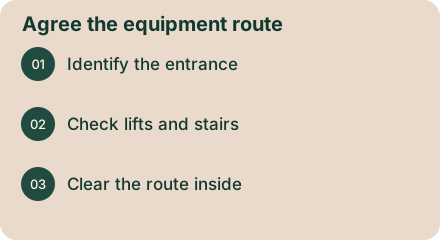
Check the loading, lift and departure arrangements together
Ask whoever manages the building to confirm any approved loading point and time slot. Specify how far equipment must travel from there, and whether steps or ramps are involved. Check if the lift takes visitors from a different level from the authorised door. If a protection layer is required in the entrance, ask where and who supplies it. Share the access arrangement before booking and check that it covers the departure. A different resident may keep the doors open at the beginning and end of the visit.
Mention any other contractor or delivery expected through the entrance. If the same lift or turn is involved, ask how to keep it available without blocking the shared route. Confirm where a key can be collected and returned and who will be there to receive it. If the access rules change, send the new arrangements rather than using directions that still name the previous door or lift.
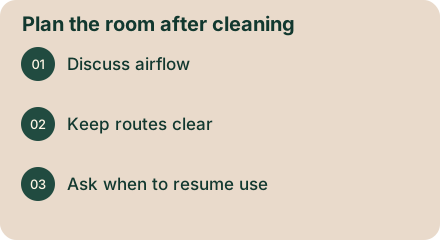
Approve an estimate based on the carpet you can actually reach
Check the estimate against the room plan and photos. If there is an unlisted recess, fitting strip or staircase, raise it before confirming the visit. If a floor covering or heavy item must stay down, ask which areas can be reached. Put loose pieces and any assessment of stains on their own lines where they need separate handling. Give the person on site a version they can refer to if a method changes or the carpet condition differs from what was visible in a photo.
Clarify who can approve any change and identify a person to receive aftercare advice. If a keyholder comes only to admit the technician, ask how the information will reach occupants. Tell us if a viewing, handover, delivery or other visit will affect drying or access later. Give as much time as practicable between commitments and check the intended room order before confirming any adjacent appointments. Record any changed timing in the same note as the agreed carpet areas.
Coordinate building use and drying
| Stage | Plan to agree |
|---|---|
| Arrival and departure | Approved route, lift and access contact for both. |
| Work and early drying | Dry way to essentials and space for moved belongings. |
| Handover | Ventilation advice and when items can be put back. |
Get a carpet cleaning quote in Waterloo
Request a quote with the carpeted rooms, stairs and any loose items listed separately.
Get a QuoteOther Cleaning Services in Waterloo
Local references · National Rail: London Waterloo station
Waterloo carpet cleaning questions
Does the station address help with the quote?
Give the actual property address and entrance. A station is useful only to describe a nearby direction.
Should I count the carpet just inside the entrance?
List it and show whether it is fitted or an inset mat that can be lifted.
Can a desk stay where it is?
Describe what can be reached around the desk and which cables or smaller items can be moved.
How do I describe a patch beside a chair wheel?
Show the room and the pile close up. Tell us where the wheels usually move and when the patch became visible.
Can the fitted corridor be left until the end?
Explain what routes have to stay available and discuss a suitable order before booking.
Do I need to book the lift for departure as well?
Check the building rules in advance, including how equipment will leave and who opens each door.