 Housekeeper
Practical carpet care for lived-in homes
Carpet Cleaning in Queen's Park
For a carpet cleaning quote in Queen's Park, explain where the fitted carpet runs and which areas are a priority. Give the condition of the pile and a short description of the way into your home. We can discuss an appropriate method after assessment and how to manage the rooms during drying.

What helps you quote a Queen's Park carpet clean?
Provide the full address, fitted areas, stair count and condition. Show separately any loose rug or stain you want checked.
What if our stairs must stay in use?
Tell us which route people need and when. Agree the room order and drying plan before the visit.
Use the junction to orient visitors towards your address
Brent Council identifies a junction of Salusbury Road, Brondesbury Road and Harvist Road in its Queen’s Park Healthy Neighbourhood information. If you refer to it in directions, say which street the private entrance faces and how someone will identify the correct number. Add the full postcode and any flat label. Where the approach changes with a basement gate, outdoor steps or a path shared with the next house, make the route clear enough to follow from the pavement. Send the actual entrance rather than expecting somebody to infer it from the name of the area or park.
Ask the person who controls the door what approach is approved for equipment. Look for a gate that only opens inwards or a tight turn after the first step. If both matter, show their positions in a photograph or a short route note. Give the name of the person who can answer the door, including an alternative contact if they are likely to be on a call when equipment reaches the house.
- State the street the door actually faces.
- Explain any narrow gate or exterior steps.
- Give one contact for the approved route.
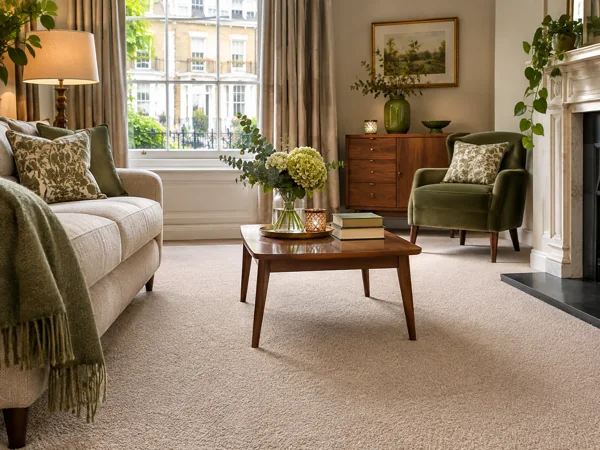
List a stair and hall properly
| Part | What to include |
|---|---|
| Straight flight | Treads and carpeted risers, with any loose edge. |
| Turn and half landing | Approximate dimensions and how the carpet joins. |
| Hall at the foot | Where the carpet starts and nearby hard flooring. |
Give the hall and stair run a separate line
A quote based on a bedroom count can miss more floor than you expect. If you want the fitted hall, half landing or a short staircase included, write those on separate lines. Count the treads and risers with carpet and say whether there is carpet between two flights. Identify any rail, rod or stop that has become loose. A photograph up the stairs and one along the landing help place the points of concern. If a step or landing is part of a shared approach, explain who owns it and who is able to make a request for that area.
Note the point where the landing carpet passes into a room or meets bare boards. A runner in this area may have a different fibre or fixing from the sitting room. Send its width and length and any label you can see without disturbing it. Show if a carpet strip continues at the foot of the stairs, since that could change how you plan to walk through the property while it dries.
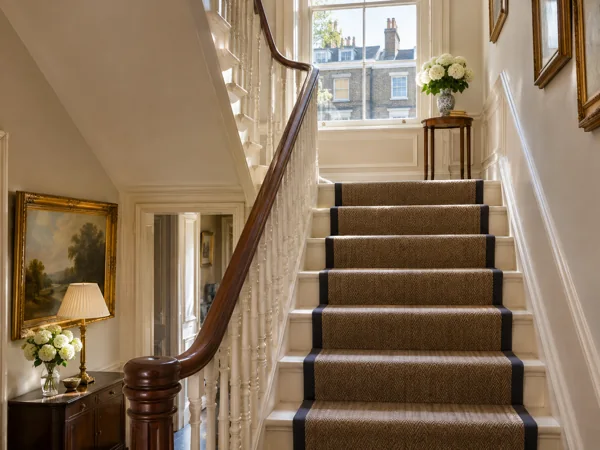
Describe the two or three places most affected by traffic
List the places you notice every day, such as the floor immediately inside the front door or the path between the hallway and a chair. Take a photo along the path and another at an angle so the change in pile shows in both. Decide which area you want assessed first. A stain might share a traffic lane without having the same origin as the rest of the visible change. Explain if the most obvious mark appeared quickly, or gradually over years of people using the same part of the carpet.
A patch that has been kept under a mat or cabinet can look different once exposed. If you recently changed the furniture, tell us what used to stand where. Record any floor protector that covered one half of the room. Changes in texture caused by repeated use and changes to the colour of the fibre need to be discussed during assessment. An estimate can include attention to visible marks, with outcomes depending on their cause and the condition of the surface.
- Give the location and age of the most noticeable areas.
- Photograph the pile along and across the traffic route.
- Tell us what used to cover each patch.

Put a recent stain and an old spot into different notes
Use a separate description for each stain if you can. One might have a known history and still be damp, while another has been present since before your tenancy. Record any cleaner or rinse already used, with a label or photograph if you have it. Mention when the stain dried and whether you have noticed it return. Clear photographs are useful, but keep enough of the room in one picture to show whether a mark is beside a wall, a bed or a door. Give the affected size if you can do so without moving a heavy piece.
Remember to say if a stain extends under a rug or into a join. If the resident has noticed the surface feel or colour change after a product was applied, record that detail. An odour or recent dampness also matters before any method is proposed. Listing two marks separately helps an assessment consider the history, fibre and what appears on the day. The technician can explain the limits of what can be attempted before work goes ahead.
- Note the likely date and the action taken afterwards.
- Report where a mark goes under a rug or join.
- Explain changes to the pile or any current odour.
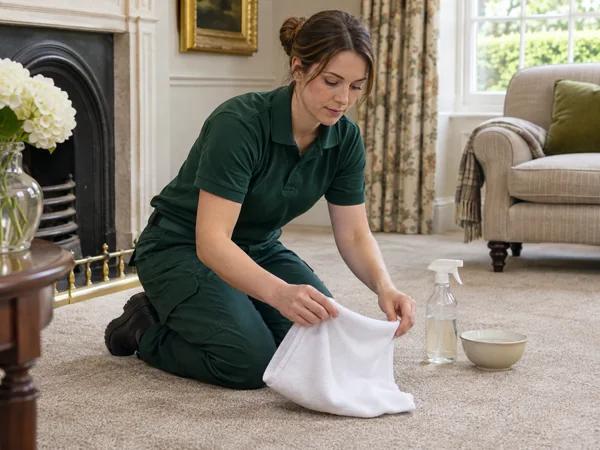
Write a stain record
| What is known | Useful evidence |
|---|---|
| Immediate spill | Approximate date and material that reached the pile. |
| Old spot | Condition when first noticed and any earlier floor covering. |
| Mark that returns | When it becomes visible again and what has been tried. |
Choose a suitable method once the carpet has been examined
Use manufacturer guidance where it can be found. A retained label or offcut can help indicate construction but may not say how the installed carpet has worn or what products it has been exposed to. Point out the edges, seams and any patches you know have been repaired. If carpet was installed upstairs at a different time, give a separate description and identify the floors in your images. An onsite check can consider fibre, backing where visible, dye response and current condition. Ask what can be confirmed before selecting a treatment.
Water-based extraction can be discussed for carpets where the material and condition suit it. A lower-moisture approach or specialist assessment may be considered where there is an unknown backing, delicate fibre or uncertainty about an old repair. Tell us if a loose rug needs assessment of its own, using the care label and backing details if visible. Record a plain fitted hall and an ornate runner separately even if they sit alongside each other.
Find the best place for a household to wait
A clear space in the front room can be handy for a visit, provided everybody can reach it from a dry floor. Choose somewhere to keep school bags, medicine, pet bowls or anything a resident might need until the carpet can take use again. If a cot or a pet enclosure has to stay in place, mention that before the room order is planned. Think about a sleeping child, a person who works in the loft or a dog that needs to go outside. The route must work at the time the carpet is being treated and afterwards.
Check which rooms can be aired and whether you can safely leave windows open while the household is elsewhere. Carpet, method and conditions influence drying, so let the person using the room first know that the time may change. Wait for the advice given for the individual areas before putting floor coverings or large items back. A dry room and clear route can make it easier to allow enough time without trying to hurry drying to meet another commitment.
- Set aside an untreated room for essential belongings.
- Mention the stairs or doors occupants must use.
- Share restrictions affecting ventilation.

Make room for people and equipment
| Household need | What to organise |
|---|---|
| Pet access | Dry room or route to outside away from treated carpet. |
| Furniture waiting place | An untreated room, with its entrance left clear. |
| Ventilation | Windows or vents that can be safely used and who checks them. |
Keep moved items away from the narrowest point
If some furniture can be moved safely by the resident, plan where it will wait. The landing is rarely helpful if a technician needs to carry equipment past it and other people still use it. Pick a dry room where you can put small items without blocking a doorway or trapping something you will need. Bundle trailing cables away from the floor you want cleaned and take care of unstable objects on low tables. Tell us which large furniture needs to stay, putting the ones nearest a doorway first in your note.
If an item will be removed by someone else, confirm the timing and how much carpet should be accessible after it has gone. A bed or cabinet can make more of a difference to the work than several small chairs. Send an image showing the floor once it is clear if the layout changed after the estimate. If no moving is possible, describe the limits of the open floor so time is planned for areas the technician can actually reach.
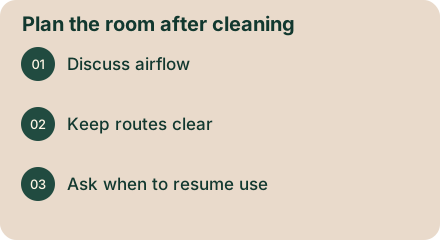
Compare the agreed room order with normal household use
Ask for the quote to use the same room names you use in the household. Identify separate items such as a stair runner, a tricky edge or a spill when they need their own decision. Compare the proposed order with school pickups, work calls or another appointment that uses the entrance. Confirm that somebody can answer questions about which floor to start with and what is safe to move. If your plan requires an untouched room throughout, mention which area it is before agreeing the visit.
Give whoever is there the final estimate, notes and contact details. Make sure the same person knows which room matters most if the carpet needs a different treatment than assumed. Agree who will receive and pass on advice for ventilation, traffic and returning furniture. If a child or pet is normally first through the hallway, tell everybody when it can be used again. For an empty home, make sure you know who can return to check the rooms if ventilation needs to be adjusted.
Get a carpet cleaning quote in Queen's Park
Request a quote with the carpeted rooms, stairs and any loose items listed separately.
Get a QuoteOther Cleaning Services in Queen's Park
Local references · Brent Council: Queen's Park Healthy Neighbourhood
Queen's Park carpet cleaning questions
Do I list a half landing when the stairs are included?
Yes. Mark any carpeted turn or landing with the stair count and show where it joins the hall.
What if the front-room carpet was protected by a mat?
Show the outline and say how long the mat was in place so the different appearance can be assessed.
Can you tell from photos whether water-based extraction is suitable?
Photos help plan the visit. The condition, material and other checks on site guide the recommendation.
How do I explain a separate entrance for a basement flat?
Give the full postal address and point out the exact gate or steps used to reach the flat.
Where can I wait during cleaning?
Plan a dry space with a usable route, and discuss it while the visit order is arranged.
Should I tell you if a spot appeared after a product?
Yes. Include the name or label and what changed after it was applied.