 Housekeeper
Practical carpet care for lived-in homes
Carpet Cleaning in Blackheath
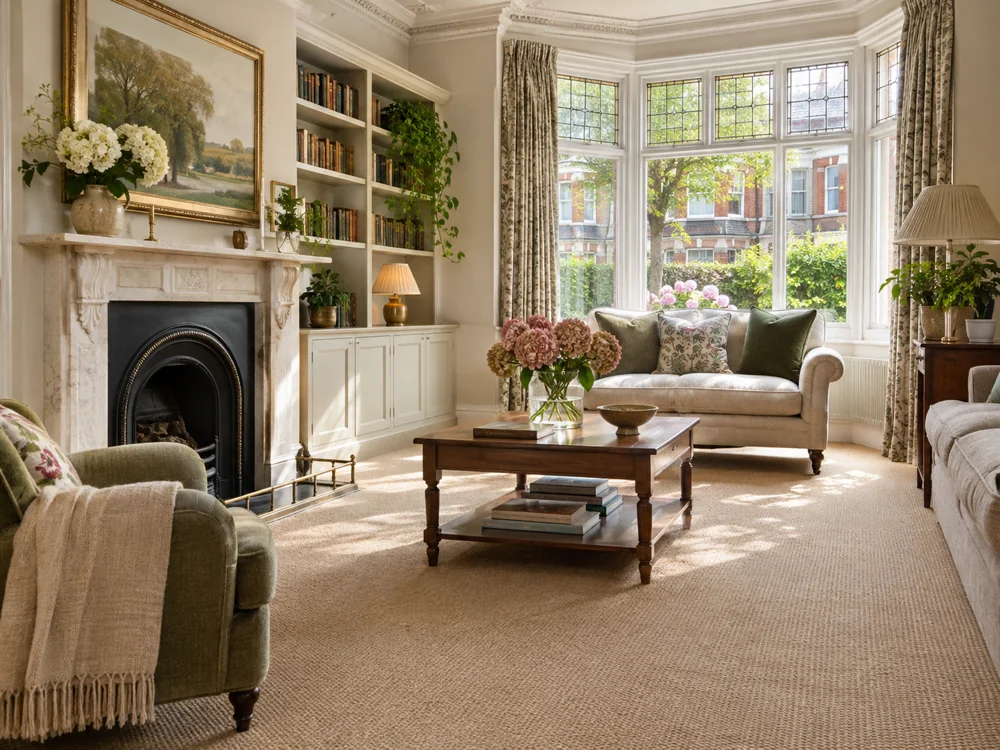
For carpet cleaning in Blackheath, list the fitted rooms, carpeted stairs and important marks you want considered. Explain whether the textile changes at a doorway and how the technician can reach the open carpet. Give the full SE3 postcode and the access route from the street, especially if steps lead to an entrance below or above pavement level.
Can I enquire about a Blackheath home near Tranquil Vale?
Yes. Give the complete property address, actual door and authorised equipment route, including any steps.
Can a faded strip near a window be assessed?
Yes. Describe exposure to light, previous cleaning and the location. The technician can distinguish changes from removable soil.
Give the actual Blackheath entrance and explain which side of the property is used
Lewisham Council’s Blackheath conservation area appraisal describes the station and the lower part of Tranquil Vale. Use these as local references only if helpful, and follow them with the residential door, full postcode and approach. A converted property may have an entrance reached by a separate path or external stair rather than the front of the building. Identify the door number or bell label and tell us where a technician can unload lawfully. If the nearest place to stop does not lead directly to the entrance, give the route from there.
Mention slopes, gate widths, external steps and turns along the path to the door. Inside, describe any flight or corridor that leads to the carpet. If it is a shared entrance, confirm how a resident or building manager can open it and who will meet the technician. Tell us which floor the fitted area occupies and whether a lift reaches the same level. A side approach might reach the right room but still be tight where it turns. An accurate description helps plan how to bring equipment in and out of the property.
- Give the full SE3 postcode and the exact door marking.
- Describe the route after any shared entrance or outer gate.
- Check when and where permitted unloading is possible.
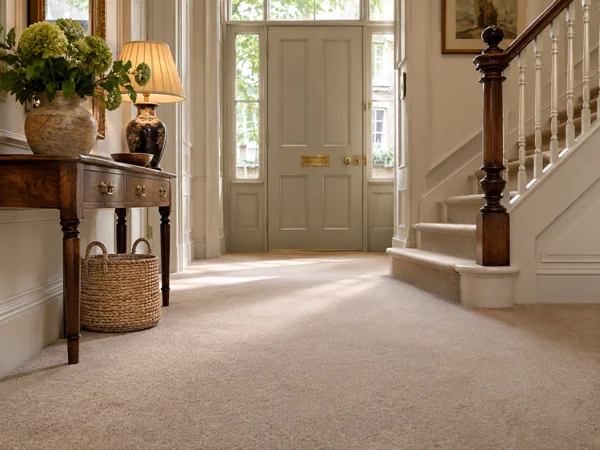
Blackheath fitted areas to describe individually
| Area | Measure | Mention |
|---|---|---|
| Front room with bay | Main area and projection dimensions | Furniture between bay and room |
| Basement access hall | Widths and length | Steps and entrance route |
| Private staircase and landing | Treads and separate landing size | Runner fixings and edges |
Set the fitted floor measurements around real furniture and thresholds
Give the approximate length and width of each carpeted room. Where a bay, alcove or narrow dining corner adds to the fitted floor, measure it separately. Indicate where the carpet stops at a door bar or opens into a hall. If you want treatment of the area around a fixed cabinet or bed, note the rest of the carpet that you can reach without moving it. An irregular area beside furniture can be easier to describe with a rough sketch or photo.
Include any sections that continue from a front room towards the stairs. A separate landing or fitted runner should have its own dimensions and condition details. Tell us where one textile is fitted to another, regardless of how similar they look. A loose rug may cover part of the fitted floor and need independent treatment information if both are requested. State what will stay in the room and what you can clear in advance. If the equipment will cross a carpet that is outside the work, mark it as access only.
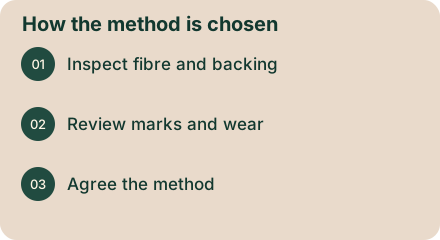
Use fitting information and visual condition to choose an approach
If you have an original invoice, label or carpet offcut, let the technician know. They can consider it with details from the inspection, such as the fibre, colours, accessible backing, seam condition or loose fitting. A repair at the edge of an alcove may change whether the carpet can be worked on all the way to the wall. Report current damp, past leaks and areas where the backing may have shifted. Mention the position of a raised threshold and any pieces replaced at different times.
Water-based extraction can be appropriate after a suitable fitted carpet has been assessed. It uses cleaning solution and suction to recover liquid and loosened soil. Some carpets and fittings can need a lower-moisture or specialist method. Discuss what is appropriate before work is agreed. Where the carpet is unknown, colours have shifted or a previous product was used, ask about assessing a small area. Different methods may be considered for different textiles, and a vulnerable seam may set a limit even if the carpet around it is sound.
- Share any fitting and care information already available.
- Identify edges that lift, repairs and changes of backing.
- Explain earlier wetting or ongoing moisture before the visit.
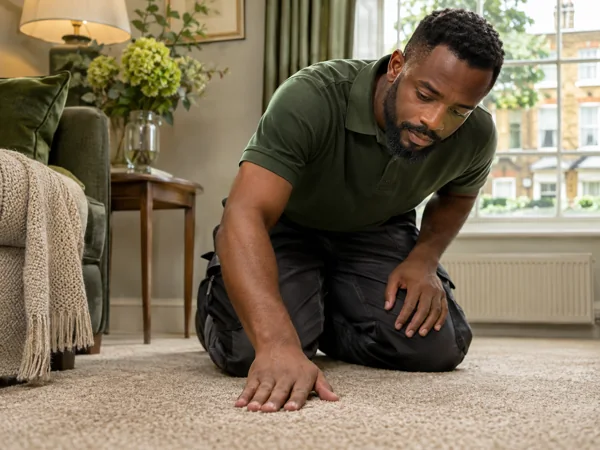
Describe a light strip where the carpet has seen sun or less wear
A distinct pale strip near a window or under an old mat can look like a cleaning problem. Tell us how long the area has looked different and where it sits in relation to the light and use of the room. If you have noticed marks from spills as well, give the age and source where known. Send a close image plus a wider view that shows the relevant doorway, furniture or window. Provide the names of earlier products if possible and describe any difference after drying.
A darker strip near the hall can contain soiling along with wear or flattened pile. The technician can examine whether the appearance seems to come from soil, product residue or a change in the carpet itself. Mention persistent odour, repeated pet events and any moisture that may have reached below the surface. Define the priority if one change is more important than the rest of the floor. That helps the work and its possible limits be discussed before any treatment is agreed.
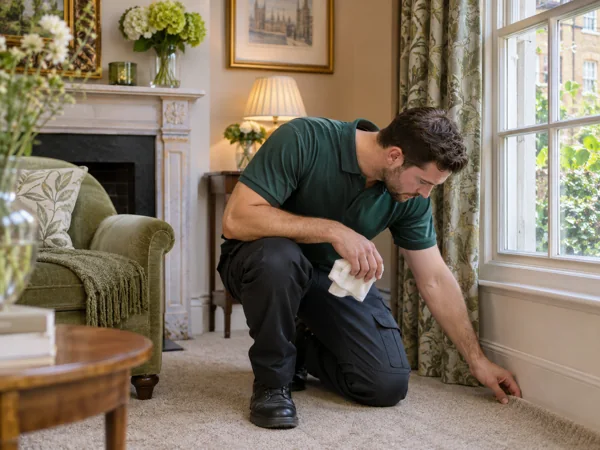
Information for comparing visible carpet changes
| Observation | What to share | Assessment point |
|---|---|---|
| Light strip beside window | Light exposure and product history | Likely shade change or removable soil |
| Dark route from front door | Use, mat location and earlier work | Soil and pile condition |
| Repair near a threshold | Age, fit and materials | Treatment limit at the join |
Agree where equipment can work around fixed or delicate furniture
Identify the items that must remain in position and the clearance around them. A low seat, floor-standing sideboard or fixed cupboard can leave a clear strip but prevent treatment underneath it. If there is a mark close to one of those pieces, note how much is open. A smaller item may be movable where the household can set it down without blocking the passage. Tell the office if there is no suitable alternative location. It can be more practical to consider the areas that are genuinely open.
Clear loose belongings, cords and fragile objects from the floor and the path the equipment will take. Identify any polished timber edge or tile beyond the carpet. If a workspace has to stay connected or an occupant needs a particular doorway, explain that. Planning the work and household movement before the appointment helps keep the entrance and agreed routes clear. Ask about the expected limit around furniture or at delicate edges before taking the date and work as confirmed.
- Give the open measurements next to furniture that stays.
- Remove loose items and cables from the working route.
- Identify delicate floor transitions and essential access.
Inventory carpeted treads and landings as distinct areas
Count each tread in each flight and indicate any angled steps on a turn. Measure the carpeted landings separately. Note if a runner has rods, bound edges or exposed sides, and report any loose part or repair. Give the materials if the landing and stair differ. The technician needs enough clearance at the top or foot of the stairs to reach the treads with an appropriate tool. Describe a gate, door or tight bend close to the first or last step.
In a conversion, an uncarpeted common stair might lead to a private carpeted area. Label which surface is simply equipment access and which you want assessed. If a common carpet is included in the enquiry, find out who can authorise the work. A private flight may be essential for reaching bedrooms or the bathroom. Tell us when occupants need it and ask about safe access during assessment and when the treated carpet can next be used afterwards.
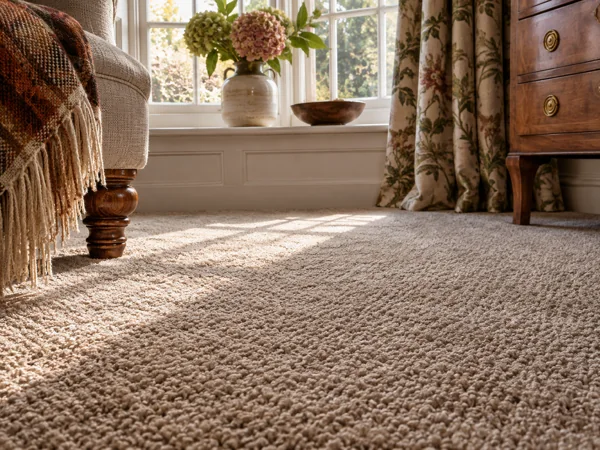
Organise use after the fitted carpet is treated
| Requirement | Tell the office | Ask the technician |
|---|---|---|
| Only stair serves bedrooms | When the route is needed | When it can next be used |
| Old rug covers front room | Material and where it can wait | When and how to replace it |
| Furniture arrives later | Time and access path | How to manage the treated area |
Prepare a drying plan for the interior and exposed rooms
The technician can advise on drying based on actual conditions, the material and the cleaning method. Say which windows can be opened safely and what ventilation is possible in carpeted halls and interior rooms. A room next to an entrance can be used differently from a spare bedroom, and the treated surfaces may have different aftercare. Tell the office whether the home has another route people can use and when the carpeted areas need to become accessible again.
Arrange another place for pets and ask when footwear, rugs and furniture can return to each carpet. If you have a fixed move, delivery or viewing, give the time and the route those people will need. For a property without anyone at home afterwards, discuss what ventilation and access can safely be left. Avoid timing the work around a fixed assumption about drying. Confirm what you can do to follow the advice, especially if the treated carpet serves the main living areas.
Request a Blackheath quote that identifies each fitted area and separate textile
Use the full postcode and property type in the preview and list the rooms and stairs. When speaking to the office, supply dimensions, the entrance route and the conditions that may influence treatment, including stains, repairs and earlier cleaning. Give a date preference if you have one and say who can open relevant doors. Explain the part of the work that is a priority. Ask which details still need assessment, especially where there is damp, an unstable border or unknown material.
Describe a loose rug, upholstered item or mattress as a separate item with its own measurements and relevant material. A broader checkout clean is also separate, so give any agent requirement independently if needed. Confirm which fitted areas, steps and landings are being considered. If the condition or layout changes, or a shared entrance will close for work on the chosen day, tell the office before the appointment. That helps the assessment and quote discussion reflect the actual conditions.
Get a carpet cleaning quote in Blackheath
Request a quote with the carpeted rooms, stairs and any loose items listed separately.
Get a QuoteOther Cleaning Services in Blackheath
Local references · Lewisham Council · Blackheath conservation area appraisal
Blackheath carpet cleaning questions
Can I use Tranquil Vale as the full arrival address?
Use it as a local reference and include the complete property address and private door. Give the permitted route for equipment separately.
Should a fitted alcove be part of the room measurements?
Give its approximate dimensions and explain how it meets the open carpet. Mention if furniture or a border affects reach.
Can an existing light strip be assessed before treatment?
Yes. Describe exposure, wear and earlier products. Ask the technician to assess likely causes before agreeing work.
Will the same method suit a repaired section near a door?
The technician considers the actual carpet and repair. A vulnerable join or changed material can require a separate assessment.
What if the carpet at the top of the flight is different?
List both textiles separately. Count the treads and measure the landing, then point out where the change occurs.
Can I set the time for a viewing before knowing the aftercare?
Tell the office the viewing time and what rooms it uses. The technician can discuss the method, drying and use for the actual carpet.