 Housekeeper
Plan the equipment route before arrival
Carpet Cleaning in Borough
Tell us how the fitted carpet sits within your Borough property. A small entrance hall can collect grit from an outside route while the room beyond it sees a different type of use. We can discuss the open floor, any defined stain and the way to bring equipment to the right door before arranging a quote.
Can I ask about fitted carpet in a Borough apartment?
Give the full SE1 postcode, private door, lift access and the approximate open carpet dimensions.
Does a stain need its own line?
Yes. Give its location, substance and what was tried before you noticed the current appearance.
Separate the entrance carpet from the remainder of the flat
Start with the visible transition. A hall leading from a hard floor to a carpeted lounge may have a narrow fitted strip, a recess beside the door and a patch under a mat. The area that can be reached depends on the clearance around existing pieces and the exact doorway. Give an approximate size for each part, including any step and landing. If the carpet continues through the private door into common parts, say where the proposed work should end.
In an open living area, the fitted floor may wrap round a table, built-in seating or a cupboard. Mark both the open area and the furniture that stays in place. If an item can be moved safely before the technician arrives, say where it will go without blocking the only exit. A simple plan or a pair of photos can explain an irregular space better than a room count. If your concern is a single patch, show its position in the overall layout.
- Mark the fitted areas beyond each threshold.
- Photograph any part hidden when the door stands open.
- Send the measurements of the part that is actually clear.
Use Southwark Street to give bearings before stating the private route
Borough Market locates itself on Southwark Street next to London Bridge station and describes its public spaces as including uneven surfaces such as cobbles. If either landmark helps to orient a visitor, follow it with the property's full SE1 postcode, actual residential door and the approved street approach. A route through the market estate is not the same as permission to bring equipment to your door. Explain which side of the building a technician should arrive at and what sign or number they can see.
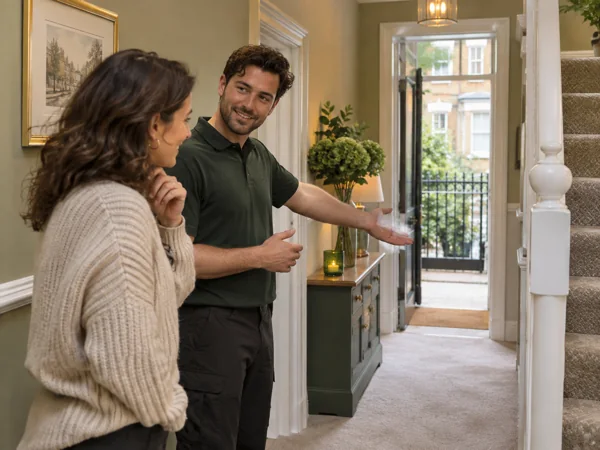
Give the agreed unloading position and describe the ground surface and narrowest turning point. A private door might sit behind another opening or opposite a business with the same number. Tell us which bell or gate to use first. If access from the ground floor changes to a stair or lift, include the remaining route and any permission needed. For a block with time restrictions, check when the equipment entrance can open. Discuss that before arranging other appointments around a carpet visit.
Fitted areas in a Borough apartment
| Area | Open measurement | Detail to describe |
|---|---|---|
| Lobby by entry mat | Width and visible recess | Where fitted carpet starts |
| Living area near built-in seat | Accessible length around it | Carpet remaining covered |
| Carpet across opening | Sizes before and after threshold | How the materials meet |
Consider both the carpet fibre and the adjacent flooring
Bring any accessible care label or fitting note to the assessment. If two parts of the flat were fitted at different times, give the records and photos by room. Photograph a seam or edge where it already shows. There is no need to lift a fitted section to take a picture of its underside. Give a note on loose joins, an unstable transition strip and any earlier repair that might affect where work should stop. It is useful to show the flooring immediately beside the carpet as well.
The technician can review the visible pile, condition, accessible backing and colour stability. A partly fitted carpet can mark differently near a transition or around fixed items. If you know of a leak, persistent dampness or a section that moves underfoot, raise it separately when enquiring. The appropriate treatment may depend on what can be established after inspection, not merely on the overall look in a photo. Tell us if a particular transition must stay dry or untouched.
- Show the junction at the doorway on both sides.
- Identify fresh damage separately from ordinary traffic marks.
- Keep the care record for each item with its corresponding photograph.
Discuss the proposed method after checking the fitted surface
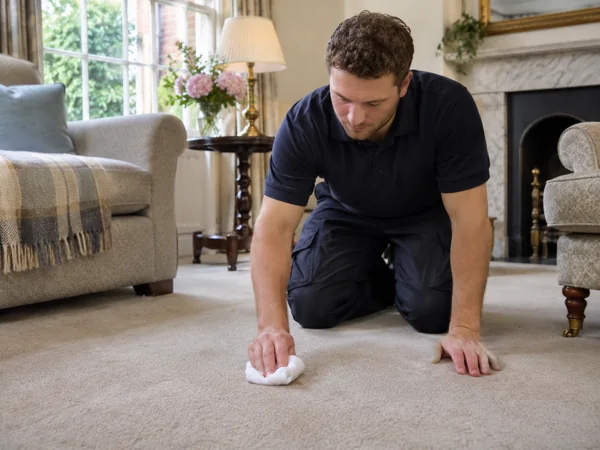
Water-based extraction can be considered on a suitable carpet. Professional equipment applies and recovers the cleaning solution; the carpet then needs further drying. Fibre, backing, condition and previous work help determine suitability. If a label limits the use of moisture or the carpet edge is unstable, discuss a lower-moisture or specialist assessment rather than assuming a water-based process. A synthetic appearance alone may not identify what is underneath or establish which process is appropriate.
Ask where the treatment can stop and which sections remain separate. If the hall is suitable but a repaired edge by the living area needs further checks, the technician can explain that before a method is agreed. Tell us which fitted surface you want to prioritise and which could be excluded if required. Where a lower part of the carpet remains inaccessible around furniture, discuss the work as a measured open area instead of promising to clean the entire room regardless of the arrangement.
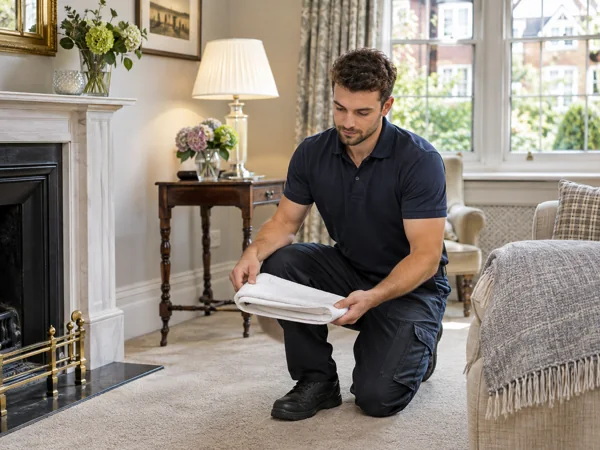
Distinguish a mark from a strip that receives everyday foot traffic
A dark entrance strip can result from both soil and compressed fibres. Photograph the position relative to the doorway and show a less-used part of the same carpet. If a pale edge appeared after a rug or mat was lifted, tell us how long it had been covered. The technician can assess what appears to be removable soil and which differences may persist because of wear or earlier changes in colour. Do not assume that a mark close to the door has one single cause.
For a known spill or spot, give the approximate age and any treatment already attempted. Mention if the mark became brighter or returned after drying. A smell or stickiness can be useful to report separately from the colour, and a pet incident may have extended below the part that is visible. Avoid another product before the visit if possible. Give a wide photo followed by a close view and explain what result you want to discuss when the technician sees the carpet.
- Describe a dark route and an isolated spill on separate lines.
- Tell us what changed after an earlier cleaning attempt.
- Report any smell or moisture in addition to the visible mark.
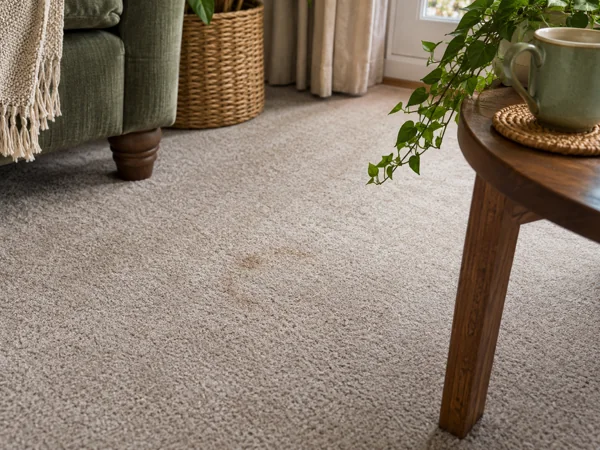
Inspection near hard flooring
| Observation | Explain | Consider |
|---|---|---|
| Loose trim at threshold | Movement and affected edge | Working boundary |
| Dark line near outer door | Use and shade from another angle | Soil and pile wear |
| Sticky spot isolated from traffic | Products previously tried | Possible residue |
Keep the turn from the door clear and specify the treatment boundary
Arrange small items so they do not crowd the foyer or the only clear turn into a room. Where a fixed cabinet or full shelf remains in position, identify which parts can be reached around it. If you want a low area partly beneath a sofa considered, show how far the carpet is open from an accessible side. Remind the technician about trailing cables or vulnerable edges you discovered while clearing a strip. The quote can be discussed around the area actually being made accessible.
When fitted stairs are present, count the treads and describe corners and flat landings separately. Point out any rods or insecure edges without detaching them. If a stair is part of the equipment route but not the area you want cleaned, include it in the arrival note. Similarly, a shared landing may need permission if it will be treated and have different timing from your own flat. Agree the exact dividing point in advance so everyone knows how far the proposed work extends.
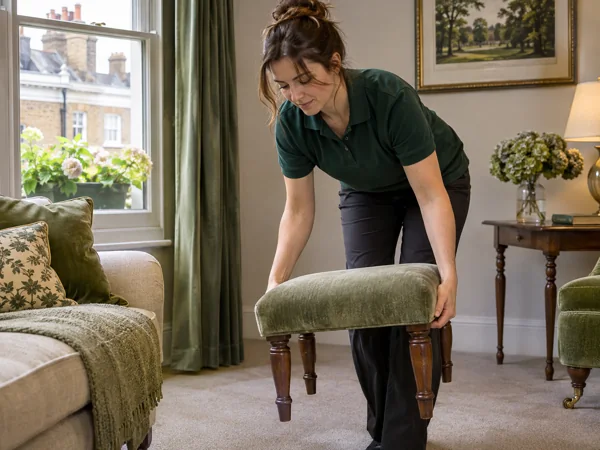
Agree how to leave and re-enter without walking on treated carpet
Ask how the selected areas can be used while drying takes place. The entrance hall may be the only way out of an occupied flat, so discuss how it can be treated in relation to the other rooms. If the household has a pet or a visitor coming back later, give the times and identify an alternate path if possible. Explain any limit to ventilation, such as windows that do not open fully or a door that normally remains shut.
Drying depends on the textile, technique, airflow and conditions. A carpet can still need drying once the equipment has left. Ask what to do while the area is drying and when normal foot traffic or furniture can return. If a removal or handover follows the visit, discuss the plan directly rather than assuming the carpet can return to use at a set time. Pass any aftercare advice to the person next opening the property, including which route they can use.
Prepare the Borough quote with address and carpet details together
The postcode form helps collect the property type, fitted areas and stairs before you speak to the office. Give sizes, room location and the exact private entrance alongside the condition you want assessed. If there is a rug, mattress or upholstered seat too, put it on another line and add dimensions or a care label where available. This helps the office discuss the work to the fitted floor while treating the other surfaces as distinct items.
Confirm the work, quote, access and availability with the office. Give them any new photographs after furniture has been cleared or an edge has moved. Where a concierge or another person will open the door, share the agreed details and tell them which entrance and rooms you expect the technician to use. They should know which pieces will stay and whom to contact if the condition requires a new discussion. Keep any timing linked to actual access and drying arrangements. For a flat that has shoe storage built into the entrance, say whether doors swing out over the carpet and which shelves need to stay available. An inset area may have dust that cannot be reached with a closed door but still form part of the visible floor when it opens. Give the technician the opportunity to discuss that strip before the work for the visit is agreed.
SE1 details beyond the postal address
| Information | Send | Why important |
|---|---|---|
| Visitor entrance | Actual route and bell | Identify permitted access |
| Unloading surface | Distance and ground type | Workable equipment approach |
| Only exit through fitted hall | Times and ordinary use | Agree drying plan |
Get a carpet cleaning quote in Borough
Request a quote with the carpeted rooms, stairs and any loose items listed separately.
Get a QuoteOther Cleaning Services in Borough
Local references · Borough Market, visitor access and location
Borough carpet cleaning questions
Can the area by my Borough flat door be treated without cleaning the whole room?
Describe the dimensions and where it meets other carpet. We can discuss what can be assessed and how the proposed work would stop.
Does the technician enter from the same street used by visitors to Borough Market?
Give the actual approved property route. A landmark can assist orientation but does not identify your private entrance or unloading position.
What if a carpet edge near a tile floor is raised?
Show it in place and mention whether it moves. The technician can consider the safest limits of the work after inspection.
Can drying be planned separately for the hall and lounge?
Discuss all routes you need to keep in use and how the two areas connect. The method, textile and ventilation will affect each part.
Should I record the size of a stained area or of the whole carpet?
Give both if the proposed visit includes fitted cleaning and particular spot assessment. Label their locations separately.
Can I include the stairs inside my flat but exclude the building's carpet?
Yes. Count the fitted treads in your home and describe the common route separately for equipment.