 Housekeeper
Inspection, preparation and extraction
Carpet Cleaning in Bermondsey
A Bermondsey carpet visit can start in a narrow passage and finish in an open room with very little fitted floor beyond the furniture. Tell us the route your building permits and give the exact areas you want considered. If the carpet stops where the original boards begin, show that boundary and identify any marks or repairs beside it.
Can I request a quote at an SE1 or SE16 address?
Send the complete property postcode and explain which entrance equipment can use.
Can I keep part of the loft floor uncovered while work happens?
Yes. Tell us where the fitted carpet ends and which route you need available during treatment and drying.
Identify the courtyard and doorway, then the carried route
Southwark Council describes the Bermondsey Street conservation area as including narrow streets, arched passages to rear yards and former warehouse architecture. If a converted building uses such a passage, describe the private route after the arch or gate. The area name or historic building name can help with bearings but may not identify the right approach today. Give the full property postcode, sign, unit and floor, and tell us if an entrance faces a different street from the address.
Describe where equipment can be unloaded, whether a building allows a lift and who actually opens a second door. If surfaces change from pavement to cobbles or there is a tight corner after the courtyard, include those details. A route available on foot might not be suitable for moving the equipment. Tell us the narrowest part, note steps inside the lobby and ask how to coordinate entry with the person managing the building. Do not leave those arrangements to somebody who was only given a postcode.
- Write the entry street before describing the arch or lobby.
- Give the private name or number on the correct bell.
- Confirm the agreed unloading location and permission to use a lift.
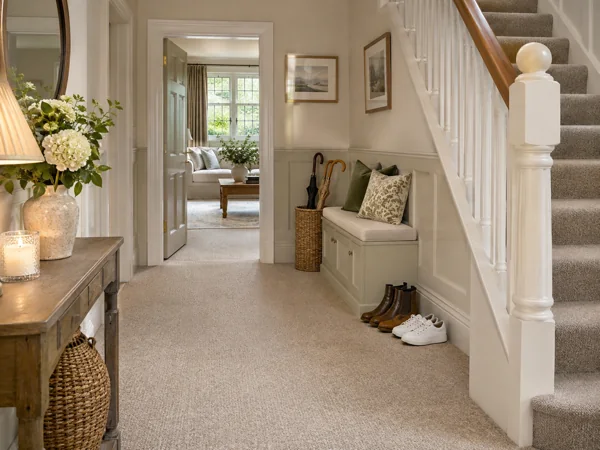
Draw the carpet shape where it meets hard flooring
A flat may use fitted carpet in only a sleeping area, an L-shaped hall or a raised section beyond a broad opening. Give the approximate sizes of the carpet pieces, not the total floor area of the whole apartment. If a border curves around a column, note the affected dimensions and even the narrow gap you want included. Look at the carpet from both directions and identify where it meets the boards or another material.
Tell the technician which items stay in place and where you need the work to finish. A fitted bed base or low storage built around a column may make a precise border in the accessible floor. Show any vulnerable trim or surface next to the carpet. A rug on a hard floor or over a fitted area must be given its own line and dimensions. If a doorway serves an occupied room that cannot easily be closed, mention timing before asking for a price.
Show the condition at the transition before assessing the fibre
An exposed edge can reveal more about fitting than the centre of a patterned surface. Photograph any transition and note an attachment that has already lifted. An installer sample, invoice or care label may identify parts of the floor. Give each item its room and location, since a patch may not be the same age or material as the main carpet. Do not detach a fitted carpet to inspect the backing on our behalf.
The technician can consider the visible pile, backing where already accessible, seams and colour stability. Where a strip moves underfoot, a damp patch has an underlying cause or a join looks repaired, give a separate note before booking. Carpet treatment may need to stop at a different point from the visible threshold if existing conditions limit the work. Ask which areas can be discussed as sound and what should be assessed separately. This helps where adjoining floor coverings have to be left dry or untouched during the visit.
- Send a whole-edge photograph rather than an isolated fibre close-up.
- Name which textile any fitter's instruction describes.
- Point out movement or damage around the strip.
Fitted carpet meeting other floors in Bermondsey
| Area | Useful measurement | Condition check |
|---|---|---|
| Loft sleeping area | Open carpet around fixed bed | How it meets boards or tile |
| Passage into flat | Narrowest fitted width | Raised trim or mat |
| Carpet recess near column | Dimensions round the corner | Clear working edge |
Discuss methods on sound fitted areas and sensitive edges
For a suitable fitted carpet, the technician can consider a water-based extraction process in which equipment applies and recovers solution. The floor needs further drying afterwards. The method depends on suitability of the material, backing, installation and current condition rather than solely on what the weave looks like. If an edge or colour is sensitive to moisture, discuss a lower-moisture or specialist assessment. Give any existing restrictions that accompanied the carpet when it was fitted.
Where an open room contains a sound carpet and a repaired edge, a technician may need to consider two questions. One is what process can be used on the main section; the other is where work has to stop. Ask for the distinction to be explained before you agree the quote or a change on site. If another person will check the property or manage access, send the limits to them as well. This prevents a room name being mistaken for an instruction to treat every textile in the open space.
Describe residues near a change of flooring
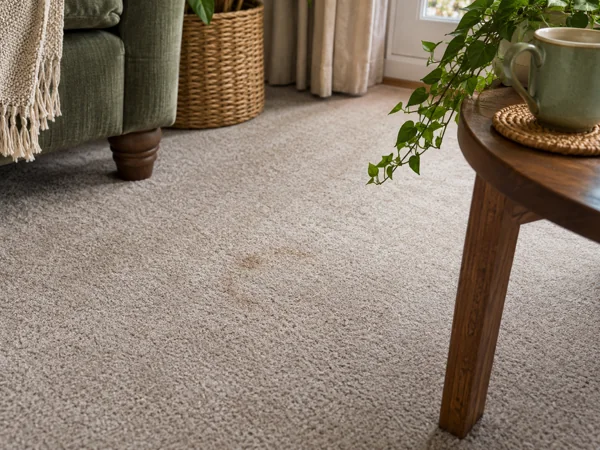
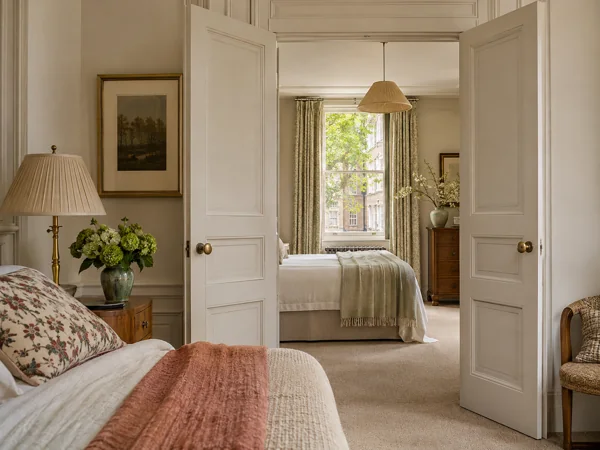
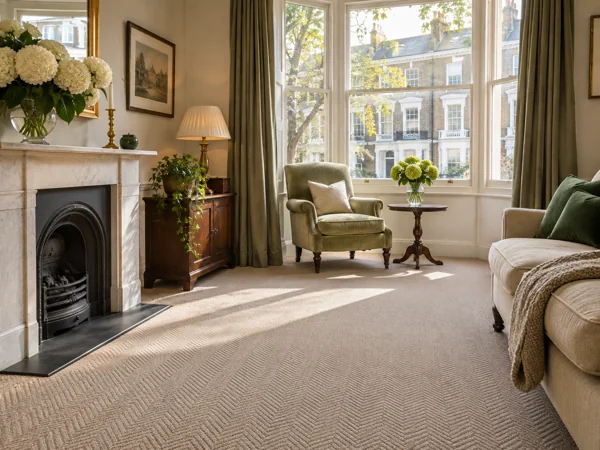
A short fitted entry can develop a dark strip where traffic leaves the boards, while a mark near a chair may have a separate cause. Take photographs that show where the affected areas are and how the pile looks from another direction. Tell us if wear, compression or earlier cleaning has changed how one part feels. A change in the fibres or stain colour may remain after soil removal so the expected benefit should be discussed at inspection.
For a spill, give the date or approximate age and the products already used, where known. If a residue remains sticky or a smell is noticeable mainly in a closed room, report that as well as visible colour. A liquid can reach further than its surface outline suggests. Avoid putting another cleaner on it before the visit. The technician can discuss what those observations mean and how they affect a proposed local treatment. If the patch is linked to a damp opening or leak, explain that separately rather than requesting ordinary stain work.
- Photograph both flooring surfaces around the transition.
- Describe a product application and what happened after drying.
- List an odour or damp concern separately.
Specific conditions to record
| Observation | Send with enquiry | Discuss |
|---|---|---|
| Sticky strip near transition | Previous product and traffic direction | Possible residue or soil |
| Raised edge around repair | Photo and evidence of movement | Where the work can stop |
| Odour after keeping doors closed | Timing and likely cause | Possible issue below surface |
Identify movable fittings and separately measured stairs
Tell us which small furnishings will be moved and which larger ones remain. A table top used as a work desk might not need moving if the carpet around it can be reached. Give the open size and any strip under a low fixed item. Do not move several items into the only clear area needed for equipment to turn. Mention power leads, a raised edging strip or an unstable mat rather than assuming the technician can work through them.
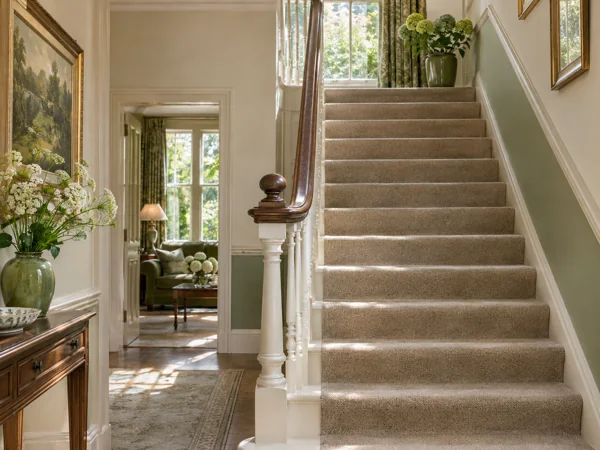
For fitted steps, count each tread and describe the turns, landings and edge fixings. If the access includes a shared flight but the work is only on private stairs inside your door, distinguish the two. Photograph a runner as it sits and do not pull off rods or trim to show the edge. If you want the common carpet considered, explain who can give permission and list it apart from your own room. The measurements, condition and people who use those spaces may each affect what can be agreed. Where temporary signs or barriers are required by building management, ask the manager who provides and removes them. Give the technician a point of contact and confirm how long you can keep an alternative route open. For a corridor that residents must continue to cross, it may be more practical to agree a separate appointment once access can be organised.
Plan how to manage traffic across the carpet once work ends
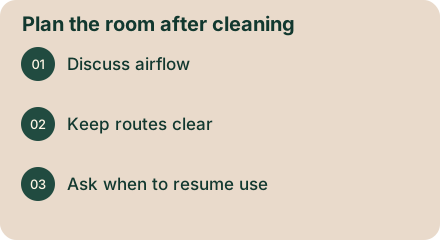
An open-plan flat may have one usable route from the kitchen to the front door, even where the carpet covers only a small area. Show how people can get around it after cleaning. If a pet or visitor needs to cross the space, tell the technician before agreeing the order of work. Mention if glazed sections cannot be opened or a door has to remain closed. Ask about ventilation and what to do until that particular carpet is ready.
Drying varies with the carpet, method, airflow and conditions. Foot traffic and furniture can need a separate plan after the equipment leaves. Ask when you can place items back onto the treated floor and whether a temporary layout makes sense. If a cleaner, agent or resident will arrive later, pass on the advice. Before a move or check-out, give the office the proposed key handover and explain if the selected carpet sits on the only route through the property.
Send a Bermondsey enquiry that separates quote items from access
Prepare the full postcode, property type, named rooms, carpet measurements and stair details through the quote form. Include the route the technician is allowed to use, even if the courtyard or service door is shared. Put another textile on a new line, with dimensions and a care label if available. A rug on exposed boards, upholstered seat or mattress can be considered separately rather than included within the fitted carpet area.
Check coverage, method, access and cost directly with the office before depending on a proposed appointment. If a building changes entry or a piece of furniture will unexpectedly stay in the room, update the details you sent. Give the same route and work list to a keyholder if they will meet the technician. Include who can agree a change after an inspection and which sections are the priority. Putting the measured areas and the available equipment route together makes the practical points clear before someone arrives.
SE1 and SE16 building access details
| Step | Address information | Confirm |
|---|---|---|
| Approach arch or yard | Entry from actual street | Permission to pass with equipment |
| Second gate or lobby | Bell and unit or sign | Who is there to open it |
| Lift or private stairs | Floor reached and turns | How equipment reaches carpet |
Get a carpet cleaning quote in Bermondsey
Request a quote with the carpeted rooms, stairs and any loose items listed separately.
Get a QuoteOther Cleaning Services in Bermondsey
Local references · Southwark Council, Bermondsey Street conservation area
Bermondsey carpet cleaning questions
Can a carpet that only covers half a Bermondsey loft be quoted separately?
Yes. Give the open measurements and show where the fitted carpet meets the other floor.
Should I give the loading entrance as the address?
Give the property's full postal address and clearly name the separate equipment entrance and permission arrangements.
Can you assess a mark if I do not know which chemical was used?
Report that an attempt was made and say what changed. That history can help the technician even if the product is unknown.
What if the carpet meets timber with an edge that moves?
Photograph the transition without lifting it. Tell us how it behaves when walked on so the technician can consider the safe working boundary.
Can I include only my private internal stairs?
Yes. Count the fitted treads beyond your door and put shared routes in the arrival information instead.
How do I prepare if the room has very limited window opening?
Tell the office in advance. At the property, ask how ventilation and everyday access should be managed for the selected process.